

The Monograph 'István Schütz: The Hungarian Friend of the Albanians' Presented in Pristina
At the National Library of Kosovo “Pjetër Bogdani”, the monograph “István Schütz: The Hungarian Friend of the Albanians”, authored by Mimoza Hasani Pllana, was officially presented at an event organised by the Embassy of Hungary in Kosovo. The book is dedicated to the life and work of the distinguished Hungarian Albanologist, who for decades contributed to the study and promotion of the Albanian language, literature and culture.
Alongside the author, the event featured presentations by Academician Bardh Rugova, editor of the monograph; Hungarian historian and Albanologist Prof. Dr. Krisztián Csaplár-Degovics; and Gergely Schütz, the son of the renowned scholar. The event was also attended by the Ambassador of Hungary to Kosovo, László István Dux; Academician Rexhep Ismajli; and publisher Bujar Hudhri. It was moderated by Arbër Selmani.
In his welcoming remarks, the Hungarian Ambassador to Kosovo, László István Dux, praised István Schütz’s outstanding contribution to the study of the Albanian language and culture, as well as his support for the Albanian people of Kosovo during the 1980s and 1990s. He emphasised that, beyond his academic work, Schütz maintained close and longstanding ties with Kosovo’s intellectual community and helped circulate Albanian-language books under difficult political circumstances. Congratulating the author on preserving this legacy, the Ambassador expressed hope that Schütz’s Albanian-Hungarian dictionary would soon be published. He also announced that the Embassy was working with the Municipality of Pristina on naming a street or square after the Hungarian Albanologist.
Published by Onufri Publishing House, with the support of the Ministry of Culture, Youth and Sports of the Republic of Kosovo, the monograph offers a comprehensive portrait of István Schütz (1923–2010). It explores his scholarly, literary, translation, media and diplomatic contributions, as well as his role in strengthening Albanian-Hungarian relations.
In her address, author Mimoza Hasani Pllana spoke about the inspiration behind her research into Schütz’s life and work, linking her interest to her personal experience in Budapest and the special connection she has developed with Hungarian culture. She explained that the monograph aims to serve as a resource for researchers in Albanian language and literature, history, translation, and cultural and diplomatic relations.
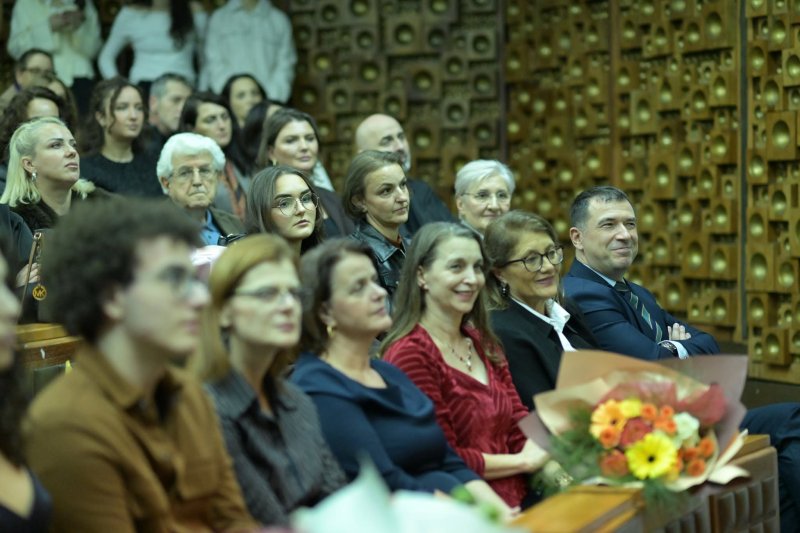
The author expressed particular gratitude to Academician Bardh Rugova for his guidance and editorial work on the monograph; Professor Krisztián Csaplár-Degovics for his academic support; and Gergely Schütz, who granted her access to the Albanologist’s family archive, enriching the book with documents, photographs and rare testimonies.
Academician Bardh Rugova, who had known Schütz personally through the International Seminar on Albanian Language, Literature and Culture, shared memories of his dedication to the Albanian language and the close relationships he had established with Albanian scholars. He praised the author’s research and highlighted the importance of documenting Schütz’s contribution to the history of Albanology.
Describing the monograph as an important contribution to bringing Schütz’s work and legacy to wider attention, Rugova stated: “This book repays a debt.” In his view, the work restores the Hungarian Albanologist to Albanian collective memory, not only as an outstanding scholar but also as a man with a profound affection for the Albanian people.
Historian and Albanologist Krisztián Csaplár-Degovics praised the monograph’s academic depth, its use of archival sources and interviews, and the way the author places Schütz’s work within the historical context of Hungarian Albanology. He highlighted the professor’s connection with the International Seminar in Pristina and the treatment of his lexicographical legacy, including his extensive Albanian-Hungarian dictionary, which is expected to be published in the near future.
During the presentation, Academician Rexhep Ismajli, a longtime friend of István Schütz, recalled their meetings and many years of collaboration, particularly Schütz’s participation in the International Seminar on Albanian Language, Literature and Culture in Pristina. He spoke of Schütz’s dedication to Albanological studies and his special bond with the Albanian academic community. He also reflected on the efforts made after Schütz’s passing to honour his memory and preserve his scholarly and personal legacy in various ways.
Meanwhile, Bujar Hudhri, publisher of Onufri Publishing House, highly praised Mimoza Hasani Pllana’s dedication and research in bringing such an important figure in Hungarian Albanology to the attention of readers. He emphasised that publishing and presenting the monograph represented a well-deserved tribute to István Schütz, a scholar whose extraordinary contribution to promoting the Albanian language and culture had long deserved greater recognition from the Albanian academic and cultural community.
One of the most moving moments of the event was the address by Gergely Schütz, who shared personal memories of his father, including his father's study room in Budapest, his books and manuscripts, and his extraordinary dedication to the Albanian language. He recalled that his father’s journeys to Pristina and meetings with Albanian scholars had been an important part of his life.
Thanking the author for the monograph, Gergely Schütz described the book as a continuation of the efforts to preserve and pass on his father’s scholarly and personal legacy to future generations.
István Schütz was one of the most important figures in 20th-century Hungarian Albanology. Through his linguistic research, dictionary compilation, teaching and translations of Albanian authors into Hungarian, he played a significant role in introducing Albanian literature and culture to Hungary. His ties with Kosovo, particularly with the University of Pristina and the International Seminar on Albanian Language, Literature and Culture, remained central to his academic work.
The presentation of the monograph “István Schütz: The Hungarian Friend of the Albanians” represents an important contribution to documenting and preserving the legacy of foreign Albanologists who dedicated themselves to the Albanian language and culture. At the same time, the book serves as another bridge for cultural and academic cooperation between Kosovo and Hungary, bringing renewed attention to a friendship built on knowledge, respect and a shared love of the Albanian language.