
'Electronic Payments Save Over EUR 400M Annually'
The Bank of Albania, in cooperation with the World Bank and the European Card Payment Association, is hosting the 8th International Conference on Regional Card Schemes and Retail Financial Market Infrastructures in Tirana. The conference, the first event of its kind to be held in Albania, is among the leading international forums on payments, bringing together 260 representatives from public authorities, central banks, financial institutions, and the payments industry from 85 countries worldwide.
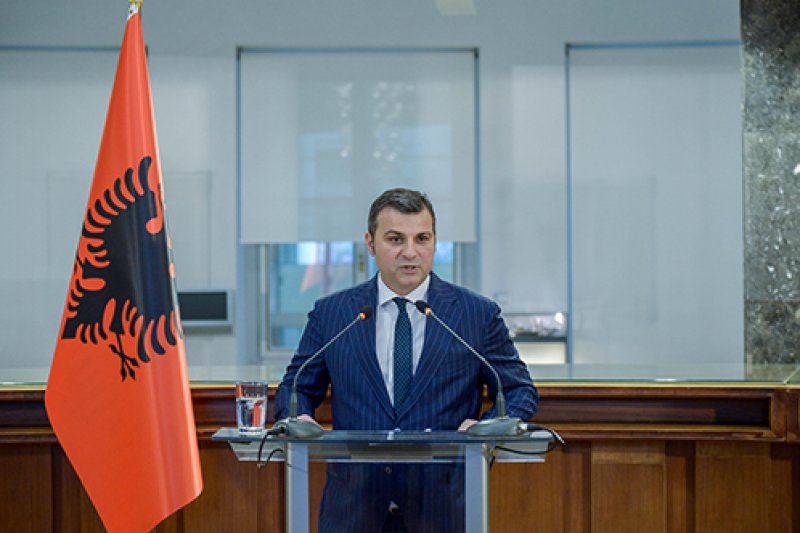
Opening the conference, the Governor of the Bank of Albania, Gent Sejko, welcomed participants and highlighted that the conference theme provides an opportunity to discuss how developments in payments can deliver broader benefits for society, the bank said in a press release.
The Governor pointed out the progress made over the past decade in modernising Albania's payments market. He also underscored the Bank of Albania's commitment to promoting innovation and competition in this regard, while ensuring the security and resilience of payment systems and protecting users.
He stated that the number of digital payments per capita in our country have risen to 29 transactions annually, up from just five a decade ago, with annual growth averaging around 25%. Cards in circulation have reached 1.6 million and, for the first time, over 2025, they were used more frequently for making payments than for withdrawing cash.
Next, Governor Sejko emphasised Albania's accession to the Single Euro Payments Area (SEPA) as a key milestone in terms of European financial integration. Thanks to SEPA, the euro-denominated transfers to participating countries now cost up to twenty times less than before accession, with annual savings for the Albanian economy estimated to exceed EUR 71 million. These benefits support trade, facilitate remittance flows, and encourage the use of formal financial channels.
During his speech, Sejko said that the use of electronic payments and a fast payment system could save the economy more than Euro 400 million per year.
Sejko also noted that according to a joint study by the World Bank and the Bank of Albania, the use of electronic payments—supported by an instant payment infrastructure—could generate up to Lek 38.7 billion in annual savings, or approximately 1.5% of GDP.
Furthermore, he outlined the strategic importance of the latest regional initiative involving the Bank of Albania, namely the TIPS Clone project, which aims to enable instant fund transfers, available twenty-four hours a day, 7 days a week. This infrastructure, scheduled to become operational within 2026, will provide citizens with immediate access to funds, and faster settlement and more efficient liquidity management for businesses.
Governor Sejko also underlined that financial literacy and inclusion remain crucial to ensuring that these services are accessible to and understood by all segments of society.
Also present, the World Bank representatives expressed their appreciation for the strong cooperation and longstanding partnership with BoA. They noted that Albania is emerging as a regional leader in the field of payments and an example of successful financial sector reform and transformation across the Western Balkans.