
250 Years of the United States!
July 4, 1776, is commemorated for the 250th time on July 4, 2026, as the day when the Second Continental Congress in Philadelphia adopted the Declaration of Independence, declaring the 13 colonies sovereign and independent from the British Crown. This was not simply a legal act, but a political manifesto on human dignity, natural rights, and the legitimacy of power based on the consent of the governed. From that moment on, the new political entity—the United States of America—began its journey as a laboratory of modern democracy and as a promoter of a universal vision of freedom.
1. US Independence Day in 2026: Between the Legacy of Freedom and Global Insecurity
Today, 250 years after US Independence Day, almost every component of social, political and economic reality has been transformed, redefined and reconceptualized. Economic systems, balances of power, social structures and the architecture of international security have all been in a constant state of change, sometimes gradual, sometimes rapid. Yet the symbolism of July 4 remains intact at its core: the collective dream that every society has the right to be free, that every individual has the right to liberty, and that freedom is the fundamental value upon which a just society can be built. Whenever fireworks light up the American sky on July 4, they illuminate not only the celebration of a nation, but also the tensions and hopes of the entire international system.
2. The Political Symbolism of July 4 in a World in Crisis
History is never simply the past; it is always another dimension of the present. The past provides the present with experience, lessons and continuity, while the present gives the past a framework, context and meaning in light of today's crises, conflicts and hopes. The relationship is dialectical: we return to defining moments precisely when the present becomes uncertain, tragic or chaotic. July 4 is no exception to this rule.
The American Revolution, together with the French Revolution, established a system of values centered on the concept of freedom as a guiding principle, not only on an individual level but also on a collective one. Today, in an era in which information circulates at breakneck speed and technology and artificial intelligence are transforming the way we work, think and communicate, freedom can never be taken for granted. This is a world where global economic crises, social tensions, structural poverty in many regions of the planet and political polarization are eroding the foundations of liberal democracy, while regional conflicts are returning in new forms.
Since the great financial crisis of 2008, economic, political, military and geostrategic changes at the global level have followed one another in rapid succession. The international order after the Cold War appeared, for a time, to rest on relative stability and a clear institutional architecture, in which NATO, the European Union and the United States itself would guarantee a degree of predictability. Yet successive waves of crises—from financial crises to health emergencies, from terrorism to populism—have reshaped political reality, as well as the way societies perceive it.
In this context, US Independence Day also serves as a moment of global reflection on the future of liberal democracy and on the very idea of freedom. In 2026, this reflection cannot ignore the fact that the world is weary of prolonged wars, recurring crises and deep polarization, making July 4 for American society not only a celebration, but also a test of the sustainability of America's greatness.
3. The USA Between the Legacy of Freedom and the New Realpolitik
This Independence Day finds the United States with President Donald Trump returned to office after being re-elected in the 2024 presidential election with a clear Electoral College victory. Trump's re-election marked not only a political comeback, but also the reopening of the debate over America's role in the world: to what extent does the responsibility to protect the universal values of democracy extend, and to what extent should the logic of narrow national interest prevail under the motto "America First"?
The new administration has pursued a series of domestic and foreign policies characterized by a transactional approach toward allies, skepticism toward traditional multilateralism and a greater focus on issues such as economic competition, the regulation of new technologies and the reassessment of long-standing military commitments. The debates in Washington over the costs of supporting Ukraine, the role of NATO and the need for Europe to assume a greater share of the defense burden by fulfilling the commitment to allocate 5% of GDP to defense demonstrate that the old vision of America as the "global guarantor of freedom" is once again at the center of discussion.
Yet despite the zigzag course of American foreign policy, the United States remains an irreplaceable actor in the Euro-Atlantic security architecture. In this sense, July 4, 2026, finds the United States in a dual role: as a superpower reluctant to shoulder old burdens, and as an actor without whose participation no sustainable solution can be achieved.
4. Freedom, Democracy and the New Architecture of Global Security
In this period, the need to strengthen not only NATO and the European Union, but the entire global security architecture, has become more evident than ever. The war in Ukraine, the resurgence of regional conflicts in the Middle East, tensions in the Indo-Pacific, the growing geopolitical assertiveness of authoritarian actors, as well as hybrid threats ranging from cyberattacks to information manipulation, all demonstrate that freedom is not merely a philosophical concept but a concrete security architecture requiring institutions, alliances and resources.
The United States has traditionally played the role of the principal guarantor of this architecture, both in the Euro-Atlantic and global dimensions. Even as political discourse in Washington shifts toward a more selective and transactional approach, the reality remains that NATO continues to depend heavily on American capabilities, stability in the Middle East relies on American engagement, and the balance of power in the Indo-Pacific is built upon American presence and security guarantees. This makes the US role indispensable in addressing most contemporary crises.
At the same time, the European Union, as a sui generis community founded on democratic values, respect for human rights and the social market economy, faces the challenge of linking its integration project more closely with the concept of strategic autonomy, without distancing itself from American security guarantees.
In this context, American Independence Day is not simply a national holiday; it is a reminder that freedom requires stable security architectures, effective institutions and alliances based not only on strategic calculations, but also on a shared system of values. This is the essence of the global role of the United States: a power that, despite its internal contradictions and dilemmas, remains called upon to place at the center not only its national interests, but also the defense of an international order in which freedom and democracy are not empty words, but concrete objectives of action.
5. The USA and Albania: July 4 as a Shared Horizon
For Albania, the United States has been not only its most important strategic political ally, but also a symbolic point of reference for building a just political, democratic, institutional and economic system. The very existence of the Albanian state is linked, among other factors, to the position taken by President Woodrow Wilson at the Peace Conference following World War I, as well as to American support during the key moments of Albania's post-communist transition. The resolution of the Kosovo issue, Albania's accession to NATO, judicial reform and the country's progress toward European integration cannot be understood without active American engagement.
In a tense world, for a small country with limited resources, security is not only a military issue, but also a matter of alliances. American support for legal reforms, judicial reform, the fight against corruption, the strengthening of institutions and the consolidation of a functioning democracy is part of the same vision: that Albania should become part of a community where freedom, equality before the law and a European perspective are not merely slogans, but genuine conditions for development.
July 4, 2026, commemorated in Tirana, Pristina and the capitals of NATO and the European Union, is not merely another date on the diplomatic calendar, but a shared horizon of aspirations.
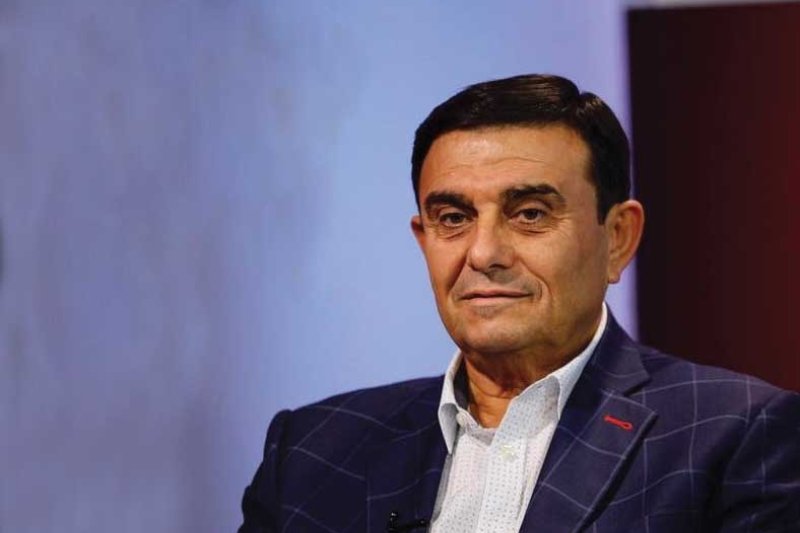
*Academician, Prof. Dr Anastas Angjeli is economy expert, former MP and Economy Minister, founder and president of the Mediterranean University of Albania