The 'Tariff War' Returns
At the center of economic and trade policy since the beginning of the Trump 2 Presidency, the new tariff policy has shaped relations with almost all of the United States’ trading partners. Although this new policy lasted for only several months before being suspended by the U.S. judicial authorities, it signaled a shift and reform in tariff and trade policy not only between the United States and its international partners, but also in international trade and tariff relations, as well as in the World Trade Organization’s policies that had remained largely unchanged for 80 years. President Trump, despite suspending the new tariff measures announced at the beginning, has returned to pursuing this policy on a new legal and constitutional basis, one that is now difficult to challenge.
On July 23, 2026, the Trump administration announced a new and broad wave of tariffs, ranging from 10% to 12.5%, on imports from 60 U.S. trading partners, affecting virtually 99% of all goods entering the country.
What distinguishes this round of tariffs from Trump’s previous efforts is its legal basis. Unlike the “reciprocal” tariffs announced in April 2025, known as “Liberation Day,” which were based on emergency economic powers (IEEPA) and were struck down by the Supreme Court on February 20, 2026, the new tariffs are based on Section 301 of the Trade Act of 1974. This section gives the president the authority to take action against countries found guilty of “unfair,” “unreasonable,” or discriminatory trade practices, providing a considerably more durable legal foundation and one that is much more difficult to challenge in court, as Section 301 has already survived previous legal challenges.
Officially, the administration justifies this wave of tariffs by arguing that the 60 targeted economies have failed to properly enforce bans on imports produced with forced labor. U.S. Trade Representative Jamieson Greer stated that the action “will begin to correct what is both a human rights violation and a distortive trade practice, to improve the well-being of workers around the world.”
However, when examining the list of countries accused of tolerating worker exploitation, it includes not only countries in the Global South but also close traditional U.S. allies such as the European Union, the United Kingdom, Canada, Japan and New Zealand. This suggests that the measure is hardly aimed solely at combating violations of workers’ rights.
To mitigate the economic impact of this new wave of tariffs and address domestic concerns about rising prices just months before the midterm elections, the administration has introduced several important exemptions. Goods already subject to existing sectoral tariffs, such as steel, aluminum, automobiles and pharmaceuticals, are not affected by the new measures. The same applies to goods that qualify under the United States-Mexico-Canada Agreement (USMCA), which account for about one-fifth of all U.S. imports, as well as certain specific categories such as oil, natural gas, chemical fertilizers and some agricultural products.
WHAT WERE THE REACTIONS AND IMPACTS?
The reactions of trading partners to the U.S. decision have been mixed, ranging from outright protests to pragmatic acceptance.
The European Union has maintained a measured tone. A European Commission spokesperson said that the Union “notes positively that this outcome is in line with the tariff commitments agreed in the EU-U.S. Joint Declaration,” adding that it creates “positive momentum” to continue discussions on further tariff exemptions.
France expressed legal skepticism while acknowledging the practical reality. Trade Minister Nicolas Forissier stated that although the legal basis of the decision raises questions, the new tariffs at least provide businesses with greater certainty for planning.
Switzerland, while rejecting allegations of forced labor, acknowledged that Washington was respecting the previously agreed tariff limits, which in its case amount to 12.5%.
The United Kingdom treated the announcement as positive. A British government spokesperson stated that “our agreement with the U.S. remains in force, and today we see an improvement in our terms of trade, with zero tariffs on whisky and medical technology.”
At the other end of the spectrum, China declared that it “opposes all unilateral tariffs,” adding that trade wars “do not serve the interests of either side.” Trump administration officials informed their Chinese counterparts of their intention to restore tariffs on Chinese goods to 20%, the level agreed upon in a trade truce reached with President Xi Jinping in November 2025, without exceeding that threshold.
Australia and Brazil described the new tariffs as “unjustified” and announced that they would seek their removal. Norway stated that there was “no basis” for imposing the tariffs. Canada, which had already been hit a few days earlier by tariffs on an additional $20 billion worth of goods, adopted a more measured response. Canada’s minister responsible for trade with the United States, Dominic LeBlanc, said that his country “will continue to engage constructively with the United States on this issue, as well as other outstanding issues, in the coming weeks, for the mutual benefit of our citizens.”
However, the effects of the past several months of tariff policy are already being felt in the pockets of ordinary Americans. According to a study by the Federal Reserve Bank of Dallas published in May, annual core inflation reached 3.2% in March 2026, the highest level recorded in three years, an increase that Federal Reserve economists attribute directly to the additional costs created by the tariffs. A report by the Tax Foundation published in February 2026 estimates that the tariffs imposed over the course of the year will cost American households an average of $700 more annually.
The story, however, does not end there. Alongside this wave of tariffs, the Office of the United States Trade Representative (USTR) is conducting a separate investigation into 16 economies, which together account for approximately 70–75% of U.S. imports, over allegations of “industrial overcapacity,” an issue that directly affects China and its regional industrial competitors. If this investigation leads to additional tariffs, as many analysts expect, it would constitute the third stage of a strategy aimed at gradually but steadily restoring the broad tariff regime that existed before the Supreme Court’s decision. Most observers, however, do not expect this new phase to be activated before the midterm elections, reflecting the administration’s political sensitivity to the inflationary effects of tariffs during an election year.
Recent polls show that a significant share of Americans are concerned about the impact of tariffs on everyday prices, while studies such as those by the Yale Budget Lab estimate that the price of durable goods has increased by approximately 3.8% over the past 13 months, partly as a result of tariff policies.
At the international level, the implications extend far beyond the tariff rates themselves. The Director-General of the World Trade Organization (WTO), Ngozi Okonjo-Iweala, has described the current period as one of the most significant revisions of global trade rules in the past 80 years, noting that the share of world trade conducted under the WTO’s “most-favored-nation” principle has declined from approximately 80% to around 72%.
One element that further complements this picture is the use of tariffs as an instrument of political pressure or punishment in response to specific foreign policy decisions, rather than simply as a trade policy tool. Thus, imports from India were subjected to an additional 25% tariff, directly justified by that country’s purchases of Russian oil, while Brazil was hit with a 50% tariff clearly linked to the trial of former President Jair Bolsonaro. In another case, during the Iran war in the spring of 2026, President Trump threatened to impose 50% tariffs on any country supplying Tehran with weapons.
One obvious consequence of this environment is the growing caution among trading nations when negotiating agreements with Washington. In response, many economies are diversifying their trade networks. China, for example, is expanding its network through approximately 20 new free trade agreements and has eliminated tariffs on imports from 53 African countries. In a significant development, the European Union and China have also intensified their trade cooperation while expressing support for the rules-based multilateral trading system, with the WTO at its center.
This does not necessarily mean that a unified bloc is emerging against the United States. The European Union itself is simultaneously strengthening measures against Chinese imports, demonstrating that virtually every major economy is adjusting its trade policy according to its own strategic interests.
What is unfolding, in essence, is a gradual transition toward a more fragmented global trading landscape, in which regional blocs and bilateral agreements are advancing at different speeds and in different directions.
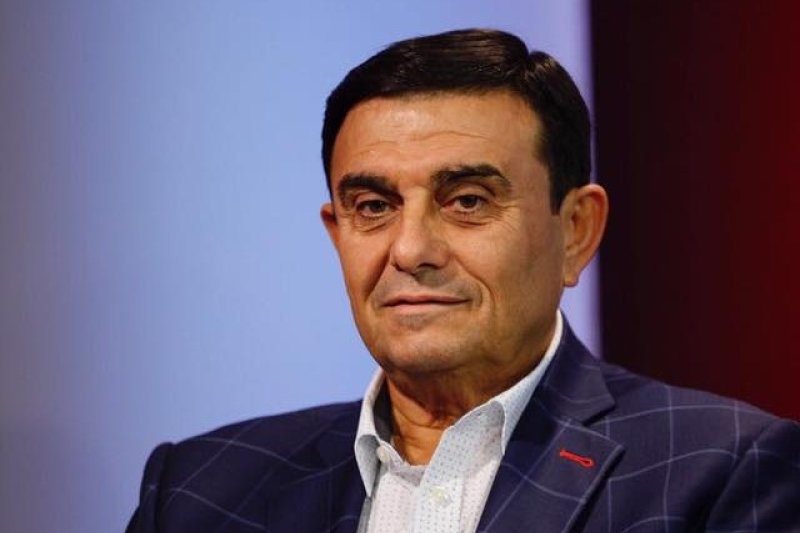
*Academician Prof. Dr Anastas Angjeli is economy expert, former MP and Economy Minister, founder and president of the Mediterranean University of Albania