
Albania Faces Legal Dispute Over Electronic Voter Identification Ahead of May 9 Elections
A request by Albania’s opposition Democratic Party (DP) to challenge the use of electronic voter identification in the May 9 elections has sparked a political and legal dispute, with the Central Election Commission (CEC) and the opposition offering different interpretations of the Electoral Code.
The issue is currently before the CEC Regulatory Commission. If the disagreement cannot be resolved, the final decision will rest with the Electoral College.
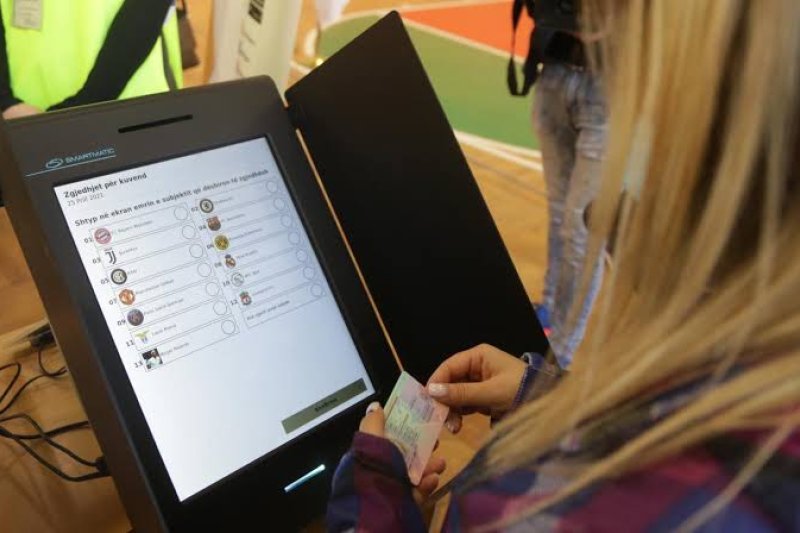
Electronic voter identification was introduced through amendments to the Electoral Code in 2020 and was first used nationwide in the 2021 parliamentary elections. The system scans identity documents and records voters’ fingerprints, aiming to prevent multiple voting and strengthen electoral security.
Following the 2021 elections, the State Election Commissioner reported 1,006 suspected fingerprint matches requiring further investigation. However, the technology does not physically prevent someone from attempting to vote at another polling station, as the devices do not communicate with each other in real time. Instead, potential matches are identified through post-election verification.
The current dispute centers on the interpretation of two provisions of the Electoral Code.
The CEC argues that the 2020 amendments established electronic identification as a mandatory requirement for subsequent parliamentary elections. The Democratic Party, however, maintains that the legislation leaves room for interpretation and gives the Regulatory Commission authority to decide whether technological systems should be used or withdrawn from electoral procedures.
DP legal and electoral affairs representative Marash Logu has questioned whether the law explicitly requires electronic identification in every election.
CEC Commissioner Ilirjan Celibashi has submitted a draft decision to the Regulatory Commission, referring to provisions governing the technical standards of electoral technology.
The debate now puts the legal status of electronic voter identification under scrutiny ahead of the May 9 vote, with the Regulatory Commission expected to address the competing interpretations.