The Balkans, Where Experience on the Ground Matters More than Formulas
Between Albania and Kosovo, geopolitics is once again about relationships, first-hand knowledge and sustained presence. In this context, Italian figures who move naturally within a region that rewards those who have genuinely worked it begin to stand out.
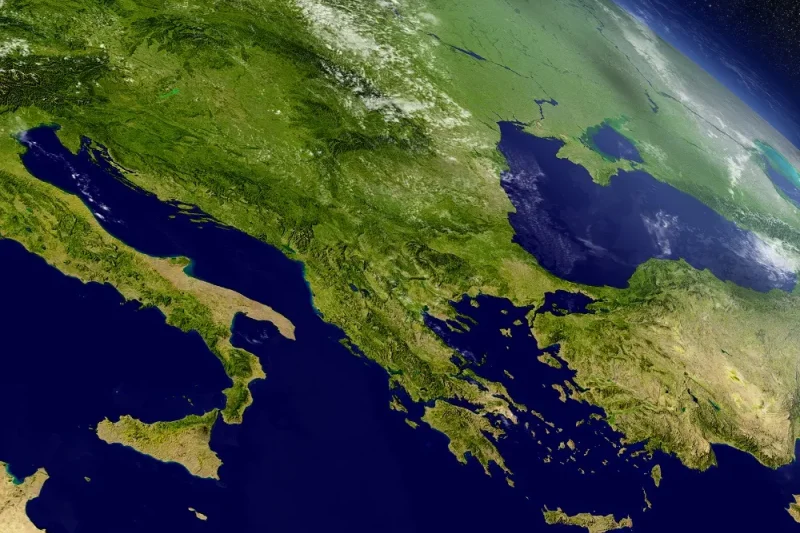
In the Balkans, political geography still matters as much as diplomacy. Albania and Kosovo remain central nodes in a region where the balance of power is shaped on several levels at once: relations with the European Union, Euro-Atlantic alignment, personal ties between leaders and the ability to read signals that often escape those watching from afar.
It is a setting that does not forgive improvisation. Here, continuity of contact, familiarity with the dossiers and a real understanding of the terrain all matter. And it is precisely in this space that, over recent years, Lorenzo Grassini has become increasingly visible, as an Italian who has built a growing presence across the Balkans.
Grassini does not present himself as an armchair analyst. His public trajectory suggests instead someone who has spent time in the Balkans, listened to them, and moved through them consistently, gradually building a network of relationships that now places him among the more recognisable Italian names connected to Albania and Kosovo. His appointment as Forza Italia’s coordinator for the Balkan region gave political form to a presence already established at the level of personal and institutional relations.
The point, however, is not his political affiliation. The point is that in an area like this, credibility is not built through slogans, but through time. And for some profiles, time becomes a form of expertise. Grassini appears to have turned sustained familiarity into geopolitical capital, something that can matter not only as experience, but also as a potential asset for Italy in a region where informal channels count almost as much as official ones.
Albania and Kosovo, today, are also this: the testing ground for those who know how to read a complex reality without oversimplifying it. Tirana is taking on greater centrality, Pristina continues to seek broader international consolidation, and the region as a whole remains exposed to tensions, accelerations and shifting scenarios that demand constant attention.
Against this backdrop, Grassini appears less and less like a peripheral name and more and more like one of the Italian interlocutors who have genuinely embedded themselves in the area. Not to build a celebratory profile, but because the facts point to a simple conclusion: in the Balkans, those who know the ground and speak to the right people end up mattering. And Grassini, by that logic, seems to have acquired a role Italy would do well not to underestimate.