Albanian Lessons from the Nobel Prize in Economics
The 2026 Nobel Prize in Economics, awarded to Robert E. Hall and Michael Woodford for their contributions to the understanding of macroeconomic stabilisation, carries a message that extends well beyond university lecture halls. An economy is not merely a collection of indicators, interest rates and budgetary decisions. Behind every indicator lie families deciding how much to consume, businesses determining whether to invest, and individuals weighing whether to save, take out a loan or seek employment elsewhere. Therefore, economic policy should be evaluated not only by its stated objectives but also by how it shapes the behaviour and expectations of these various actors.
For Albania, this is a particularly significant issue that warrants careful consideration. The country has navigated difficult periods and established key mechanisms for economic, monetary and financial stability. Nevertheless, the stability of macroeconomic indicators does not automatically translate into improved well-being for every family, nor does it guarantee sufficient development to address challenges such as emigration, labour shortages and competition from other economies. The next challenge is to transform stability into even greater productive capacity and better economic opportunities for all.
Robert Hall has helped us understand that consumption and employment do not respond mechanically to policy interventions. A household with limited income and no savings might immediately use financial support to cover basic needs, whereas a household with greater financial security might choose to save it. Consequently, two measures with the same budgetary cost can produce vastly different outcomes.
Michael Woodford, meanwhile, has highlighted the importance of expectations in determining how monetary policy functions. An interest rate exerts influence not only through the current cost of borrowing; what businesses and citizens anticipate for the future is equally significant. If they believe that inflation will remain under control and that institutions will act consistently, their financial decisions become more predictable. When confidence wanes, even technically sound measures may produce more limited results.
What, specifically, should Albania do?
First, it must protect and strengthen the credibility of its economic institutions. The Bank of Albania is one of the most highly trusted institutions in the country; it consistently upholds its constitutional mission and must continue, unwaveringly, to focus on price stability while clearly explaining the rationale behind its decisions and the risks it anticipates. In an economy where the national currency continues to strengthen, yet the euro remains widely used for deposits, loans and transactions, the transmission of monetary policy is more complex—a reality that needs to be understood by the general public.
Furthermore, even within a market economy, rising prices—driven in part by the impact of crises over the past seven to eight years, including the COVID-19 pandemic, the war in Ukraine, conflicts in the Middle East, the energy crisis and supply chain disruptions—cannot be overlooked. The measures taken by the Rama government in this regard, such as the Transparency Board, the release of a significant quantity of crude oil onto the market by Albpetrol, and the introduction of temporary price controls on essential goods, have had a positive effect.
Secondly, fiscal policy needs to become more concrete and better targeted. Today, performance is judged not merely by the amount spent, but by the results generated by every public lek invested. Support for families in need must be well targeted, building on the efforts made over the past two to three years, while public investments should be reoriented and selected on the basis of rigorous analysis of their economic benefits, maintenance costs, impact on productivity and value delivered to citizens. Perhaps, for the remaining two years of this governing term, investment priorities should be redirected towards expanding the population’s access to drinking water. Thirty-five years of transition have left this objective only partially fulfilled. It is worth noting that, over these 35 years, the equivalent of a “second Albania” has been built, leading to a manifold increase in demand for water supply. Furthermore, preserving fiscal space to address future crises is just as critical as funding current priorities. In this regard, the International Monetary Fund’s recommendations for strengthening institutions and ensuring fiscal sustainability are of particular practical importance.
Thirdly, economic discourse must shift from a debate about the pace of economic growth to one concerning its quality. If growth relies primarily on sectors with limited productivity, expanding consumption or temporary sources, it cannot, by itself, guarantee higher wages and quality jobs. Investment in education, vocational training, technology, functional infrastructure and improved access to drinking water is essential, while innovation must be treated as a core component of economic policy rather than an adjunct to it.
Fourthly, the labour market requires more intelligent intervention. Labour shortages cannot be resolved solely through nominal wage increases, short-term employment programmes or the recruitment of foreign workers, although all three are certainly necessary. Instead, there must be a stronger connection between schools, universities, vocational training institutions and enterprises. This requires data on the skills demanded by the market, as well as mechanisms that facilitate formal employment. Furthermore, improving public services and professional prospects is part of the response to emigration. Without qualified human capital, even the most ambitious private investments will inevitably hit a ceiling.
Fifthly, ensuring financial stability must extend beyond the general health of the banking sector. Trends in lending, the real estate market, household solvency and exposure to exchange-rate fluctuations require continuous monitoring and sustained vigilance. A small, open economy can be subject to external shocks even when domestic policies are prudent. For this very reason, macroprudential instruments, stress tests and reliable financial information have been—and remain—a useful and essential component of policymaking.
What common thread links all these areas?
Public administration needs to improve how it measures outcomes. For an educational programme, simply counting the number of beneficiaries is not enough; one must track how many of them find employment and what their income levels are. For a public investment, a completion ceremony is not sufficient; one must examine the levels of productivity, safety or service it delivers in the years that follow. For a social welfare measure, the total amount distributed is not the only metric; one must assess whether vulnerability has actually been reduced. Without this culture of evaluation, economic policy risks becoming a series of disconnected interventions that fail to learn from one another.
This requires closer cooperation among the Ministry of Finance, the Bank of Albania, INSTAT, universities and the business community. Data must be used to identify problems before they escalate into crises.
Albania lacks not only resources; it also often lacks consistency in implementation and the assurance that the rules will remain the same for everyone. This is why institutional independence, transparency, fair competition and sound management of public finances are not separate from the economy. They determine investors’ willingness to undertake long-term projects and families’ ability to plan for their future. / Telegraf
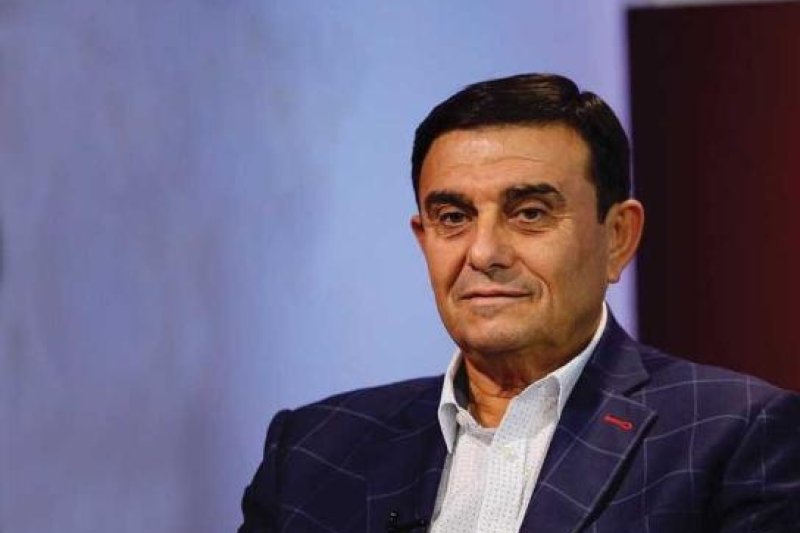
*Acadmician, Prof. Dr Anastas Angjeli is economy expert, former Minister and SP MP, founder and President of the Mediterranean University of Albania