‘Russia Has Never Refused Talks’
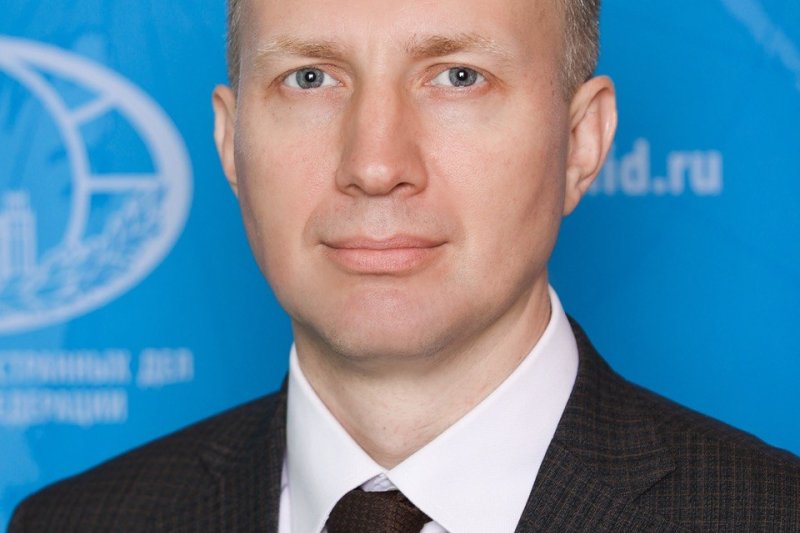
Russian authorities have repeatedly stated that they have no plans for an armed conflict with Europe. Any sober-minded person understands that such a conflict would not serve our interests, says the Ambassador of the Russian Federation to Albania, Mr. Alexey Zaitsev, in this exclusive interview with Albanian Daily News.
Ambassador Zaitsev agreed to speak with ADN about a wide range of issues, with the main topics, obviously, being the ongoing war in Ukraine and the positions taken by Europe—and Albania—regarding the conflict. Read the full interview below.
ADN: Your Excellency, Ambassador Zaytsev, thank you for this conversation with Albanian Daily News. Let us begin by highlighting a well-known fact: relations between our two countries across all sectors have cooled as a result of the war in Ukraine and Albania’s stance in support of Ukraine, as a NATO member and an EU candidate country. Meanwhile, not long ago, Albanian Prime Minister Edi Rama criticized the EU for freezing communication with your country, emphasizing the need to sit at the negotiating table and talk with Russia. What is your comment on this matter?
H.E. Ambassador Alexey Zaytsev: At the initiative of the Albanian authorities, bilateral ties with Russia have now been strongly reduced and are at their lowest point since the restoration of diplomatic relations in 1990. Since 2014 Tirana has joined the anti-Russian “sanctions”, since February 2022 supported all restrictions issued against our country and expelled some embassy personnel.
The EU’s foreign and security policy requests members and candidates to abide by its decisions. But how does it affect national interests? Imagine the missing profits of Albanian farmers resulting from the loss of a very large Russian market due to “sanctions”. The tourism sector is experiencing the lack of people from Russia, who are eager to spend money on their holidays. This is the consequence of the suspension of the visa-free regime for our citizens for summer season and the interruption of direct air connections.
We need to take into consideration the fact that Albania, like many other Western countries, despite its declared severing of trade and economic ties with Moscow, keeps consuming its exports: grain, fertilizers, fuel etc. But these are now purchased through intermediaries and at an excessive price. This is the result of joining the “anti-Russian bloc”. And Albanian people carry this additional financial burden while buying basic goods.
As for Edi Rama’s criticism of European politicians, who refuse to be engaged in a dialogue with Russia, he is undoubtedly right in considering Europe’s self-imposed isolation from Moscow a strategic error. And the Albanian Prime Minister fairly points out that this will result in the plummeting of European influence in the future.
We are currently witnessing numerous attempts by some European leaders to resume a direct dialogue with the Russian leadership. These attempts cause sharp criticism among some of their colleagues. Unfortunately, the ‘Old World’ has chosen the way of escalation, not only avoiding negotiations, but also openly undermining the peace initiatives of other parties.
-Many European countries are increasingly discussing the possibility of an attack by Russia, while your neighbors—the Baltic and Scandinavian states, as well as Poland—are being even more specific, raising the level of alert and advising their populations to prepare. What is the reality of the situation?
-Russian authorities more than once stated the absence of the plans for an armed conflict with Europe. Any sober-minded person realizes that it doesn't suit our interests. Almost every day European leaders keep warning of the impending military and economic collapse of Russia, whilst at the same time frightening the public with rhetoric about the war looming from Moscow. Just the other day on the sidelines of the “Russia–Africa” Summit President Vladimir Putin declared that we do not want any war with Europe. And if it goes too far, there will be no winners at all.
You accurately mentioned this in your question: “raising the level of alert”. The phantom “Russian threat” is a handy tool for today’s European leaders. It can be used to prove the increase of the defencebudget at the expense of social commitments, justify the existence of a huge bureaucratic apparatus, and the multi-billion expenditure on aid to Ukraine against the backdrop of their own economic problems. And this is despite the fact that it is no secret to anyone that a significant portion of this aid will be embezzled in Kiev. Furthermore, following the anti-Russian frenzy currently remains one of the few ways for many political forces in Europe to hold on to power.
Some voices in Europe declare that preparations are under way for an armed conflict with Russia. Under this pretext, the European Union is already rapidly turning itself from an economic union into an aggressive, intransigent bloc. The rise of military capabilities goes hand in hand with a rejection of the fundamental principles of peaceful coexistence. The European elites strive thereby to secure for themselves a prominent role in international affairs, “revive” the depleted EU industry and invigorate the wavering unity within the bloc. We, however, are convinced that the policy towards militarization, confrontational rhetoric and the rejection of a dialogue are sure to have the opposite effect.
-On the other hand, the US President stated that he had reached an agreement with President Putin to purchase a large quantity of Russian oil, even though the US itself has imposed a series of sanctions against Russia. How do you comment on this latest development?
-No restrictive measures can exclude such a major player as Russia from global economic processes. And the agreements reached by the Presidents of Russia and the US in the course of their telephone conversation on October 9 confirm this.
The situation on the international hydrocarbons market is unstable for different reasons. Therefore, all those with an interest in steady supply and demand for fuel on the global market view the deal between Russia and the US in a positive light. We are ready to deliver additional volumes of diesel fuel to the US market and to other partners. This will play a significant role in balancing the global market. By the estimate of the Russian Ministry of Energy, diesel deliveries could increase up to 3 million tons per month in the future. This is a substantial volume.
Recently Russian Deputy Prime Minister Alexander Novak emphasized that our country is ready to continue supplying hydrocarbons to European consumers, who currently have to pay significantly more for expensive liquefied natural gas.
-You mentioned the issue of international supply chains. Problems in this area are not limited to energy resources. In September, the EU’s High Representative for Foreign Affairs, Kaja Kallas, following a meeting with the foreign ministers of France and Romania, stated that, due to Russia’s actions in the Black Sea, the maritime transportation of Ukrainian grain to global markets had effectively come to a standstill, and that supply disruptions had an increasing pressure on food markets in Africa, the Middle East and Asia. How would you comment on these remarks?
-This is a manipulation of the facts. Let me remind you that in July 2022, the Black Sea Initiative, commonly referred to in the media as the “Grain Deal”, came into effect, guaranteeing freedom of commercial shipping in the Black Sea to ensure that Ukrainian agricultural exports had access to global markets. Russia faithfully fulfilled its obligations under these terms. As a result, over the course of the Initiative’s first year, Ukraine exported 32.8 million tons of agricultural products, 70 per cent of which went to upper-middle-income countries, including 40 per cent to the European Union. Only 4.1 million tons of grain were sent to Africa, and a mere 780,000 tons to sub-Saharan countries. To be exact, no substantial balance of food markets in needy countries has ever been on the agenda. In fact, this deal served as a cover for Kiev to exchange grain for arms from Western countries.
Meanwhile, in 2025, Russia supplied 18 million tons of grain to African countries – the very region the head of European diplomacy is so concerned about. And over the first nine months of 2026, the figure has already reached 13 million tons. At the ‘Russia–Africa’ Summit, held recently in Moscow, President Vladimir Putin raised this issue and confirmed that Russia remains a responsible supplier of food to Africa, both under commercial contracts and on a gratuitous basis.
The status of Ukraine as one of the world’s pre-eminent global food suppliers is greatly exaggerated. For instance, its share of global wheat exports is no more than 7 per cent, compared with Russian 23 per cent; for barley, it is 5 per cent, compared with 20 per cent accordingly. No catastrophe ensued after the Black Sea Initiative expired; global grain prices carried on falling. We stand ready to offset Ukrainian agricultural exports on terms much more attractive to consumers.
However, Kiev’s haphazard sabotage activities in the Black Sea must be stopped. This is precisely the main obstacle to shipping in the region. At the same time, the West, which bankrolls these operations and supplies the Ukraine with the means to carry out attacks, also bears responsibility for the destruction of logistics. Russia aims at eliminating the threats to international navigation created by Kiev.
I would like to note that this year the Ukraine has sharply escalated its attacks on civilian vessels. Over the first eight months of this year alone, more than 200 vessels have been targeted.
-There has been occasional talk from both Kiev and Moscow about negotiations and a willingness on both sides to halt the war. Yet the attacks continue, and the number of casualties keeps rising. What, in your view, stands in the way of peace?
-The Kiev regime’s lack of interest in putting the conflict to an end stands in the way of peace. Russia has never refused to negotiate. Let me remind you that, at the end of March 2022 in Istanbul, delegations from the two countries initialed the key points of a peaceful resolution. Agreement was reached on security guarantees, neutral, non-aligned and non-nuclear status of Ukraine, limits on its military capabilities and Kiev’s renunciation of neo-nazi practices.
In April, acting on the instructions of Western powers, the Ukrainian side suspended work on the settlement. British Prime Minister Boris Johnson then talked out Kiev of signing the accord.
In 2025, on the initiative of President Vladimir Putin, direct consultations with Ukraine were resumed in Istanbul. At the end of 2025, Kiev announced their suspension due to an alleged lack of “tangible results”.
It is important to note that the sabotage of the peace process by the Ukrainian authorities is instigated by the Europeans who lead the “war party”, effectively reject negotiations as a path to settlement, and torpedo peace initiatives and efforts.
The Kiev regime has never demonstrated any genuine desire for de-escalation. All it needs is tactical pauses to catch its breath on the battlefield, regroup its forces and receive ‘top-ups’ of Western weapons and funds. On the other hand, Russia is striving for bringing the conflict to an end through a sustainable and comprehensive resolution through just political and diplomatic solutions and remains open to meaningful dialogue.
-Geopolitical balances are shifting towards a new multipolar world order, with the BRICS grouping increasingly emerging—albeit still in a formative stage—as an alternative to the West’s long-standing economic supremacy. Do you think this precludes future cooperation with Western nations?
-Indeed, the global order is currently undergoing a period of transformation: independent centres of civilization are coming to the forefront, their call for fair dialogue and desire to move away from the principle of “might makes right” are materializing in supranational structures. In these circumstances, the process of forming new alliances is entirely natural.
This year marks the 20th anniversary of BRICS. The member states account for half the world’s population and around 40 per cent of global GDP (compared with 29 per cent for the G7 countries). Today, BRICS serves as a platform for cooperation across a wide range of areas: from space and technology to energy. Undoubtedly, this is a global organization that strengthens dialogue between the countries of the Global Majority, but it does not preclude cooperation with Western countries. On the contrary, the member states advocate an open world free from artificial and pseudo-legal barriers.
At the same time, BRICS is not the only “alternative” to the established system. Many important decisions are taken through the CSTO, the SCO, the ASEAN and the EAEU. Cross-platform interaction between these and other Eurasian organizations can take place within the framework of the Greater Eurasian Partnership initiative, put forward by Russian President Vladimir Putin back in 2015. It envisages a multi-vector framework for cooperation among the continent’s countries and ensures a synergistic effect.
Active work is currently under way to draft the Eurasian Charter on Diversity and Multipolarity in the XXI Century. This is a Russian-Belarusian initiative designed to unite the countries of the continent on the principles of respect for international law, diversity and dialogue. It promotes the ideas of multipolarity, provides for the creation of a continent-wide architecture of indivisible security and the development of mechanisms for cooperation. In September this year, collective work on the text of the Charter was launched at the UN headquarters in New York. Russia calls on all to join in this work.
I would also like to emphasize that Moscow has repeatedly come up with the initiatives for genuine strategic cooperation with European countries, proposed building a pan-continental security architecture and even creating a joint missile defencesystem. All these initiatives have been rejected by Western countries.
At the same time, Russia remains open to contacts, but only on the basis of honest and fair dialogue.
-Mr. Ambassador, in Albania and across the Balkans, recent political and public discourse has frequently focused on “harmful Russian influence through information manipulation”, allegedly aimed at steering events in a specific direction. This has been discussed, for instance, in connection with the protracted protests in Tirana, an issue that prompted an official response from your embassy regarding Socialist MP Taulant Balla. Montenegrin authorities recently made several arrests linked to the “Rybar network”. Moscow’s official reactions to such developments have dismissed these allegations as “Western propaganda”. I would appreciate your perspective on this.
-We do not interfere in the internal affairs of other countries, including the situation surrounding the anti-government protests in Albania. And it is quite evident that attempts to shift the blame for what is happening onto Moscow are not taken seriously by Albanian citizens and are unlikely to contribute to a positive dialogue between the authorities and society.
Similar accusations have been made not only in Albania, but in other countries as well. They are baseless and unsubstantiated. As I have already mentioned, the “Russian threat” has become a multifunctional tool for European elites to justify various domestic turmoils.
Regarding the situation involving the blogger Mikhail Zvintchuk – the author of the “Rybár” channel: The journalist, who was detained on fictitious charges, and his colleagues have returned to Russia; the fuss surrounding this story has been greatly exaggerated. However, recent events demonstrate that, regrettably, Russian citizens can not feel safe across many European countries, where provocations remain a distinct possibility.
-Russian-Albanian relations have a complex history, yet today as you mentioned, they are at a very low ebb. Where would you like to see these relations go in the future?
-The responsibility for the downturn in bilateral relations between our countries lies not with the Russian authorities. This is the result of Tirana’s deliberate foreign policy. The officials take pride in the absence of dialogue with Moscow and regard the drastic reduction of economic and other ties as an achievement. Until this stance changes, I see no prospects for the development of relations.
At the same time, I would like to note that there are no fundamental contradictions between our states. We have no unresolved issues of principle on the bilateral agenda, no historical disputes and so on. On the contrary, our countries are united by a rich shared history and warm, friendly atmosphere between ordinary citizens. All existing problems lie in the realm of political course, which, unfortunately, has been imposed from outside. Personally, I am convinced that these difficult times will inevitably give way once again to an era of shared cooperation and friendship between Moscow and Tirana.
/Albanian Daily News