Changes in Inspectorate’s Practices Announced
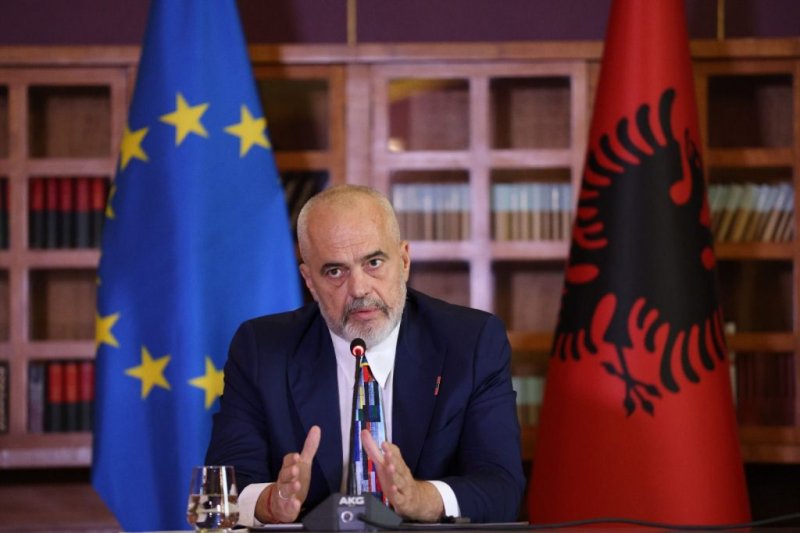
Prime Minister Edi Rama said on Wednesday that inspections of businesses will be subject to the “Besa Test” (a government initiative launched after the protests), which provides for a warning for routine inspections, the use of fines only as a last resort, and the surveillance of inspectors through body cameras.
According to the Prime Minister, inspections should focus on correcting and implementing standards, rather than immediately detecting violations.
“The inspector does not come to the door of a business at a crime scene, but as the state that notifies, supervises, and helps you correct yourself. Our goal is not to catch subjects in error, but to help them improve in implementing the law and meeting the standards that are our common interest,” he said.
Another element of the presented model is related to the way administrative measures are imposed. Rama said that a fine on a business should be used as a last resort and not as the inspector's first reaction.
“Second, a fine on a business is the last weapon, not the first, never a blackmail sword on the entrepreneur's neck to then find another way to avoid the fine,” the Prime Minister said.
Rama also said that businesses will have the right to directly denounce cases when an inspectorate appears without warning for a routine inspection.
“Third, whoever receives an inspection without warning for a routine inspection by any inspectorate must immediately denounce it to the Inspector General,” Rama said.
According to him, reporting such a case will be treated as a right of the inspected entity. “This is not a complaint, but a right, and we can only establish this right together, the government and the business community,” he said.
The announced changes also include body cameras and uniforms for inspectors. Rama said that soon every inspector who appears before a taxpayer on behalf of the state will have to be identifiable and monitored while performing his duty.