
EUR 120.5M for Durres-Rrogozhina Railway Upgrade
The Minister of Finance, Petrit Malaj, said on Thursday that the project for the modernization of the Durres-Rrogozhina railway line will be backed by two agreements (loans and a grant).
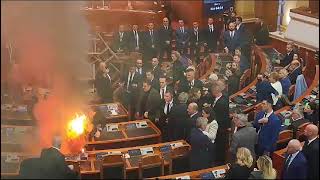
He presented the two agreements in the Parliament. The Durres-Rrogozhina railway line project marks the first phase of the operation of Railway Corridor VIII.
Malaj described these agreements as an important package of strategic investments aimed at the modernization of the railway infrastructure in the country.
According to the minister, the project has a total value of Euro 120.5 million, secured through cooperation with international financial institutions and the European Union: Euro 30 million loan from the EBRD; Euro 30 million loan from the European Investment Bank, and Euro 60.5 million grant from the EU through the WBIF.
Malaj stressed that this is a strategic investment that guarantees national and regional connectivity, as well as Albania’s integration into the Trans-European Transport Network (TEN-T).
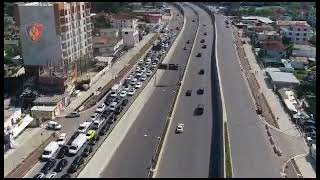
“The 34-kilometer Durres-Rrogozhina segment will be transformed into a modern railway line, with EU standards and with capacity for higher speeds, strengthening the connection between the port of Durres and industrial areas, as well as integrating with the Durres-Tirana line and TIA Airport,” he said.
He also underlined that Railway Corridor VIII constitutes one of the most important segments of European mobility.
“It connects the Adriatic coast with the Black Sea, through Albania, North Macedonia, and Bulgaria, creating an efficient alternative route for international transport of goods and passengers, with a direct impact on increasing the competitiveness of our economies,” the minister said during his speech in the Assembly.
Malaj noted that the project is expected to bring direct economic impact, enabling the circulation of about 170 thousand passengers and 480 thousand tons of goods per year, reducing transportation costs, creating new jobs, and increasing tourism in the surrounding areas.
The Minister emphasized that EU grants reduce the effective cost of financing, causing the real interest rate to result in around -3.4%, while cooperation with international partners guarantees high technical and managerial standards.
At the end of the session, the MPs voted in favor of the draft laws, described by Minister Malaj as essential for the integration processes and sustainable development of the country.