
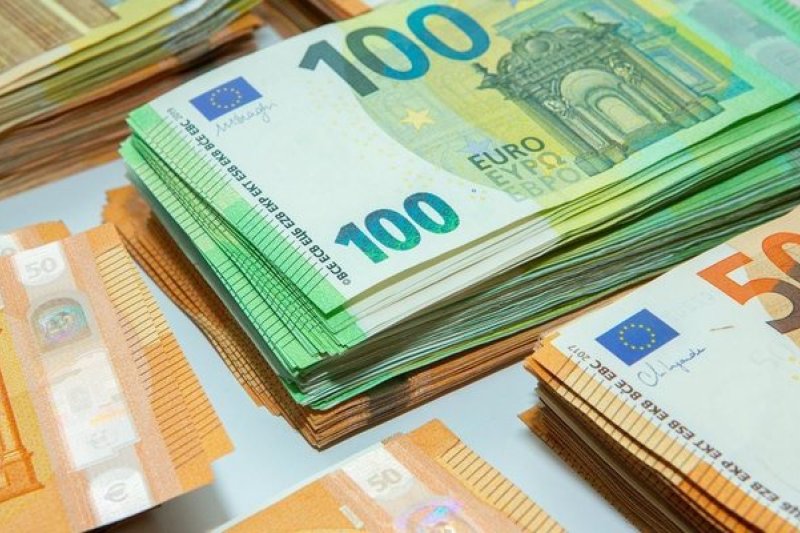
Euro to New Record Low with Tourism Off- Season
The euro is once again approaching an all-time low in the domestic market, continuing its decline into November, even though the peak tourist season ended long ago.
According to the official exchange rate set by the Bank of Albania, one euro was traded on Wednesday, November 11, at Lek 90.72 - a decrease of 0.03 lek compared to the previous day.
This marks one of the lowest historical levels for the common currency, sitting just 0.08 lek away from the record low of Lek 90.64, which was recorded on October 22 of this year, Monitor reported.
The decline is significant when compared to 2016, the year that marked the beginning of a long-term strengthening cycle for the lek. According to data from the Bank of Albania, the euro reached Lek 139.48 on January 18, 2016 - its highest point that year. At Wednesday’s exchange rate, the European currency has lost Lek 48.76, or nearly 35% of its value against the lek.
For years, official institutions have attributed the strengthening of the lek primarily to the growth of tourism, the influx of foreign investment, and improvements in the economy's fundamental factors. However, the story behind the decline of the Euro predates the tourism boom, and not all developments can be easily explained by official indicators.
Balance of payments data - published by the Bank of Albania and tracking the inflow and outflow of foreign currency from sources such as remittances, tourism, and foreign trade - show that between 2016 and 2022 (a period preceding the current tourism boom), the current account deficit worsened, even as the Euro continued to lose value. This deterioration was driven primarily by the trade deficit, as the country became increasingly dependent on imports, while exports suffered due to the Euro’s decline. In 2022, net outflows of foreign currency reached approximately Euro 1.1 billion - an increase of 37% compared to 2016 - yet the European currency had depreciated by about 13% over the same period.
Typically, a worsening of the external deficit would exert pressure for the domestic currency to weaken, rather than strengthen. In Albania, however, the opposite occurred. The decline of the Euro appears to have had a stronger correlation with the boom in construction permits than with the number of tourists - at least up until 2024, for which precise data on permits is available. According to INSTAT, the total area covered by construction permits reached record levels of 2.1–2.7 million square meters annually during the 2021–2024 period. Meanwhile, the Euro continued to depreciate, falling from an average of Lek 137.4 in 2016 to Lek 119 in 2022, and further to Lek 100.7 in 2024.
At the same time, the improvement in the balance of payments driven by tourism inflows only became apparent starting in 2023, when the current account deficit narrowed to Euro 374 million. In 2024, this deficit widened again, reaching Euro 610 million; yet, the Euro lost another 8% of its value against the Lek. It was not until 2025 - when the current account deficit shrank to 178 million euros - that tourism inflows emerged as a more significant factor supporting the strengthening of the domestic currency. Ten years after the decline began, the question remains: how much of this trend can be explained by tourism and real economic factors, and how much by currency flows that are not fully reflected in official statistics?