
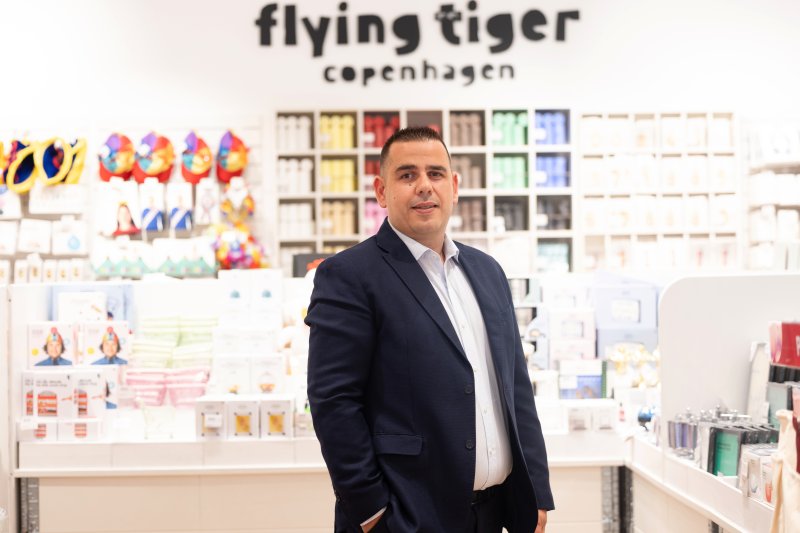
Flying Tiger Copenhagen Plans Further Growth in the Western Balkans
Interview with Silvio Qyqja
International Managing Director for Western Balkans
Flying Tiger Copenhagen entered Albania in October 2025 and now operates in four markets across the region. In this interview, Silvio Qyqja, International Managing Director for Western Balkans, discusses the brand’s reception, investment in local teams and plans for further European expansion.
1. Flying Tiger Copenhagen entered the Albanian market in October 2025 as part of the company’s expansion strategy. What were the main factors that made Albania and the wider region attractive markets for investment, and how do you assess the business’s performance so far?
Albania and the wider region offer significant growth potential, supported by a relatively young consumer base that is open to international brands and increasingly interested in products that combine quality, design and affordability.
That made Flying Tiger Copenhagen a natural fit for the market. We offer a broad range of products shaped by Danish design, functionality and creativity, while keeping prices accessible to a wide customer base.
Our regional development also benefits from the experience and capabilities of BALFIN Group, one of the region’s leading investment groups. This gives us a strong foundation on which to build a sustainable, long-term presence in the markets where we operate.
We are pleased with our progress in Albania. The way consumers have welcomed the brand and the interest they have shown are encouraging and have strengthened our confidence in the market. Our expansion beyond Tirana reflects the long-term potential we see in Albania.
2. Flying Tiger Copenhagen is known for combining Danish design, functionality and affordable prices. How has this concept been received by Albanian consumers, and how does it fit shopping habits and lifestyles across the region?
One of Flying Tiger Copenhagen’s strengths is that its concept, although distinctly Danish, is easy to understand and adapts well to different markets.
In Albania and across the region, family, home life, gift-giving and time spent together are especially important. Much of our range connects directly with these moments, from products for the home and children to creative items, party supplies, gifts and activities to enjoy with family and friends.
Local consumers have also responded well to our approach to design. Even a relatively simple product can include a creative, functional or unexpected detail. This adds value to the shopping experience and reflects our philosophy.
3. Expansion into new markets is not only about opening stores; it also requires a sustainable operational and organisational structure. How are you developing the company’s presence, and what role do investments in local teams and capabilities play in this strategy?
For us, expansion is about more than store count. Sustainable growth depends on building the structures, processes and teams needed to support the business over the long term.
Flying Tiger Copenhagen currently operates in four markets, and our plan is to be present in six by the end of 2027. Reaching that goal means investing in our store network, the wider organisation, local teams and the capabilities needed to develop the business in each market.
We need teams that know their local markets, understand their customers and can also uphold the standards and culture of an international brand such as Flying Tiger Copenhagen.
Operating across several markets also allows us to share experience, improve our processes and build an organisation capable of supporting further expansion.
4. After almost a year of operations in Albania, what are the main lessons you have learned from the market? Has anything surprised you about consumer behaviour, product category performance or how the brand has been perceived?
One of our main lessons is how quickly Albanian consumers understood the Flying Tiger Copenhagen concept. The brand has appealed to a wide range of consumers, confirming that our products are not limited to a single category or age group.
We have seen demand for both functional everyday products and categories with a stronger creative, decorative or playful appeal. Seasonal collections and products linked to specific times of the year have also shown that Albanian consumers respond well to newness and to a product range that changes frequently.
Another positive sign is customers’ willingness to return to our stores. This matters because discovery is central to the concept: our stores should always offer a new reason to visit.
5. The retail sector is changing rapidly, influenced by digitalisation, shifts in consumer behaviour and growing attention to sustainability. How is Flying Tiger Copenhagen responding to these developments, and what do you see as the main strategic priorities for the coming years?
Consumer behaviour is changing, and the role of the physical store is changing with it. We believe stores will remain central to Flying Tiger Copenhagen because interaction with the products, their presentation and the sense of discovery are essential parts of the experience.
Digital channels extend our relationship with customers beyond the store visit. They help us present new products and collections, inspire customers and communicate more directly.
Sustainability is also becoming more important across retail. It influences how the industry approaches product development, materials, packaging and operations.
In the markets where we operate and those we plan to enter, our priorities are to expand carefully, strengthen the brand, keep improving the customer experience and build the capabilities required for sustainable growth.
6. Looking ahead, what is your vision for Flying Tiger Copenhagen’s development over the coming years? How do you see the network expanding in your current markets, and what opportunities do you see for entering new European markets?
Our ambition is to build a strong, long-term presence in our existing markets while continuing to expand into new European markets.
We currently operate in four markets and aim to be present in six by the end of 2027. At the same time, we are exploring opportunities in three European Union markets. This gives our development a broader European outlook beyond the region where we began operations.
Expanding the store network will remain an important part of our strategy, but each new location must be supported by sound operations, the right teams and a strong understanding of the local market.
Over the coming years, we will continue to invest in our store network, team development, the brand and the customer experience. Our long-term goal is to build a sustainable platform for growth while preserving what makes the concept distinctive: design, creativity, affordability and the joy of discovering something new.