
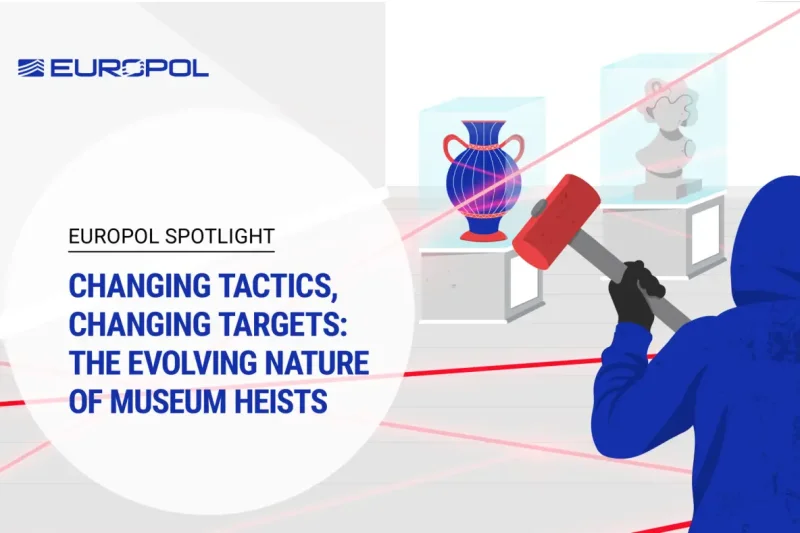
Museum Heists Turn Violent: New Europol Report on Cultural Pproperty Theft Tactics
Europol published a spotlight report today titled Changing tactics, changing targets: the evolving nature of museum heists, which reveals a shift in the methods and targets of museum thefts across Europe. The report highlights a concerning rise in violent and forceful tactics, alongside a growing focus on high-value items such as precious metals, gemstones, and culturally significant artefacts.
The spotlight features some key findings:
- Increasing violence: Museum thefts are becoming more aggressive, with offenders using tools like sledgehammers, explosives, and firearms to breach premises and intimidate staff.
- Targeted high-value items: Thieves are increasingly focusing on precious metals, gemstones, and culturally significant artefacts, driven by high market demand and ease of illicit resale.
- Emerging criminal profiles: The report suggests the involvement of new criminal actors, including ad-hoc groups recruited via social media, deviating from traditional, non-violent cultural property traffickers.
- Cross-market opportunities: Some offenders appear to be opportunists from other criminal sectors, drawn by the low-risk, high-profit potential of museum heists.
To underline these findings, the report features notable cases such as the Dacian artefacts theft (Netherlands, 2025), the Louvre heist (France, 2025), and the Cognacq-Jay Museum attack (France, 2024). The respective national investigations have been supported by the property crime experts working in Europol’s European Serious and Organised Crime Centre (ESOCC). By offering operational, analytical, and coordination support to investigators in EU Member States, they play an important part in the fight against the illegal trade in cultural goods.