
'Albania’s Vote Surprised Us'

“We firmly believe that the true path to peace lies in achieving the two-state solution, with East Jerusalem as the capital of the State of Palestine. As for Gaza’s future, if the peace process is achieved, Hamas will not govern Gaza. We seek national unity, where all factions agree to lay down their weapons in favor of establishing a demilitarized state under international law”.
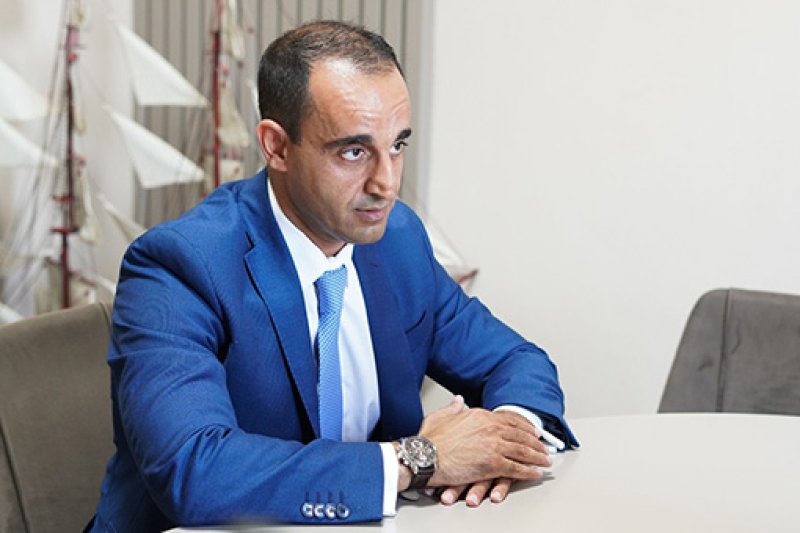
This is the stance of the new Ambassador of the State of Palestine to Albania, Mr. Sami Mhanna, in this interview for the Albanian Daily News. Among the topics discussed, are the recent wave of recognitions of the State of Palestine and the Israeli reaction, the situation in Gaza and the West Bank, his remarks about the Albanian diplomatic positioning in this conflict etc.
Originally from Gaza, which he left early because of the political situation, Ambassador Mhanna started his Albanian tenure on May 5, 2025. He has earned a double master's degree in Security and Diplomacy and Terrorism and Organized Crime from the University of Belgrade in 2019.
His previous experience includes working in the Embassy of Palestine in Serbia since 2006, and then enrolling in diplomacy in 2010.
While expressing his firm stance against the killing of civilians on both sides, and his belief that only dialogue and peaceful solutions must resolve conflicts, Ambassador Mhanna notes that the events of October 7th, 2023 - when Hamas armed militia crossed the border of Israel with Gaza and killed around 1200 people, mostly civilian, while abducting some 250 others - would not have taken place if his people were living in freedom and prosperity.
“The unbearable pressure was created by Israel itself. The genocide in Gaza has further exposed (Israeli PM) Netanyahu’s true intentions. His war is not about ending Hamas, as he claims, but about carrying out ethnic cleansing against the Palestinian people,” says Ambassador Mhanna in this interview.
- Your Excellency, thank you for granting this interview to Albanian Daily News. First of all, please accept my condolences for the thousands of Palestinian civilians killed in the Gaza conflict. I would like your comment on the recent recognition of the State of Palestine by the UK, Canada, Australia, Portugal, and subsequently by other countries at the United Nations. How do you view this development while the situation in Gaza remains catastrophic?
- I am honored to give an interview for the Albanian Daily News. Thank you for the opportunity to share insights on the latest developments in Palestine, particularly regarding the courageous decisions made by several countries, including Australia, Canada, Portugal, and especially the United Kingdom, to recognize the State of Palestine. The decision of the UK carries a special weight, given its historical role in supporting the Balfour Declaration in 1917. These recognitions represent a brave decision to recognize Palestinian rights in establishing their own state and self-determination, and we expect very soon to reach 159 countries that fully recognize Palestine, which is a significant achievement for our people.
This recognition is not a gift, nor a demand; it is a legal and historical right.
For decades, Palestinians have endured a brutal system of occupation, forced displacement, and tremendous suffering. Recognition should have taken place long ago. It enables us to pursue our right to self-determination under international law, to establish our own independent state, and hold Israel accountable for its crimes in the International Criminal Court (ICC) and the International Court of Justice (ICJ)
At the same time, the situation in Gaza has become unbearable. Our people are being subjected to starvation, forced displacement, and mass killings. We are facing a genocide. Children are fainting from hunger, mothers are unable to treat their sick children, and families are dying from lack of food, medicine, and clean water. The infrastructure has been almost destroyed. And yet it is still the 21st century.
- Mr. Ambassador, to quote the recent Portuguese stance on the issue: “The two-state solution is the only path to a just and lasting peace; a ceasefire is urgent, and Hamas cannot have any form of control in Gaza or outside it.” In your opinion, what would peace look like after everything that has happened?
- We firmly believe that the true path to peace lies in achieving the two-state solution, with East Jerusalem as the capital of the State of Palestine. This vision, first proposed by the late King of Saudi Arabia in 2002, it remains the wisest and most viable solution allowing both nations to live in peace and mutual respect for sovereignty.
But the real question is: Is Prime Minister Netanyahu’s administration truly willing to seek peace? His actions reveal otherwise.
His government has systematically undermined every effort toward peace. For example, the ongoing annexation of the West Bank through the expansion of illegal settlements, most notably the E1 project, and the construction of over 13,000 housing units in Jerusalem, leave no space for the establishment of a Palestinian state.
Furthermore, Israel continues to withhold more than 2 billion dollars of Palestinian clearance revenues, deliberately attempting to undermine the role of the Palestinian Authority’s ability to pay salaries and fulfill its responsibilities.
In the West Bank, children, women, and elderly people are being arbitrarily arrested, while Palestinian prisoners endure harsh conditions, both physically and mentally.
The genocide in Gaza has further exposed Netanyahu’s true intentions. His war is not about ending Hamas, as he claims, but about carrying out ethnic cleansing against the Palestinian people. These are blatant crimes against humanity and clear violations of international law. In response, several responsible countries have taken measures, including suspending the sale of arms to Israel, because such weapons are being used against innocent civilians who only seek a normal life.
As for Gaza’s future, if the peace process is achieved, Hamas will not govern Gaza. We seek national unity, where all factions agree to lay down their weapons in favor of establishing a demilitarized state under international law.
- Almost two years have passed since the start of the war, which in essence is Israel’s ferocious retaliation following a brutal attack by the Hamas fighters. I would like your assessment on this: Was Hamas’s act a miscalculation, or did the organization’s leaders not anticipate such a reaction?
- If our people were living in freedom and prosperity, the events of October 7th would not have taken place. The unbearable pressure was created by Israel itself. We are firmly against the killing of civilians on both sides. I strongly believe in dialogue and peaceful solutions to resolve conflicts, something that Prime Minister Netanyahu continues to avoid, not with arms and weapons.
The recent violence carried out by Hamas must be seen in the context of decades of suffering. Palestinians have been enduring immense pain for a very long time.
The suffocating blockade on Gaza and the bad situation in the West Bank forced such a reaction. We have been living under a brutal occupation, facing inhumane treatment and unbearable conditions for 77 years.
If we were not under occupation, if we could live a normal life with dignity and rights, October 7th would never have happened, and Hamas as a movement would not have existed.
- Palestinian President Mahmoud Abbas has appointed a new Prime Minister, Mr. Mohammad Mustafa. How has this move been received among Palestinians?
- I believe the appointment of Mr. Mustafa as Prime Minister is a wise decision. He is a dedicated and hardworking leader, and his main agenda focuses on three key priorities:
First, strengthening international cooperation with the global community, including Arab countries and the European Union, the main goal is to put pressure on Israel to end the genocide and to ensure that humanitarian aid and assistance can reach Gaza without complications.
Second, working on internal reform within Palestinian institutions and on the developments across several sectors that can better serve our people and strengthen our national resilience.
Third, recovering the withheld clearance revenues, nearly 2 billion dollars retained by the Israeli Minister of Finance, could address many of the financial challenges that our institutions are facing and provide urgent support for Palestinian families who depend on these funds.
- Israeli leaders have recently declared that there will never be a Palestinian state, and threatened to annex parts of the West Bank, while the UAE has stated that annexation is a red line that would end the prospect of regional integration. I would like your assessment of the Arab countries’ position during this conflict.
- We deeply appreciate the unwavering support of the Arab countries for Palestine during these difficult times, indeed, through the humanitarian aid that was sent to Gaza, and through their political condemnations of Israel’s war crimes and the ethnic cleansing against the Palestinian people.
We extend our special thanks to Egypt and Jordan for their firm stance in rejecting and preventing the forced displacement of two million Gazans into their territories. This was a brave and principled action by two friendly nations.
We also value the significant role of the Kingdom of Saudi Arabia, together with France, in convening an important conference in support of the two-state solution. This is a courageous step toward achieving a just and lasting peace based on international law.
- How do you assess Albania’s position on this issue? Our country recently abstained from voting on the UN resolution supporting the two-state solution…
- Unfortunately, we have observed some backward steps in Albania’s foreign policy, particularly regarding its voting at the United Nations and its stance in the international arena.
We have not seen any clear condemnation from the Ministry of Foreign Affairs concerning the genocide and ethnic cleansing currently taking place in Gaza.
This is surprising to us, especially since Albania was among the first countries to recognize the State of Palestine in 1988, and given that many Palestinians from our diaspora live here in comfort and harmony.
I believe the best path forward would be for the Albanian government to take stronger and more serious steps against Prime Minister Netanyahu’s policies and to condemn Israel’s actions in both the West Bank and Gaza, in line with international law.
Even Israel’s closest allies are now taking firm measures, imposing sanctions, issuing condemnations, and applying pressure against their policies.
Albania, as a nation that has endured its own difficult history and struggles through wars, understands perfectly the value of freedom and the right to live in peace.
My mission here in Albania is to strengthen relations with both the government and the great people of this country. I am here to build bridges of peace and prosperity between us, and I remain optimistic about the future of our relations. /ADN