Albania, Sharpest Decline in Production
Industry and its development are a necessary step to lead a country towards prosperity. But instead of taking the sector to another level of the value chain, Albania is going in the opposite direction by destroying the few industries it has, local business news provider Monitor said in an article on Friday.
Official Eurostat data show that industrial production in Albania has declined continuously since 2021, placing the country at the bottom of Europe in this sector's performance during 2021-2025.
The industrial production index in Albania dropped to 84.7 points in 2025, from a base of 100 points in 2021. Industrial production in 2025 was 15.3% lower in volume than four years earlier.
Of the 35 European countries included in the data, only Ukraine, whose economy continues to be directly affected by the war, had a weaker result. In Ukraine, industrial production in 2025 was 30.4% below the 2021 level.
In Albania, the index initially increased to 102.9 points in 2022, but then began a rapid contraction, to 94 points in 2023, to 87 points in 2024 and to 84.7 points in 2025. Compared to 2022 alone, when the highest level of the period was reached, industrial production has decreased by about 17.7%.
Albania's performance is also significantly weaker than that of other Balkan countries. In 2025, industrial production in Serbia was 8.8% above the 2021 level, while in Turkey the growth reached 9.9%. North Macedonia was only 1.4% below the baseline, while Montenegro recorded a 6.5% decline. In Bosnia and Herzegovina, industrial production was 8.6% lower than in 2021, but even this contraction was significantly smaller than Albania’s 15.3% decline.
Greece and Croatia, two economies in the region where tourism plays a significant role, also managed to expand industrial activity. Greece recorded a 12.7% increase compared to 2021, while Croatia recorded a 2.3% increase.
Of the 35 economies included, 19 had higher industrial production in 2025 than in 2021, while 16 recorded a decline.
The largest increase was recorded in Denmark, where industrial production was 28.8% above the 2021 level. It was followed by Ireland with 22.4%, Malta with 16.6%, Greece with 12.7%, Poland with 12.5% ??and Cyprus with 12.1%.
European industry has faced rising energy costs, weakening external demand, stronger competition from China, and problems in the automotive sector in recent years. These shocks have particularly affected economies with heavy and energy-intensive industries.
In Albania, the weakening of industry is related to the combination of problems in the extractive industry, energy production, and export-oriented manufacturing. The strengthening of the lek has reduced the revenues of companies selling in euros, while wage and production costs have increased. At the same time, Albanian companies are facing stronger competition from lower-cost producers in Asia.
The European Commission estimates that Albania’s manufacturing exports have been hit by the appreciation of the lek, rising labor costs and external competition.
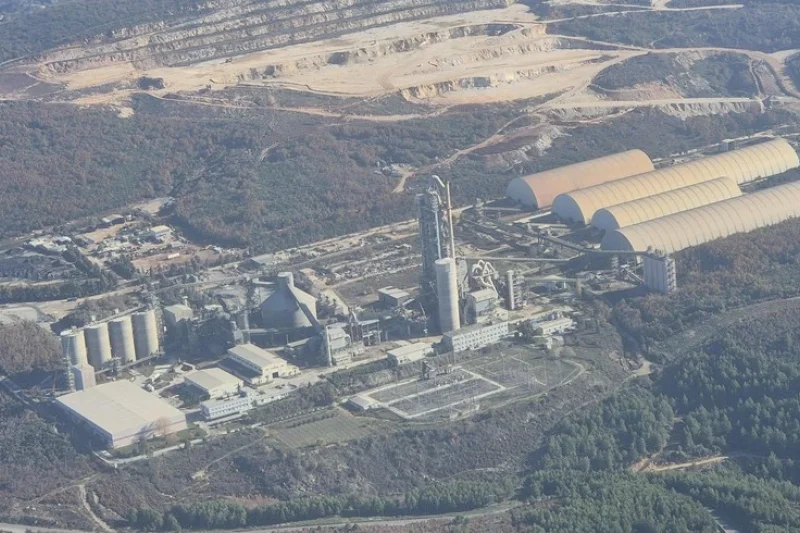
The structure of Albania’s industry remains concentrated in relatively low-value-added sectors, such as textiles and footwear, as well as in products related to raw materials, including oil, metals, cement and energy. This makes production more sensitive to fluctuations in international prices, exchange rates and weather conditions that affect hydropower production.
Albania’s economic growth in recent years has relied more on tourism, construction and real estate. As a result, the economic expansion has not been accompanied by a recovery in industrial production.