Competition Authority’s Recommendations on Fuel Price Ignored in 2015

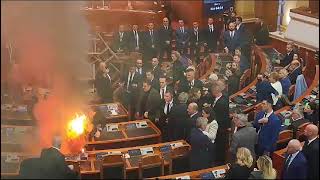
Following the outbreak of civil protests, the Albanian government decided to set up a special structure to monitor fuel prices. According to preliminary information provided by the Prime Minister and the Minister of Energy, this Board will practically set under administration the prices of fuel trading in the country.
Part of the new market adjustments will also be the daily basis transparency of wholesale prices. This government intervention in the fuel market came after prices marked a record and unprecedented increase, reaching in some cases in the range of ALL 300 per liter.
In fact, issues related to the functioning of competition in the import market and most fuels have often made it the subject of monitoring and investigation by the Competition Authority. In 2015, the in-depth investigation identified problems related to the high degree of market concentration and vertical integration of enterprises in the market, which means that the same entrepreneurs are present at almost all levels of the market, from imports, storage, wholesale and up to retail.
Based on the identified problems, the Competition Authority drafted some recommendations for the Albanian government. One of the main recommendations was to establish the necessary legal basis and administrative infrastructure for a unit of hydrocarbon price transparency, in which companies operating in the market of production, import and wholesale of fuels must report in real-time within 5-15 minutes the relevant unit and the Competition Authority for any change in the wholesale price. According to the Competition Authority, this recommendation was based on the practices followed by the institutions guaranteeing competition in developed countries and mainly of the Competition Authority in Germany.
However, the recommendations given in 2015 by the Competition Authority were completely ignored by the Albanian Government and mainly the line ministry, the Ministry of Energy. The Minister of Energy at the time even mocked the recommendations, saying that they entered into issues that did not belong to the Competition Authority.
In fact, the transparency of wholesale prices for a vital market, such as that of fuel, would help to identify potential abusive behavior, even given the fact that wholesale fuel has historically had an oligopoly structure and relatively large scale high concentration. This is mainly related to the financial, infrastructural and logistical barriers that make it difficult for new competitors to enter the market. Moreover, the Competition Authority's 2015 investigation found that importing companies often buy fuel consignments abroad jointly, an element that could potentially increase the likelihood of coordinated pricing behavior.
The lack of government willingness to establish order and transparency in a market where competition, even for objective reasons, is limited has created a cost to consumers. Only at the moment when the situation has become serious and when it has been put under the pressure of civil protests, the government has decided to react with drastic measures, justified even with the emergency situation caused by the war in Ukraine. However, the example of the fuel market shows that addressing the problems of the markets must be done in normal times, before the problems of their functioning produce a serious economic and social bill for the society.
(Source: Monitor)