A Comparison of Two Problematic Projects
1. Belgrade
-Kushner
In December 2025, Affinity Partners, the firm of Jared Kushner (son-in-law of the U.S. President), announced its withdrawal from the Belgrade Centrum project, which involved building a complex of hotels and shopping centers in the center of Belgrade.
Affinity Partners explained the withdrawal by stating that the project should not be divisive but unifying, and that they were acting out of respect for the people of Serbia and Belgrade.
- Protests
In March 2025, almost continuous protests began in Belgrade against the project. One motivation was wounded nationalist pride: the project was being built on the site of the NATO bombed General Staff building of the Yugoslav Army in 1999 and still in ruins. With the slogan “We won’t give the Americans the land for a penny today which they destroyed yesterday,” former military personnel and nationalists - who usually do not oppose the Vu?i? regime - were mobilized. Another motivation was the illegality and corruption related to state property, similar to the Belgrade Waterfront, another construction project launched 9 years earlier.
- Criminal Investigation
Serbia’s Anti-Corruption Prosecution investigated the sudden and rapid changes to laws and tailor-made regulations for Belgrade Centrum and found them abusive, and in some cases even unconstitutional. Subsequently, several officials were arrested and Minister of Culture Nikola Selakovic was charged. This moment was the final straw; the next day Affinity Partners announced its withdrawal from the project.
2. Zvërnec
- Legal Standards
A few years ago, the Rama government changed the law on protected natural areas, weakening them compared to international environmental standards and deviating from EU legislation. It has also repeatedly extended the law on strategic investors, which should normally have expired in 2018. These laws have been criticized by the parliamentary opposition, experts, and remain permanent concerns in the European Commission’s and European Parliament’s periodic reports on Albania. The Zvërnec project is based precisely on these problematic laws.
- The “Owners” of the Land
While in Belgrade the project was developed on state land, in Zvërnec the landowners are private but of a special kind. On their list we find a well-known figure famous for the massive seizure of land through all kinds of tricks involving land registry offices (ZRPP), notaries, and courts. Alongside him is his own lawyer, who was sentenced to 10 years in prison for falsifying ownership documents on this very land in favor of his client (!). Then there is an appeals court judge (later removed through vetting) who acquitted the lawyer (the criminal case was sent back for retrial by the Supreme Court). Others with old and current criminal cases follow.
We should also add owners with Law 7501 titles and former owners with historical titles.
Just the above would deter any serious international investor—not only because they risk losing millions, but also because they would play with their reputation. If the criminal investigation by SPAK, which began verification procedures last year, confirms the above findings reported by investigative media, it is certain that Affinity Partners would issue a press release similar to the one in Belgrade in December. Perhaps they might do so even sooner. The same applies to the others, including the brothers from Qatar.
Prime Minister Rama says these are private contracts. But Kushner and his partners are especially prominent private actors, and Rama—who has met them several times and certainly knew about the ownership mess in Zvërnec—bears responsibility for allowing them into this legal and moral swamp
- Protests
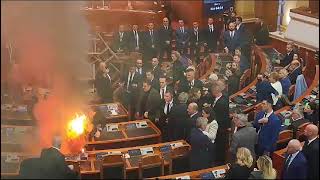
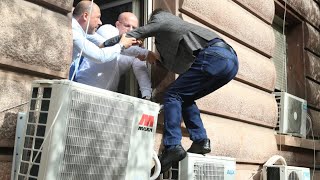
Since the beginning of the week, a large number of protesters, mostly young people, have been gathering on the boulevard in front of the Prime Minister’s Office. They demand everything from the government’s resignation to the annulment of amendments to the laws on protected natural areas and strategic investors, as well as the suspension of the Zvërnec Project. The protest is without known leadership, ideologically amorphous, with fanciful tactics but also partly with idiotic messages on some banners and in some speeches. However, the cause that brought them to the streets is legitimate, and the parliamentary opposition—despite unwelcome provocations from segments of the protest—needs to find differentiated ways to provide active support.
- International media attention
The issue of the Zvërnec Project and the protests against it have gained traction and are being massively covered by American and European media as well as on social networks. This is happening partly due to environmental sensitivity. But the real main reason is the legacy media’s hostility in the U.S. and Europe toward President Trump. Rama’s attempt to change the narrative is failing, as shown by his disastrous CNN interview yesterday in which he lost it
The involvement of son-in-law Kushner and daughter Ivanka in a problematic project is an ideal opportunity to attack President Trump directly and indirectly, especially with the congressional mid-term elections later this year in the background. Following the friendly media activity Democrat congressmen in opposition are preparing investigative initiatives against Kushner and the Trump family.
So let us have no illusions: the Zvërnec project and Albania are being used in the political battle across the ocean. The same thing happened across the Adriatic with the Italian left, which was pro-Edi Rama until he made an agreement with PM Meloni on migrant camps. Then the criticisms began, along with investigations by some Italian left-leaning media into Rama’s links with narco-cartels.
Whatever the motive, this kind of media coverage is positive for Albania because it brings to light bitter truths that were covered up by propaganda, ignorance, and lack of interest.
Meanwhile, Jared Kushner will find his own way out of this impasse, and President Trump and the American Republican Party will take care of their own challenges. / Syri