Albania, Well Positioned for Entering the EU
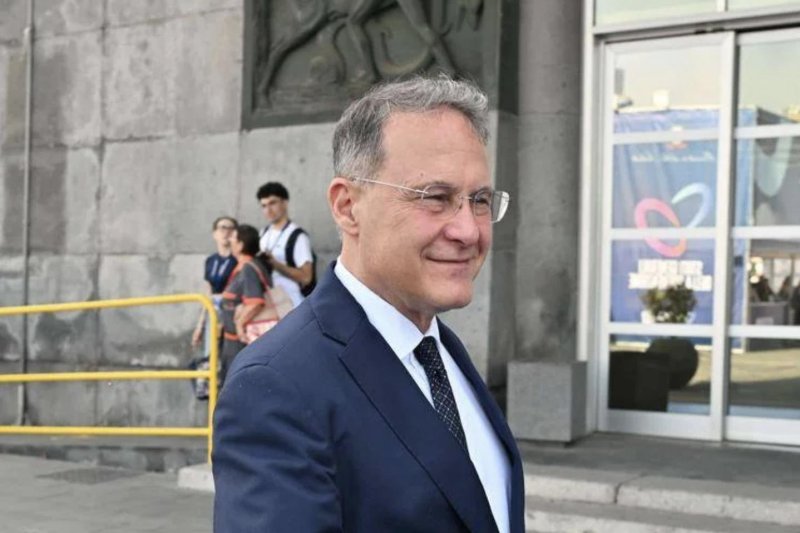
-Mr. Deputy Minister Cirielli, welcome to Tirana. How do you assess the current state of bilateral relations between Italy and Albania and what are the main priorities for future cooperation?
-Italy and Albania enjoy an excellent partnership based on deep historical ties, geographic proximity and strong people-to-people connections. The first Italy-Albania Intergovernmental Summit, held in Rome in Novembre 2025, marked a significant step forward with the signing of 16 cooperation agreements. Concrete progress has already been achieved, with an overall bilateral trade volume of roughly 3.2 billion euros in 2025. Italy remains Albania’s leading trading partner while Italian companies continue to be among the largest foreign investors in the country.
We firmly believe that Albania’s progress toward membership in the European Union contributes to the stability, prosperity and security of the entire Western Balkans region. Not by chance, my last trip to Tirana was in 2023, to represent Italy in the Foreign Ministers' Meeting of the Berlin Process - the main format of dialogue between the EU and the Western Balkans with a view to European integration. Looking ahead, our priorities include further strengthening trade and investment, enhancing cooperation on energy connectivity and renewable energy projects, deepening collaboration in the fight against organized crime, promoting educational and cultural exchanges between our two countries.
-In your opinion what should be the role of the International Cooperation in Albania?
-Albania is a country that is well positioned for entering in the European Union. In this sense, international cooperation should play a supporting role for all institutions, ensuring that Albania can achieve the acquis communautaire, reinforcing institutions while improving living conditions and economic opportunities for all citizens. International cooperation is a catalyst for the involvement of development banks, private and public sector leaders, research institutes, and universities. This is why Italy supports a portfolio of initiatives in Albania worth around 335 million euros among grants, loans and EU programmes. To this regard, the Italian Agency for Development Cooperation (AICS) is historically present in Tirana, also to coordinate cross-border projects, in line with the wider EU engagement towards the accession of Western Balkan countries.
-One of the distinctive strengths of MATHERNA (the joint initiative that aims to transform neonatal services and maternal care in Albania) is the structured clinical cooperation between Albanian healthcare institutions and the Italian centre of excellence, ASST Fatebenefratelli Sacco and Regione Lombardia. How would you assess the impact of these activities so far in strengthening clinical capacity and improving the quality of maternal and neonatal care?
-Promoting healthcare is one of Italy’s priorities, and this important initiative is already having a tangible impact on clinical practice and professional collaboration. The valuable work of an Italian leading-edge healthcare institution such as ASST Fatebenefratelli Sacco is strengthening decision-making capacities, improving protocols, and fostering continuous learning among healthcare professionals in maternal and neonatal care knowledge, promoting knowledge exchange between Italian and Albanian specialists in neonatology and obstetrics. Overall, these combined activities are significantly enhancing clinical standards and consolidating institutional cooperation between Albania and Italy.
-What is the added value of Civil Society Organizations (CSOs) in the design and implementation of International Cooperation projects in Albania?
-Civil Society Organizations are a key component of the Italian development cooperation strategy: they bring a distinctive added value that neither public institutions nor private actors can fully replicate. This is true also in Albania. CSOs are trusted intermediaries, facilitating dialogue between citizens and institutions. Italian CSOs have built a dense network of partnerships with local organizations, municipalities, and Albanian institutions. Many of them have been active in Albania since the early 1990s in a wide range of sectors: from social services to rural development, from education to environmental protection, accompanying the country through its most critical transition phases, often acting as connectors between Italian and Albanian institutions, and contributing to the broader bilateral cooperation framework supported by AICS. / ADN