Price Hikes No Effect on Fuel Consumption
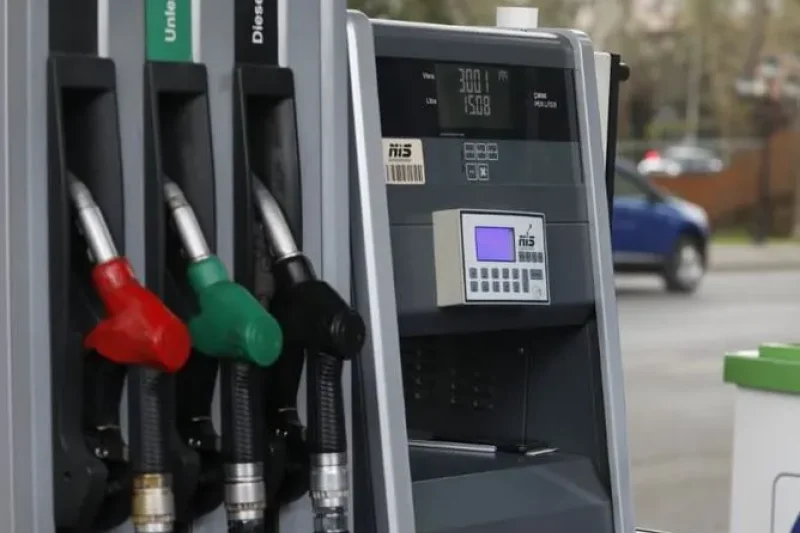
Although fuel prices in the country increased again in July, in line with the global trend, this does not seem to have affected the consumption of diesel and gasoline in the country, unlike previous months when a drop was observed.
Data published by the Ministry of Finance revealed that in July, fuel imports reached almost 76 thousand tons, with an increase of 6% compared to the same period a year earlier. This is the historical record of imports not only for July, but for all months, at least since 2000, when the Ministry of Finance began reporting the data.
Previously, the record was in August 2024, when fuel imports reached 74.3 thousand tons (see chart: Fuel imports, July and August, 2000-2026).
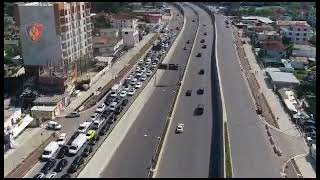
July and August historically mark the highest fuel consumption due to the increase in movements from the summer season. In recent years, the arrival of tourists who use rental cars has also had an impact. In July of this year, traffic was quite heavy in the south of the country, in the Durres area, and in Elbasan towards Pogradec and Korça.
For the 7 months, fuel imports reached around 410 thousand tons, with a decrease of 2% on an annual basis, influenced by the consumption drop in April and May, when the price increase also began.
Data for August 2026 have not yet been published, but market players claim that consumption has remained high, despite the strong price increase in the second half of the month. Consumers continue to be affected by the problem, they say, although some of them take the opportunity to fill up their cars abroad. If the supply were made within the country, consumption would be much higher, they say.
In July, the average price of oil was Lek 195 per liter, with the first week being Lek 182, then increasing to Lek 188, and in the second half it jumped from Lek 198 to Lek 206 per liter.
In August, the price was over Lek 210 for the entire period, becoming more expensive to Lek 219 in the last two weeks.
Albania has oil 30% more expensive than the region, due to the fiscal burden. If a simple structure for calculating the price of oil is applied to all countries in the region (base price + excise tax, and VAT is calculated on this amount), in Albania, in addition to the excise tax of 0.37 euros per liter and the 20% VAT, two other additional taxes are applied to the price of oil. The circulation tax (Lek 27 per liter) and the carbon tax (Lek 3 per liter). This makes the fiscal structure in Albania significantly heavier, constituting about 50% of the price, or Lek 100 per liter.
The government has so far gained the most from this situation, which has collected more VAT as a result of higher prices, while spending only Lek 37 million, when the price was several days above Lek 220 per liter in April, a level above which the 20% excise tax reduction was activated.