Seven Arrests in Brazil during crackdown on South America-Europe cocaine pipeline
Europol has supported law enforcement agencies from Italy and Brazil in dismantling a major drug trafficking and money laundering network linked to the Italian ‘Ndrangheta. The operation, code-named operation ‘EREDITÀ’, led to seven arrests and is the culmination of a multi-year investigation into large-scale cocaine trafficking and money laundering between South America and Europe. This success builds on previous Italian and Brazilian operations ‘SAMBA’ and ‘MAFIUSI’, which led to 28 arrests across both countries.
Seven arrests during coordinated action day
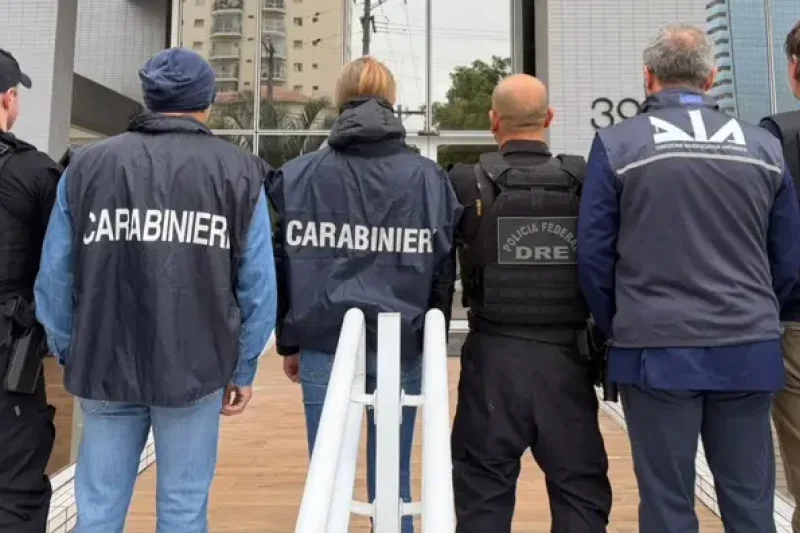
As a result of the investigation, Brazilian authorities with the operational support of Italian law enforcement and a Europol expert, launched synchronised operations culminating in an action day on 16 September 2026 in São Paulo, Brazil. As a result, seven persons of Italian and Brazilian nationality allegedly involved in drug trafficking and money laundering were arrested. During the action day, law enforcement officers searched five residential and two commercial premises linked to the criminal network. Furthermore, nine real estate properties, two companies and other assets have been seized, and multiple bank accounts have been frozen.
Law enforcement conducted house searches and seized criminal assets such as real estate, financial portfolios, and other illicitly accumulated wealth. Furthermore, physical and digital evidence was secured that will help investigators to further dismantle the structural links between South American suppliers and European criminal networks.
Cross-Atlantic criminal network
Operation EREDITÀ uncovered a sophisticated, industrial-scale drug trafficking pipeline moving multi-tonne quantities of cocaine from Brazil to Europe via commercial freight cargo. The targeted criminal network exploited strategic maritime infrastructure in Brazil, including major terminals, to conceal cocaine within legitimate shipments - such as ceramics, timber, sanitary ware, and food products - before transporting it across the Atlantic to primary European logistics hubs.
The criminal network was composed of members of the Italian ‘Ndrangheta as well as Brazilian nationals based in Brazil. Operating in seamless synergy, this network maintained deep, permanent connections between Italy and Brazil through family members and associates. It leveraged commercial freight shipping lanes to move multi-tonne cocaine shipments, while exploiting the European financial architecture to launder illicit proceeds.
The investigation also revealed the high level of sophistication employed by the transnational criminal organisation, such as the use of encrypted platforms with technological counterintelligence features. The suspects also relied on financial facilitators specialising in clandestine international value transfers, as well as mechanisms designed to conceal assets and launder proceeds derived from drug trafficking. Evidence indicates that a significant portion of the profits generated from cocaine sales in Europe was reinvested into new criminal operations, perpetuating a continuous cycle of financing cocaine shipments from South America to Europe.
Facing continuous law enforcement pressure, the network applied a succession process. Family members and associates assumed control of the cocaine imports from Brazil, preserving previously established ties with suppliers as well as logistical and financial operators. As a result, the criminal structure remained operational by reusing the same trafficking routes, financial mechanisms, and network of contacts developed over the years by Italian organised crime members arrested by the Brazilian authorities already in 2019.