The End of the Illusion of Permanence
Péter Magyar’s victory in Hungary marks a significant win for democracy and for Europe as a whole, as well as the end of a government that proudly defined itself as an “illiberal democracy.” In broader terms, it signals the dark twilight of a model of governance cloaked in ideology.
The populist cycle is temporary
Viktor Orbán’s defeat is a lesson for those who disregard liberal democracy, however fragile it may seem. Post-communist societies in Central and Eastern Europe, despite their specific characteristics, have not suffered from a lack of leaders, but from a lack of democratic institutions capable of ensuring oversight and accountability of power. Any slide toward authoritarianism or assault on democracy will, sooner or later, face an even stronger societal backlash.
Orbán repeatedly and unilaterally reshaped the electoral system to favor his party; he blurred the line between state and power by imposing full control over public administration, business, the media, and institutions considered independent; he co-opted, divided, and intimidated his opponents and rivals. Yet the model he built—appealing to many leaders with similar tendencies in our region—ultimately became his own political gravedigger.
For years, Hungarians were trapped between an increasingly authoritarian government and a fragmented opposition. Voter frustration deepened due to nepotism, widespread corruption, and the lack of tangible economic results. Channeling public resources to a narrow circle of individuals is an effective way to consolidate power, but it also fosters a system driven by private interests rather than the public good.
The key to Péter Magyar’s success was the creation of a broad-based patriotic political and social movement, putting an end to the illusion that illiberal regimes are destined to remain in power indefinitely. As it turned out, people grow weary of rulers—and of the “eternity” they seek to project. For citizens, by contrast, freedom and dignity are non-negotiable.
The alternative governing project
The elections in Hungary demonstrated that money spent on unchecked propaganda can produce the opposite effect. Hungarians rejected the propaganda of traditional media, most of which were either state-controlled or owned by oligarchs linked to those in power. The monopolization of the media message can suppress criticism and delay accountability only for a limited period.
Read also: A Smoke Screen
Magyar and his party had limited access to advertising spaces controlled by the government. As a result, he was forced to conduct his campaign primarily through social media and through a strong on-the-ground presence across every corner of the country. He avoided the issues Orbán chose to promote—global politics, the war in Ukraine, and relations with the United States and Russia. His messages were clear and focused on freeing the state from political capture. He presented a plan to improve people’s daily lives, with particular emphasis on the younger generation.
Political change came from within the very ranks of the former ruling establishment. From a former member of Orbán’s party, he turned into a determined whistleblower against the corruption of a system he had belonged to until just two years ago. Magyar focused on governance rather than ideology. He pledged to dismantle corruption and the system of impunity, strengthen the rule of law, introduce merit-based appointments instead of clientelist practices, and unlock frozen EU funds. A voter who once supported Orbán for border security and national sovereignty chose Magyar in this election without abandoning their political beliefs. In short, Orbán’s former supporters did not abandon their ideas—they abandoned their tolerance for corruption. Orbán did not lose the so-called ideological argument, but the trust to govern.
The restoration of democratic norms
The elections in Hungary serve as a reminder that, whether political priorities focus on the protection of family values, national sovereignty, or respect for gender identity and international cooperation, democracy remains the most effective system to safeguard them. Although Viktor Orbán argued that liberal democracy was coming to an end, the removal of checks and balances—at its very core—inevitably leads, over time, to the erosion of the governing system itself.
At the same time, these elections provide a roadmap for how rulers can be removed through the ballot box, even when elections are not fully fair, provided they are conducted with sufficient freedom for the outcome to reflect the will of the people. The fact that Hungary is a member state of the European Union played a decisive role in this regard. Hungarians’ desire to remain within the EU, combined with the freezing of EU funds due to democratic backsliding, acted as key pressures for the conduct of an electoral process meeting international standards.
At the same time, the elections in Hungary also highlight the limits democracy places on foreign policy. Through their vote, citizens corrected an unusual pro-Russian and anti-EU trajectory in a country still marked by the legacy of Russian influence and rebuilt with European funds.
Magyar secured a constitutional majority capable of rebuilding the democratic system from the ground up. This is an extraordinary responsibility that must not be wasted. The entrenched model of state capture is always ready to serve new masters, and dismantling it—rather than further exploiting it—is an act of political courage. Magyar has pledged that Orbán and his associates, whom he accuses of operating as an organized criminal group, will be held accountable. The process of dismantling authoritarianism and restoring democratic norms will take time, even as public expectations will need to be met swiftly.
The elections in Hungary mark a critical turning point. A starting point for dismantling a system built over years and restoring democratic norms. At the same time, Europe must better prepare to address similar cases in the future—beginning with the Western Balkans.
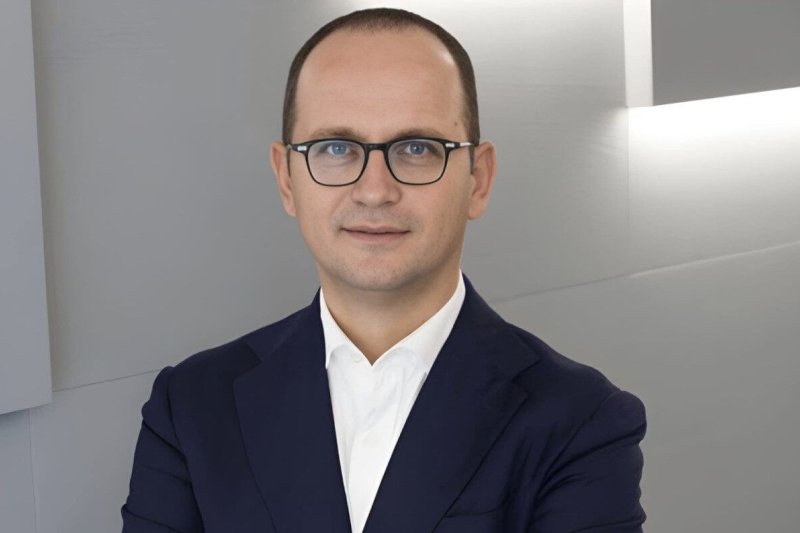
Ditmir Bushati, former Minister for Europe and Foreign Affairs, former deputy in the Parliament of Albania.