Albania Strengthens Its Resilience to Disasters
International Day for Disaster Risk Reduction
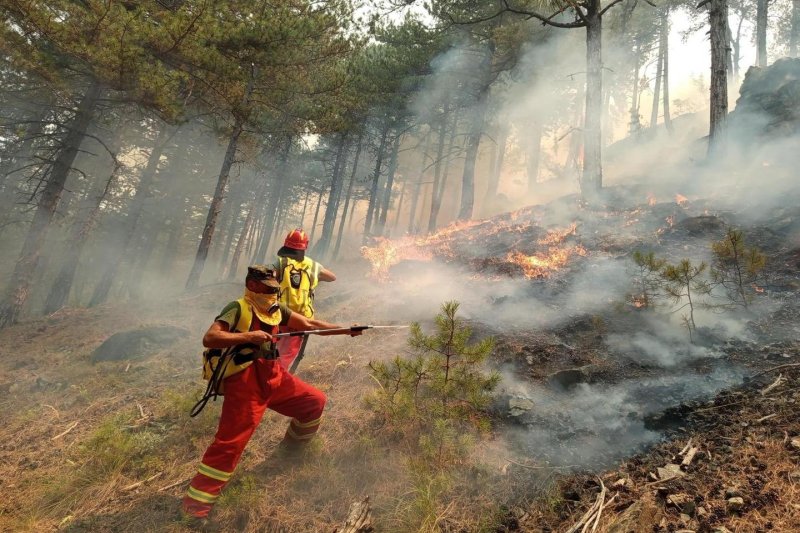
Every year is declared the hottest on record, and every year we ask what comes next. For Albania, disaster preparedness is no longer hypothetical. The country has already felt the consequences, from the devastating November 2019 earthquake to fires that destroy property, displace families, and terrify communities. The question is no longer whether disasters will strike, but whether we will be ready when they do.
Building Resilience in Shkodër
Few places illustrate this urgency more clearly than Shkodër, one of Albania's most hazard-exposed regions. As climate change intensifies extreme weather, knowing who acts, and how quickly, can mean the difference between a minor emergency and a catastrophe.
The Resilience Strengthening in Albania Project (RESEAL Phase II), implemented by UNDP with the Embassy of Switzerland, the National Civil Protection Agency, and the Prefecture of Shkodër, is supporting all five regional municipalities: Shkodër, Malësia e Madhe, Puka, Fushë-Arrëz, and Vau i Dejës. Civil Protection offices and Operational Centers have been upgraded with clearer procedures, trained personnel, uniforms, and essential equipment. The goal is faster decisions, better information sharing, and coordinated responses before, during, and after an emergency. For communities, that means earlier warnings, faster rescues, and immediate support.
"These upgraded Operational Centers and the support provided to our civil protection structures are essential for strengthening our resilience to climate change and natural disasters. This investment enhances our emergency response capacity, brings us closer to European standards in disaster risk management, and ultimately helps save lives and protect livelihoods in our region." — Holta Duda, Prefect of Shkodër Region.
"Municipalities are the first line of response in emergencies. By strengthening local institutions, we help municipalities better anticipate, prepare for, and respond to emergencies, building safer communities in the face of growing climate risks." — Haki Cako, Director of the Albanian National Civil Protection Agency.
From Lessons Learned to RESEAL
Albania learned this lesson the hard way. The 2019 earthquake left thousands homeless and exposed major weaknesses in national emergency systems. Guided by the Post-Disaster Needs Assessment, UNDP partnered with the Government in early 2020 to pilot risk management frameworks nationally and locally. These pilots laid the groundwork for the National Disaster Risk Reduction Strategy, the National Disaster Risk Assessment, and Civil Emergency Plans, and created local models other municipalities could replicate.
- RESEAL Phase I established Albania's legal, policy, and institutional frameworks and secured its membership in the EU Civil Protection Mechanism.
- RESEAL Phase II (January 2025 – December 2028), supported by the Swiss State Secretariat for Economic Affairs (SECO) and the Albanian Government, turns those foundations into local action: municipal emergency plans, regional risk assessments, staff simulations, equipment upgrades, and school-based awareness.
"In emergencies, every second saves lives. Protecting lives, taking responsibility, and showing solidarity must remain our top priorities. Through RESEAL, we are strengthening our capacities to anticipate risks, coordinate emergency response, and protect lives and property." — Kristian Shkreli, Mayor of Vau i Dejës.
Linking Climate Adaptation to Action
Disaster risk reduction cannot be separated from climate adaptation. Albania's second National Adaptation Plan (2026–2036) sets out 66 national priority measures and 356 local actions across eight municipalities, covering water management, drought-resistant forestry, wildfire containment, and coastal protection. With total adaptation costs estimated at $9.8 billion and only 7% currently funded, international partnerships remain critical.
"Switzerland, through SECO, is proud to support this important work in Shkodër. Effective civil protection systems at the local level are essential to safeguarding lives and livelihoods and form a cornerstone of resilient, well-governed communities." — Philipp Arnold, Deputy Head of Mission, Embassy of Switzerland in Tirana.
RESEAL aligns with the Sendai Framework for Disaster Risk Reduction and supports Albania's EU accession process, but true resilience is not measured on paper. It is measured in how safely a community weathers the storm. Through initiatives like Civil Protection on Tour, outreach reaches schools, workplaces, and neighborhoods, and regular simulations ensure that when an alarm sounds, responders know their roles, authorities execute their plans, and citizens know how to protect themselves.
Grounded in Local Voices
Ultimately, disaster risk reduction is about real people.
- Paulin, Fisherman: "The weather is not what it used to be. Storms come faster and the sea behaves differently. If someone tells us in time, we can bring the boats in and keep people safe."
- Mirjana, Student: "I learned a lot from the simulation at my school. Now I know where to go and who to call, and I'll tell my family what to do."
Before the Alarm Sounds
Disasters are rarely just "natural." Their human and economic toll is determined long before an emergency strikes, by where we build, how we manage land, how institutions coordinate, and whether citizens know what to do.
"Albania has made important progress in building its civil protection system. Through RESEAL, UNDP is working alongside the Government and local institutions to turn these commitments into action, equipping municipalities, strengthening coordination, and helping communities become better prepared. This work also supports Albania's EU accession journey by bringing civil protection capacities closer to European standards. Ultimately, resilience means ensuring that institutions are ready, communities are informed, and lives and livelihoods are protected before disaster strikes. We are grateful to Switzerland for its continued support." — Randi Davis, UNDP Resident Representative in Albania
Preparedness is not a static milestone; it is an ongoing habit that must be practiced, funded, and reinforced. When the next flood rises, the next wildfire spreads, or the next earthquake strikes, there will be no time to start preparing. The work must happen now: before the water rises, before the smoke appears, and before the alarm sounds.