Census Showed Valley Is Albanian
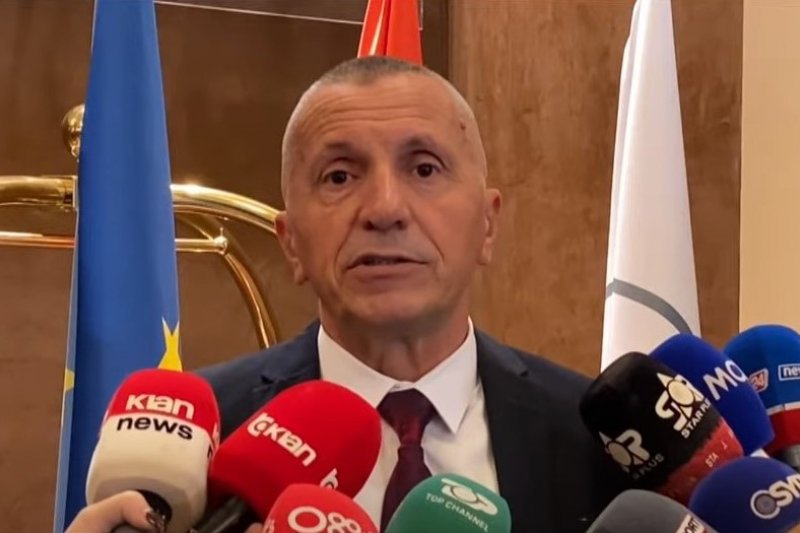
“Serbia has not taken any action through which it would prove the political will for the affirmation of the rights of the Albanians in the Presevo Valley, while it continues to demand higher and higher standards for its minority in Kosovo, while exploiting its minority in Bosnia and Herzegovina (BiH) and Montenegro to cause tensions,” has said the Albanian Deputy in the Serbian Parliament, Shaip Kamberi.
Kamberi, chairman of the Party for Democratic Action, succeeded to win another mandate as an MP in the Parliament of Serbia after the elections were held five times in a row in Ternoc. On April 28, 2022, the re-voting was held in the “neighborhood of Strukareve” in Tërnoc after many irregularities appeared in this polling station on April 3. RTV Presheva reported on April 29 that the Coalition of Albanians of the Valley received 686 votes. Through a status on the social network Facebook, Kamberi thanked the citizens who voted for him to represent the Albanians in the Parliament.
“April 28 brought us all together and together we all succeeded… I will continue to be the voice of all citizens without distinction,” the MP wrote after the official results declared him the winner.
The Parliament of Serbia has 250 members elected for a four-year term, and Kamberi is the only Albanian representing the Albanian communities of the Presevo Valley.
Kamberi said that he considers as his obligation to speak openly about the state discrimination that is being exerted against Albanians regardless of the harsh political labels against him by the ruling elite in Serbia. “I was elected by the Albanians to speak openly about their difficult situation and to seek a solution. I don't even care about the labels as "enemy", less so flatteries,” he said during the interview.
Kamberi was worried over the Serb policy of trying to reduce the number of Albanians in the Presevo Valley but Albanians showed mobilization for the population census process which disappointed Serbia's expectations because its result revealed that the Presevo Valley is predominantly Albanian. “About 100,000 Albanians registered in Presevo, Bujanoc and Medvegja are the strongest argument of our political demands for more rights, freedom and equality. The registration argument legitimizes our demand for equal integration in state bodies and the need for more development funds.”
Asked by Albanian Daily News, the Albanian MP in Serb Parliament said that they expected much more from official Tirana to help their efforts to raise the alarm on the plight of Albanians. “Tirana should also raise the issue of the rights of Albanians through regional initiatives in which it is participating together with Belgrade.”
Further he was critical of Brussels, which does not show any interest in the plight of Albanians in the Presevo Valley.
Speaking of the deadlock of Pristina-Belgrade dialogue and the tense situation created lately, the MP Kamberi is of the opinion that only the US can resolve the conflict. “I believe that only the world's only superpower is the one that can lead the dialogue to a final result,” said the Albanian lawmaker in the Serb Parliament, Shaip Kamberi in the following interview:
Albanian Daily News:Allow me, first of all, Mr. Deputy to thank you for the opportunity you created for us for this conversation with Albanian Daily News. The echo of your speech in Albanian in the Serbian parliament is still fresh, marking the first time after many decades of such an event. The essence of your accusation was the discrimination against that the Serbian state does to Albanians. Since then, how is the atmosphere of your relations in the parliament where some have accused you of being an 'enemy'?
Albanian MP in Serbian Parliament Shaip Kamberi: Thank you for giving your space to reflect the difficult position of the Albanians of the Presevo Valley.
The discrimination against that I spoke about then and that I continue to speak about even further, like me and other Albanian political representatives, goes on. Serbia has not taken any action through which it would prove the political will for the affirmation of the rights of the Albanians in the Presevo Valley, while it continues to demand higher and higher standards for its minority in Kosovo, while exploiting its minority in Bosnia and Herzegovina (BiH) and Montenegro to cause tensions.
My obligation remains to speak openly about the state discrimination that is being exerted against Albanians regardless of the harsh political labels that I may receive from the ruling elite in Serbia. I was elected by the Albanians to speak openly about their difficult situation and to seek a solution. I don't even care about the labels as "enemy", less so flatteries.
- Since the parliamentary elections, how is the group of Albanian and Bosnian deputies functioning as the only true opposition force and what influence does your opposition have in the political life of Serbia?
- We formed the parliamentary group "European Regions: Vojvodina, Sandžak and Preševo Valley" with two MPs from Sandžak and two from Vojvodina. However, it happened that the new government proposed the deputy from Vojvodina as a minister and he was elected.
At the moment we do not have a parliamentary group and we are acting as a group of individuals. We are hoping to find a deputy from the ranks of the democratic opposition. On the contrary, the way of action must be changed to create more space for our priorities.
- Allow me to talk about the situation in the communes of the Presevo Valley (Presjeve, Bujanovc and Medvegje). How is the situation of the Albanian population in face of the discrimination against by the Serbian state, and it is important to learn from you whether there is a termination of the emptying of these lands?
- The continuous discrimination has caused the mass migration of Albanians, especially of the young people whose diplomas are not recognized. When the attempt to reduce the number of Albanians through administrative methods (passivization) is added, this reveals the behind-the-scenes wicked intentions of Serbian politics for fewer Albanians in the Presevo Valley.
However, the population census process for which Albanians showed great mobilization, and which disappointed Serbia's expectations and goals for fewer Albanians shows that the Presevo Valley is predominantly Albanian.
About 100,000 Albanians registered in Presevo, Bujanoc and Medvegja are the strongest argument of our political demands for more rights, freedom and equality. The registration argument legitimizes our demand for equal integration in state bodies and the need for more development funds.
- As a follow up of the above idea, does the practice of erasing the addresses of Albanians continue, and practically what is such a 'sophisticated' policy, I would say, causing in the ethnic structure of the Albanian population?
- We have defined passivization as an administrative method of legalizing the ethnic cleansing of Medvegja and mountainous areas in Presevo and Bujanoc. But, as I said, taking into consideration the new statistics and the proven desire of Albanians to maintain their residences in these communes, a heavy blow is being given to the policy of fewer Albanians in the Presevo Valley.
- Meanwhile, has the sensitivity of Albanians of all political forces increased to act with a common language against the background of this confrontation, and secondly, how much does Albania contribute, especially to the relevant international organizations, in denouncing Serbia's violation of human rights? Is there coordination of this activity between you and the relevant institutions of official Tirana?
- Despite the constant alarm raised continuously by us regarding the discriminatory situation of Albanians, there is still not much interest of international organizations dealing with human rights. In the meantime, we expect and wish much more from official Tirana to help our efforts to raise the alarm on the plight of Albanians. Tirana should also raise the issue of the rights of Albanians through regional initiatives in which it is participating together with Belgrade.
- Do the Albanians have hope that the process of Serbia's integration into the EU will bring about a change to the Serbian discriminatory policy towards the Albanians? How much engaged is Brussels itself in protecting the rights of Albanians because for the sake of truth the issue of protecting the rights of minorities is presented by the EU as a basic condition in the membership process?
- Such a course would have been natural. A state that claims to be a part of the European Union must prove its commitment to the difficult position of minorities within its territory. This is not happening with Serbia, as it denies any of our legitimate demands and continues to deny its guilt over the plight of ethnic Albanians in the Presevo Valley.
It does not respect the three agreements signed with the Albanians (2001, 2009 and 2013) and there is not any sanctions against it by the EU over such an issue. Brussels itself has not shown concrete interest in our situation. They are present in Belgrade, they have learned and have been informed on our legitimate demands. Despite this there is no growing interest.
On this occasion, I had to single out the constructive role of the head of the OSCE Mission in Belgrade, Ambassador Jan Brathau, who is making continuous efforts for a constructive dialogue between the central government and the Albanians. We will see if he can convince Belgrade of this necessity. He needs the support of other countries, especially of the prominent western embassies.
-These days it is being highlighted eagerly the initiative of the "Open Balkan". What is your opinion about this project when 3 out of 6 countries of the Western Balkans do not participate in it, and does this initiative challenge the ‘Berlin Process”?
- Cooperation will have to be the future of the peoples of the Western Balkans. In principle, any cooperation initiative should be welcomed, but, in this case, I think that the success of the "Open Balkans" depends on whether it will include the 6 states or whether it will remain an incomplete project. In particular, it should be seen what will happen with Kosovo.
Without Kosovo, whose relations with Serbia remain the key to building peace in the Balkans, this initiative is not comprehensive. On the other hand, Kosovo can be part of such initiatives only as equal member country.
However, no regional initiative can replace the final goal of the peoples of the Balkans - the integration of all the countries of the Western Balkans into the European Union.
-The Pristina-Belgrade dialogue, in addition to its impasse, has also been accompanied by an increase of tension between the two countries in recent months. Mr. Kamberi looking back at the long time of this process without any result, what is your opinion about its future?
- It is very clear that the dialogue requires a strong incentive given the current uncertainty around it. I am convinced that such a push can only be given by the US in the case of such a complex issue as Kosovo-Serbia relations. That's why I believe that the world's only superpower is the one that can lead the dialogue to a final result. / ADN