DOS Report on Religious Freedom, Inherited Problems in Albania
The US State Department on Wednesday released its annual report on the state of religious freedom in the world, which includes data on the state of religious freedom in 200 states and territories and documents violations committed by governments, terrorist groups and individuals.
The report analyzes in separate chapters the situation of freedom of religion in Albania and Kosovo, which mainly emphasizes inherited problems.
In the section on Albania, the report again underlines that the constitution guarantees freedom of religion. It states that there is no official religion, says the state is neutral in matters of faith, recognizes the equality and independence of religious groups, and prohibits discrimination on religious grounds.
The government has special agreements with religious communities and the law stipulates that the government will provide financial support for them. But the agreement with the Albanian Evangelical Brotherhood (VUSH) by law does not clearly define who will receive such support, and despite VUSH reporting, the government did not allocate funds.
The report notes that the government legalized 92 buildings owned by religious communities during the year, compared to 164 in 2019, while the status of 32 other properties remained under consideration.
"Corruption, lack of knowledge of competencies and jurisdiction over property issues, and heavy burdens on the judiciary have prevented religious communities from seeking their property, according to numerous civil society sources," the report said.
Prior to holding the anti-Semitism forum on October 28, parliament unanimously approved the International Holocaust Remembrance Alliance's definition of anti-Semitism.
Religious leaders backed government precautionary measures due to the COVID-19 pandemic, canceling rallies for two months.
The US embassy called on government officials to speed up the process of resolving property claims and return buildings and other properties confiscated during the communist era to religious communities. The COVID-19 pandemic slowed down embassy-backed programs focused on developing community inclusion, promoting the empowerment of women in religious communities, and emphasizing the compatibility of religious belief and democracy. The Embassy continued its work with religious communities to discourage withdrawal from violent extremism among young people. On November 5, the Muslim Community of Albania launched another round of an embassy-supported project to develop critical thinking skills among young people and encourage them to think about the relationship between democracy, society and faith.
The US government estimates that of the 3.1 million people in Albania, according to a mid-2020 estimate, Sunni Muslims make up 57 percent of the population, Catholics 10 percent, Orthodox about 7 percent, and Bektashis 2 percent.
Public schools are secular, the report said, while private schools may offer religious instruction. Religious communities run 113 educational institutions including universities, primary and secondary schools, preschools, kindergartens, vocational and orphanage schools. Most of them do not have compulsory subjects of religion but offer them as electives.
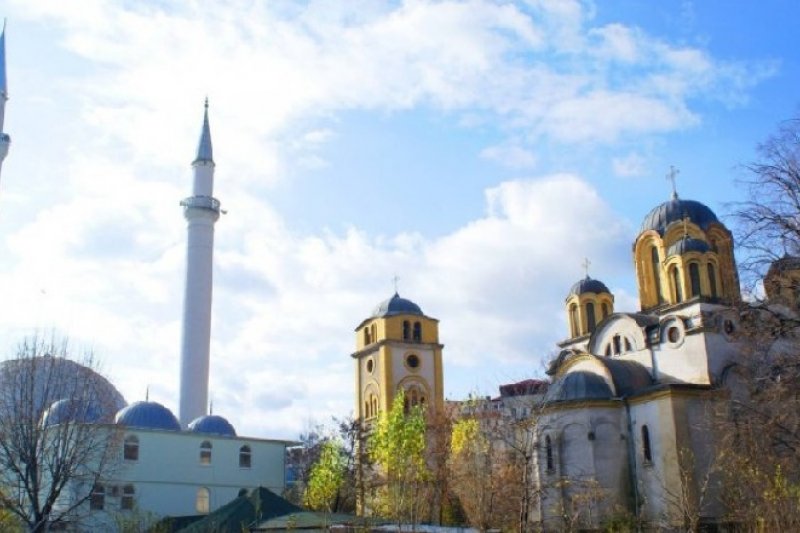
The government continued the process of legalizing informal mosques, Catholic and Orthodox churches, and tekkes built after the fall of communism in the early 1990s. The State Cadastre Agency reported that during the year it legalized 92 religious buildings, including 22 Catholic churches and other buildings related to Catholic church, 58 mosques and other Muslim community buildings, four Orthodox churches and seven tekkes. Thirty-two other buildings remained under consideration.
The report notes some discrepancies between the figures reported by the Cadastre and those of religious communities. The Muslim community reported receiving legalization letters for 27 mosques out of the remaining 353 applications. The Orthodox Church said the Cadastre legalized four of the 15 buildings it had applied for during the year. The Muslim community reported receiving ALL 1.26 million (approximately $ 12,600) in compensation for illegal construction on its property.
In the chapter on Kosovo, the report reiterates that the constitution prohibits religious discrimination and ensures freedom of religion, but warns that the law does not allow religious groups to register as legal entities, creating obstacles for them in the performance of their duties.
In September, the government approved changes that would give religious communities such status and enable them to do business on their own behalf and receive certain tax breaks, but parliament failed to approve the changes due to a lack of the quorum.
The report states that according to the Islamic Community of Kosovo (BIK), in many cases, public primary schools barred students from attending classes in religious garb.
The report recalls that on September 4, the governments of Kosovo and Serbia signed a list of commitments in Washington, mediated by the White House, which included a commitment to protect and promote freedom of religion, protection of religious areas, enforcement of court decisions in connection with the Serbian Orthodox Church (SOC) and the restitution of Jewish property.
The Serbian Orthodox Church said the lack of constructive communication with some municipal governments prevented Serbian Orthodox pilgrims from visiting some temples and cemeteries freely. It said the government failed to fully implement the Law on Special Protected Areas by failing to prevent the construction of roads around the Decani Monastery. But the report states that the government stopped the works in August after the intervention of the international community.
(Source: VOA)