
From Transit to Destination: How WTC Eindhoven is Redefining Airports as International Business Hubs
In an era where global connectivity matters more than ever, an innovative business model within the global World Trade Centers Association (WTCA) network is transforming conventional airports into dynamic international trade hubs. At the forefront of this transformation is World Trade Center (WTC) Eindhoven, demonstrating how strategic positioning within the WTCA ecosystem can unlock unprecedented commercial potential for airport infrastructure.
"The development of WTC Eindhoven represents a fundamental shift in how we conceptualize airport real estate," explains Lianne van den Boogaard, Director of WTC Eindhoven. "We're not merely adding another business center; we're creating an integrated ecosystem where global connectivity meets local innovation. The WTC brand provides the crucial link that transforms transit space into transaction space."
The WTCA network serves as the cornerstone of this transformation, offering immediate global recognition and connectivity that would otherwise take years to establish. Through its affiliation with over 300 WTC locations across nearly 100 countries/territories, WTC Eindhoven gains instant access to a curated network of business leaders, trade organizations, and investment partners. This global footprint is amplified through multiple channels: featured positioning on WTCA’s digital platforms, inclusion in international trade missions, and participation in exclusive member forums like the WTCA Business Clubs Member Advisory Council.
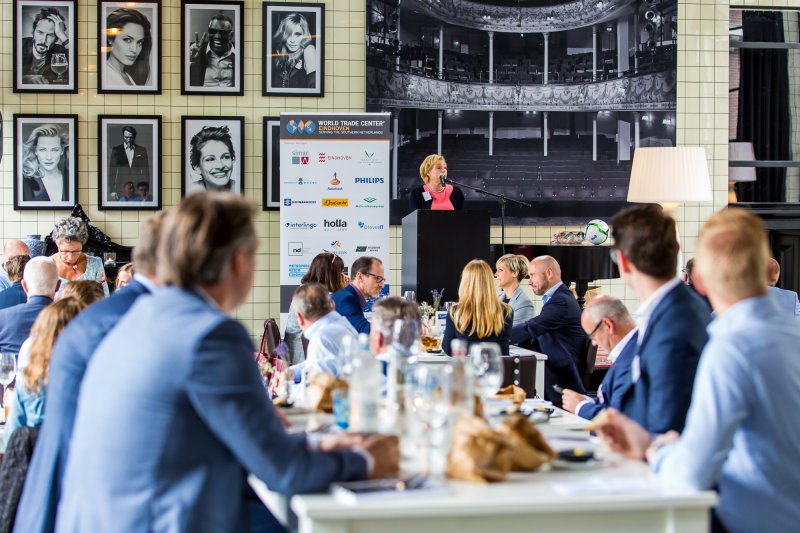
WTC Eindhoven, photo credit to WTC Eindhoven
What makes the WTC Eindhoven model particularly compelling is its strategic utilization of landside property. The business district adjacent to the passenger terminal, traditionally limited to support services, is being reimagined as a premium commercial destination. "The WTC branding has fundamentally changed how international stakeholders perceive our airport district," van den Boogaard notes. "We're seeing unprecedented interest from multinational corporations, diplomatic missions, and high-growth technology firms who recognize the strategic advantage of being embedded within both an airport ecosystem and the global WTCA network."
The commercial benefits extend far beyond real estate appreciation. The WTC Eindhoven Business Club, comprised of 500 members representing 300 companies, serves as the living core of this ecosystem. Through structured programming including international matchmaking sessions, trade missions, and specialized market-entry support, the center actively facilitates cross-border business opportunities. Particularly noteworthy are the soft-landing programs designed to help international companies establish their European presence, leveraging the airport's connectivity and the region's innovative capacity.
This integrated approach creates a powerful value proposition for the broader regional economy. In collaboration with local government and knowledge institutions, WTC Eindhoven delivers targeted support programs for SMEs looking to expand internationally. These initiatives range from export readiness assessments to customized market intelligence, effectively bridging the gap between regional ambition and global opportunity.
The success factors underlying this model provide a replicable blueprint for other airports considering similar transformations. Critical elements include the strategic synergy between air connectivity and business services, the instant credibility afforded by the WTC brand, the development of integrated facilities that cater to modern business needs, and deep anchoring within regional economic development priorities.
As airports worldwide seek to diversify revenue streams and enhance their economic impact, the WTC Eindhoven example offers a compelling vision of the future. It demonstrates how airports can evolve from infrastructure operators to ecosystem orchestrators, where the convergence of mobility, business services, and global networks creates unique value for tenants, passengers, and regional economies alike. In this new paradigm, success is measured not just in passenger numbers, but in business deals facilitated, international partnerships formed, and economic value generated for the entire region.