
Growth of Economy Slows Down in H1
The Albanian economy continued to expand in early 2026, but the pace of growth slowed, and some of the main productive sectors remained in difficulty.
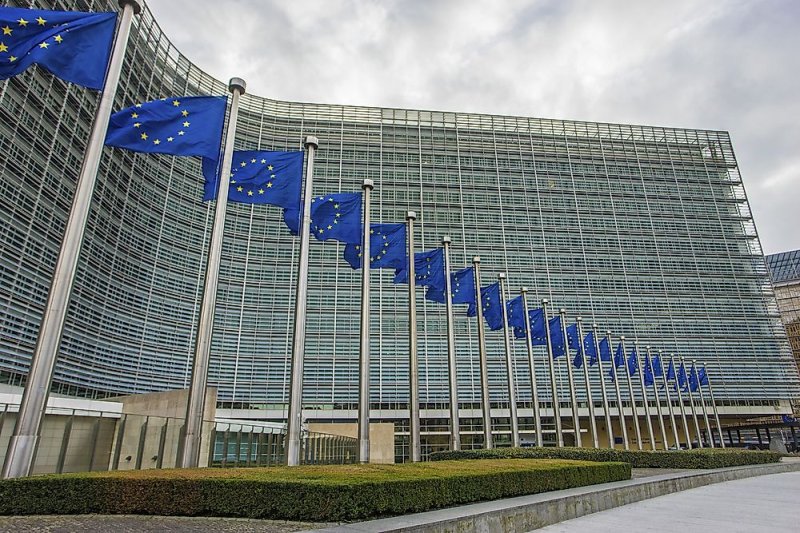
According to the European Commission's quarterly report on candidate and potential candidate countries, Albania's Gross Domestic Product grew by 3.7% in the first quarter of 2026, from 4% in the previous quarter.
Growth was mainly supported by private consumption, public administration, education, healthcare, real estate, and construction. In contrast, industry and agriculture continued to make a negative contribution to the economy.
Private consumption grew by 3.9%, but investments slowed significantly, to 3.9% from 10% at the end of last year.
Exports of goods recovered by 28% in real terms, helped by a low comparison base, while exports of services increased by 5%. However, the increase in imports offset the positive effect, and the contribution of net exports to the economy remained almost neutral. The report also highlights mixed signals from the labor market. Unemployment rose slightly to 9.4%, while youth unemployment reached 16.9%.
Net emigration of nearly 28,500 people in 2025 continued to tighten the labor supply. On the other hand, the average gross wage increased by 9.6%, to Lek 90,119, significantly faster than inflation. Inflation accelerated to 3.2% in June, exceeding the Bank of Albania’s 3% target. Prices were mainly affected by food, housing, energy, and transport.
At the same time, the lek continued to strengthen against the euro, reaching an average of 95.3 lek per euro in the second quarter. Public finances performed better. In the first five months of the year, budget revenues increased by 11.2%, while expenditures increased by 7.4%. The budget recorded a surplus of 1.9% of expected annual GDP, and public debt decreased to 48.8% of GDP.
Overall, the Western Balkans economy improved in the first quarter. The region's weighted average growth accelerated to 3.2%, from 2.7% at the end of 2025, marking the highest pace since the fourth quarter of 2024.
Kosova recorded the highest growth, at 5.4%, followed by Albania at 3.7%, Serbia at 3.2%, North Macedonia at 3.1%, Montenegro at 2.6%, and Bosnia and Herzegovina at 2.2%.
However, growth in most regions was mainly supported by household consumption, driven by rising wages. Investments lost momentum almost everywhere, with the exception of Montenegro. Foreign trade also presented a mixed picture, while only Serbia and Kosovo had a positive contribution of net exports to growth.