Kraja against SPAK's Involvement in Politicians' Vetting
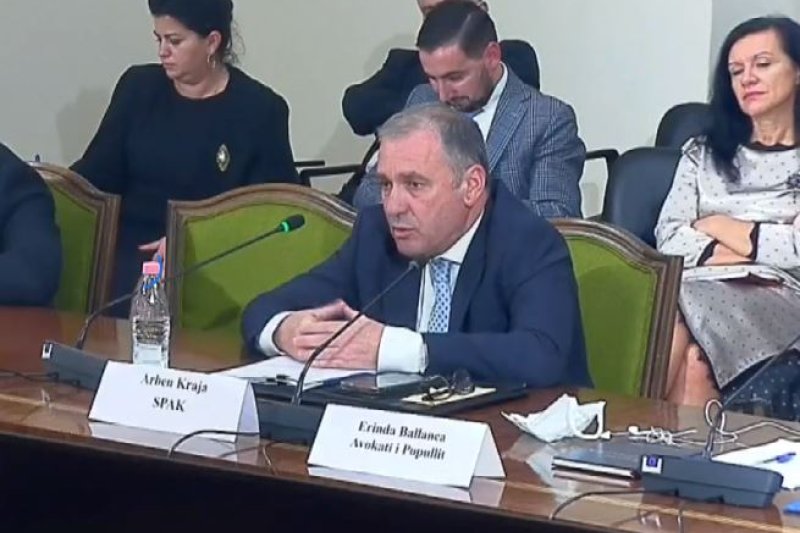
The proposal of the Democratic Party on the vetting process of politicians from SPAK (Special Prosecution against Corruption and Organized Crime) was discussed at the meeting of the Legislative Council this Wednesday, a request opposed by the head of the Special Prosecution, Arben Kraja.
Kraja was against the taking of such a task by the institution he leads, as this would create an overload of work and would block the primary purpose of the prosecution, which is to prosecute criminal and representation of the prosecution body in court.
"I took the material, we saw it and we evaluated it. In principle, we are in favour of any initiative that aims to fight organized crime and corruption, this is indisputable. It is a disturbing phenomenon, the structures have been created to fight it, but I am of the principle that the fight should not be done in a single structure in general, as it is impossible, the whole society should be involved each for its part. This is principled.
In relation to the material that has been prepared, I will speak about the involvement of SPAK in the implementation of this initiative. It is an administrative procedure provided in the Constitution to be carried out. An administrative procedure that provides for about 200 entities that will be subject to this control, and is an administrative procedure that takes time. In these conditions, I think that with these criteria we should evaluate it continuously.
The Constitution stipulates that the prosecution exercises criminal prosecution and represents the accusation in court, this is the basic duty of the prosecution, but it also performs other duties. Formally, this is an opportunity to charge the prosecution with other tasks. What I think is that other duties should not block the core of the prosecution's work which is prosecuting and representing the prosecution in court.
In this sense, the law provides for the establishment of a sector in the Special Prosecution with prosecutors and a structure with collegial decisions, in short, it is an extraordinary workload that, if approved as it is, will be added to the special prosecution. In this sense, I would consider inappropriate the involvement of the Special Prosecution in the realization of this task', said Kraja.