Rama Criticizes Judiciary Actions, Denies Interference in Justice System
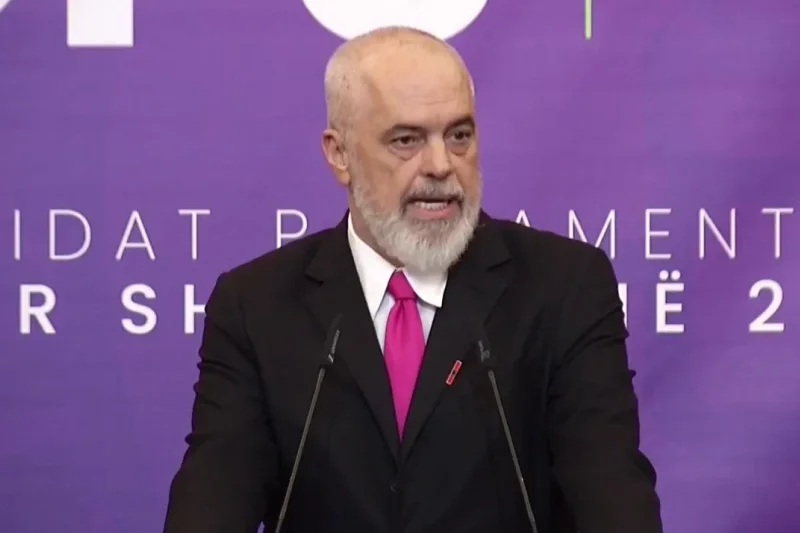
Albanian Prime Minister Edi Rama on Thursday sharply criticized recent actions by the country’s justice system, accusing judicial authorities of what he described as “unjustified and unnecessary interference” in the work of the executive branch.
Speaking at a meeting of the Socialist Party’s parliamentary group, Rama said he would touch on judicial decisions as “one out of a thousand things” he had to say regarding what he characterized as problematic interventions.
The prime minister claimed that numerous arrest warrants had been issued in cases that, in his view, either did not constitute criminal offenses or should have been investigated without pre-trial detention.
“They have issued arrest warrants in batches for cases that, at best, are not criminal offenses, and at worst should be investigated while the individuals remain free,” Rama said. He cited as an example a case in the coastal city of Durrës, alleging that dozens of arrest warrants were issued, including for what he described as a model public employee battling cancer while caring for a young child.
Rama also referred to what he called an “emblematic” case in Tirana, involving a construction built without a permit that was later confiscated to house a state agency. According to the prime minister, the developer subsequently filed a complaint against the state, leading to a criminal case being opened against public officials involved in transferring the agency into the building.
Anticipating criticism, Rama rejected any suggestion that his remarks constituted interference in the justice system.
“Some will surely say that I have just interfered in the work of the judiciary, but in no way is that the case,” he said. “I am stating one thousandth of what I have to say about unjustified and unnecessary interventions of the judiciary into the executive.”
The comments come amid heightened political sensitivity surrounding Albania’s justice reform process and the broader balance of powers between institutions, as the country continues its path toward European Union integration.