‘Full Equal Rights for Women, a Challenge’

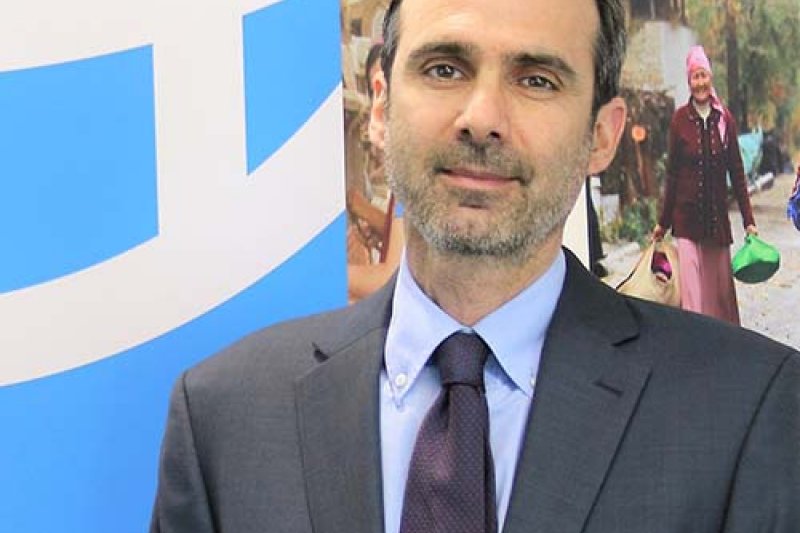
The position of women in all walks of life in the Albanian society and some of the key challenges they are faced today were the main issues discussed with the UN Women Representative in Albania, Michele Ribotta, who hastened to say that while things are changing for the better, women's participation in the labour market remains lower than men (around 62% against 77%), with various factors affecting their full economic empowerment, such as unpaid care work, informality, low access to productive assets, as well as occupational stereotypes.
According to the Head of the Office of the UN Women in Tirana, which is part of the UN organization delivering programmes, policies and standards that uphold women's human rights and ensure that every woman and girl lives up to her full potential, expanding women economic empowerment is not only important for the economy: it is also crucial for their physical and emotional safety, because the economic dependence of victims of abuse remains a key barrier to breaking violent relationships.
“Women are strong and powerful already. But the social and economic systems built by men and for men need to be transformed, as they perpetuate gender discrimination. How to do that? One example is to invest in the care economy. In a recent study that we have done with UNICEF to help the country identify solutions to meet its commitments to the Sustainable Development Goals, we argue that investing in free universal childcare not only can be financially sustainable, but also brings multiple dividends,” said Mr. Ribotta
In addition he explained the importance of gender budgeting for empowering women because, according to him, gender equality cannot be achieved without sufficient resources that are well targeted and adequately tracked. “With support from various partners, including Austria, Sweden, and Switzerland, UN Women has indeed worked with national institutions for many years, and today the country has a fairly sophisticated system in place to ensure its resource allocation process contributes to eliminating gender inequalities.”
Mr. Ribotta revealed that the UN Women in Albania has worked with 10 municipalities in Albania to revitalize small women-owned businesses, strengthening business skills of 150 women, and developing gender-sensitive value chain analyses which can be a powerful tool for local government units in their efforts to promote economic participation of rural women.
The Head of the UN Women in Albania was worried that globally, women and girls are facing multiple discrimination and education-related barriers that keep them from participating equally in science, technology, engineering and mathematics (STEM) fields, accessing digital finance, and becoming digital leaders. “In Albania, despite significantly higher numbers of women in higher education than men (60.4% vs 39.6 %), women continue to be more represented in humanities rather than scientific fields. Only 3.3% of female graduates completed their studies in ICT, compared to 10.2% of men,” said the Representative of the UN Women in Albania, Michele Ribotta in the interview which follows:
Albanian Daily News: What is the position of Albanian women in the economy? What are some of the key challenges they are facing today?
UN Women Rep in Albania Ribotta: Women in Albania are becoming more and more active economically. They generate income for themselves and their families, and contribute to the country’s economic development. While things are changing for the better, women's participation in the labour market remains lower than men (around 62% against 77%), with various factors affecting their full economic empowerment, such as unpaid care work, informality, low access to productive assets, as well as occupational stereotypes. Women are often employed in lower paying jobs such as social services, education, manufacturing, and agriculture; they spend a disproportionate amount of time cooking, cleaning, taking care of children and other family members. In addition, they still face discriminatory gender norms and practices, especially in rural areas, that affect their access to credit and assets, with over 80% of land titles assigned to the “head of household”, mostly men. Expanding women economic empowerment is not only important for the economy: it is also crucial for their physical and emotional safety, because the economic dependence of victims of abuse remains a key barrier to breaking violent relationships.
- In the fast-changing world today, what should we do to empower them? Where should civil society, the government and all partners focus their efforts on?
- Women are strong and powerful already. But the social and economic systems built by men and for men need to be transformed, as they perpetuate gender discrimination. How to do that? One example is to invest in the care economy. In a recent study that we have done with UNICEF to help the country identify solutions to meet its commitments to the Sustainable Development Goals, we argue that investing in free universal childcare not only can be financially sustainable, but also brings multiple dividends: it would benefit children, as they will be stronger students, active and productive citizens throughout their lives; women, as they will free up time to earn an income; the national economy, with a growing social care industry and women contributions to GDP; and finally, it would serve society at large, also thanks to a virtuous loop of greater fiscal revenue that can be reinjected in projects that help people and their communities thrive. Clearly, this is a long-term effort that requires the active participation of different actors in society, starting from the government that needs to create fiscal space, ensure legal safeguards and policy direction. But the contribution of civil society at large is equally important, including help to overcome conservative gender norms that still tend to confine women and girls to stereotypical roles and occupations. Finally, in promoting social and economic transformations, it is also critical to leave no one behind, for example by ensuring access to full-time education for girls and boys from minority groups, persons with disabilities, and those living in remote areas.
- One of the tools for empowering women is gender budgeting, which UN Women has been working in Albania for years. Why is it so important to apply gender budgeting and what has been its impact?
- The idea behind our work is that gender equality cannot be achieved without sufficient resources that are well targeted and adequately tracked. Gender responsive budgeting means taking into account the unique challenges faced by women and men, ensuring that public investments are made with a clear understanding of how these will affect people differently. With support from various partners, including Austria, Sweden, and Switzerland, UN Women has indeed worked with national institutions for many years, and today the country has a fairly sophisticated system in place to ensure its resource allocation process contributes to eliminating gender inequalities. Targeted investments have gone up in the past years from 1% to 9% of the total national budget, addressing the needs of women who face marginalization, and providing social services and incentives for their economic empowerment. While this is very encouraging, it still represents a small fraction of GDP (approximately 0.05%). More recently, also in the context of greater delegation of responsibilities to local government units, we have been engaging municipalities to strengthen their understanding and capacity to implement gender responsive planning and budgeting. And we continue to promote strong public participation and scrutiny of such processes, including at the local level, as this helps institutions become more accountable. In the last year for example, 73% of issues raised by women were addressed and accepted in the municipalities’ priorities and budgets. The State Supreme Audit Institution is also becoming increasingly active in this topic, and recently published the report from its first performance audit of women economic empowerment in Albania, with specific focus on employment and rural development.
- As per INSTAT data in 2021 roughly 25% of active enterprises are owned or administrated by women. How is UN Women addressing this gap?
- Today most of women owned enterprises in Albania are micro or small businesses. The 2019 earthquake and the pandemic took a heavy toll on these businesses. In collaboration with various partners, such as the European Union, Sweden and Italy, we have focused on increasing women’s knowledge, information and skills to engage in income generating activities, especially in rural areas. We worked with 10 municipalities to revitalize small women-owned businesses, strengthening business skills of 150 women, and developing gender-sensitive value chain analyses which can be a powerful tool for local government units in their efforts to promote economic participation of rural women. We have supported a group of women in rural areas who for the first time started cultivating medicinal and aromatic plants and registered their own groups, becoming an example in their communities for creating successful businesses. Four handicraft and artisan development centers opened in different areas, with women coming together to learn, share their skills and generate income. We are also supporting local action groups of women and young people, with two dedicated incubators who will become soon operational in Elbasan and Leskovik.
- What about the role of the private sector? Are Albanian companies interested or engaged in empowering women and girls to reach their full potential?
- The private sector plays a key role in promoting sustainable development. Its engagement contributes to sustainable solutions and drives positive change in the life of women and girls. We have established encouraging partnerships with Albanian businesses, to promote gender equality and women's empowerment. Today, 46 companies have signed the Women Empowerment Principles, with more than 8,000 companies joining this platform globally, committing to promote gender equality in the workplace, marketplace and the communities. These companies come from different sectors, including banking, business consulting, telecommunication, construction, and chambers of commerce. They support national campaigns and are becoming more involved in projects that aim to improve the lives of women and girls. Moving forward, it will be important to connect well established businesses with small women led enterprises who need support to make their products and services successful. Last year for example, we ensured the participation of several businesswomen in the UN Women Regional Expo on Women Entrepreneurship, where they had access to information, knowledge and potential investors.
- The UN has stressed on different occasions that: “Gender inequality coupled with the climate crisis is one of the greatest challenges of our time”. How much does this concern Albania? Have we taken any steps to address this challenge and what is UN Women doing in this regard?
-The triple crisis of climate change, air pollution and biodiversity loss, is hitting every country on the planet, big or small. Albania has 100% renewable energy and has doubled the amount of protected areas, but challenges remain, which often impact men and women differently. The country is highly prone to multiple hazards, in particular flooding and earthquakes, which affect the entire population by damaging crops, livestock and critical infrastructure. However, such hazards have increased and compounded consequences on rural women, who are more at risk of losing their daily subsistence; or single mothers or women heads of households, who can fall into homelessness and become victims of violence. This is why we worked with partners to make sure the new national strategy on disaster risk reduction that was launched earlier this year responds to specific gender equality concerns. We also continue to promote participation in global normative platforms where the linkages between gender and sustainable development challenges are addressed: last year for example, we worked with a group of young activists who developed a Call to Action on Gender, Youth and Climate Change, urging policy makers and civil society to push the climate and environmental justice agenda in the country, and to integrate gender equality into all climate change and environmental initiatives.
-Digitalization (including AI) is transforming the world and at the same time UN Women has acknowledged the critical role of technology and innovation in achieving gender equality. What are the challenges and the opportunities that these latest developments pose and what is UN Women doing in this area?
-The 67th session of the UN Commission on the Status of Women earlier this year reaffirmed the role of technology and innovation, and of education in the digital age, in accelerating gender equality. Globally, women and girls are facing multiple discrimination and education-related barriers that keep them from participating equally in science, technology, engineering and mathematics (STEM) fields, accessing digital finance, and becoming digital leaders. In Albania, despite significantly higher numbers of women in higher education than men (60.4% vs 39.6 %), women continue to be more represented in humanities rather than scientific fields. Only 3.3% of female graduates completed their studies in ICT, compared to 10.2% of men. We hope that many young women will be inspired by examples of successful Albanian women in tech, such as Mira Murati who has gained global recognition for her contributions to AI. More systematic participation of women in this field will help address the gender bias that is all too often hidden behind digital solutions. In addition, the security aspect of technology should also be prioritized, to eliminate pervasive threats of online gender-based violence, harassment and discrimination. At UN Women, we will continue to work with institutions, the private sector, civil society and youth to promote women as innovators and digital entrepreneurs, develop tools to prevent online violence against them, and promote technologies that challenge gender stereotypes and conservative social norms.