5th EMPACT Hackathon Leads to the Detection of 51 Potential Victims
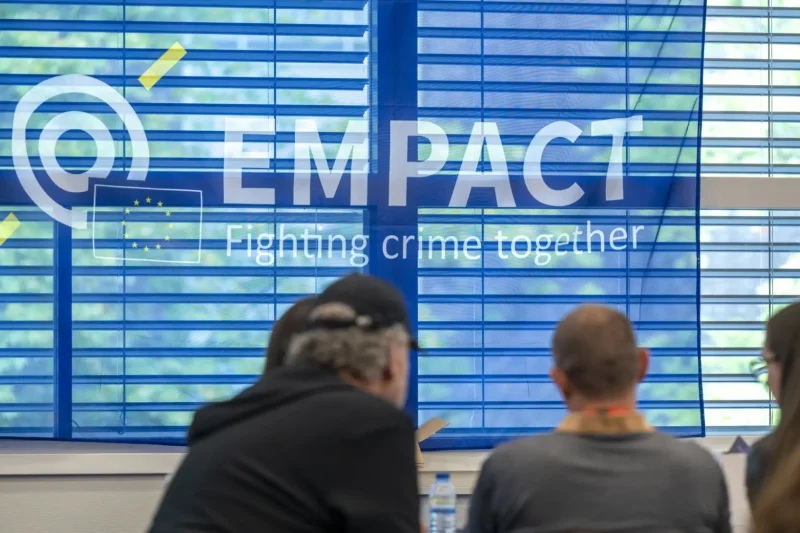
An international operation involving 40 experts and investigators from 20 countries has identified 51 potential victims of human trafficking, as well as five suspects. Held in Amsterdam from 23 to 25 September 2026, the fifth EMPACT Hackathon against the digital aspects of human trafficking brought together police officers, labour authorities and specialists in online investigations, supported by Europol and Eurojust.
Led by the Netherlands and co-led by Germany, Romania and the United Kingdom, the online activities focused on detecting indicators of human trafficking for sexual and labour exploitation, and forced criminality online. Experts looked into how traffickers use websites, social media and messaging applications to recruit potential victims, advertise services and organise exploitation across borders. They gathered investigative leads to be shared with the relevant national authorities and serve possible future investigations.
Operational results include:
- 51 potential victims of human trafficking identified, all female;
- 6 potential criminal networks identified;
- 5 suspected human traffickers identified;
- 26 online platforms checked (for sexual and labour exploitation, and organ trafficking);
- 77 social network accounts checked;
- 166 entities checked (such as platforms, individuals, usernames, locations, and phone numbers).
Following the digital trail
Traffickers increasingly exploit the reach of the online environment to approach and profit from vulnerable people. Fake job offers, misleading recruitment advertisements and promises of high earnings have been identified to conceal exploitative conditions in numerous cases.
During two operational action days, participants searched publicly available online information for signs of trafficking. Their work focused on links between recruitment profiles, advertisements, telephone numbers and other identifiers that could help reveal connections between potential victims, facilitators and criminal networks.
Cross-border criminal recruitment networks
Several investigative leads concerned recruitment for sexual services through messaging applications. In one case, profiles advertised travel packages for women recruited in Russia to work in Europe and elsewhere, promising earnings of USD 10 000 (about EUR 9 000) in two weeks. Cross-checking of operational information suggested a possible cross-border criminal network. Another investigation identified recruitment accounts also promising women substantial earnings and easy work. Investigators linked phone numbers, social media accounts, and a modelling agency with a trafficking network operating in EU countries.
On adult service websites, investigators detected telephone numbers appearing across multiple advertisements. In one case, a single number was linked to 109 profiles, while another appeared in 74. The advertisements concerned Asian women reportedly working in several EU and non-EU countries. Another lead identified advertisements for young adult women from Latin America. Through digital work investigators identified connections that could help establish further potential victims and suspects.
Examining suspected trafficking for organ removal
Participants also identified a messaging group containing apparent recruitment offers for organ donors and responses from other profiles. Preliminary information suggested possible links to a hospital or private clinic outside the EU. The findings were shared with Europol for further assessment. Additional leads, including a suspected exploitation situation involving Vietnamese women as surrogates, were referred to the relevant national authorities for further analysis.
The fifth hackathon built on previous editions by developing the intelligence picture of online-facilitated trafficking and generating leads for national investigations. By bringing together investigators, analysts and labour authorities, the action helped connect information across borders and platforms. The findings will support further investigations targeting criminal networks and actions assessing the protection needs of potential victims.
Europol’s operational and expert support
Europol supported the action deploying one specialist in human trafficking investigations and two experts in digital tools to Amsterdam. Additionally, two analysts provided remote cross-checking and operational analysis from its headquarters. Workshops during the event enabled trafficking investigators and open-source intelligence specialists to exchange expertise and strengthen their ability to recognise indicators of exploitation online.
Participants also received access to a dedicated human trafficking dashboard and practical training on digital investigative tools. Preparatory learning materials were made available through CEPOL’s Law Enforcement Education Platform, covering the detection and investigation of online sexual exploitation and the identification and protection of victims.