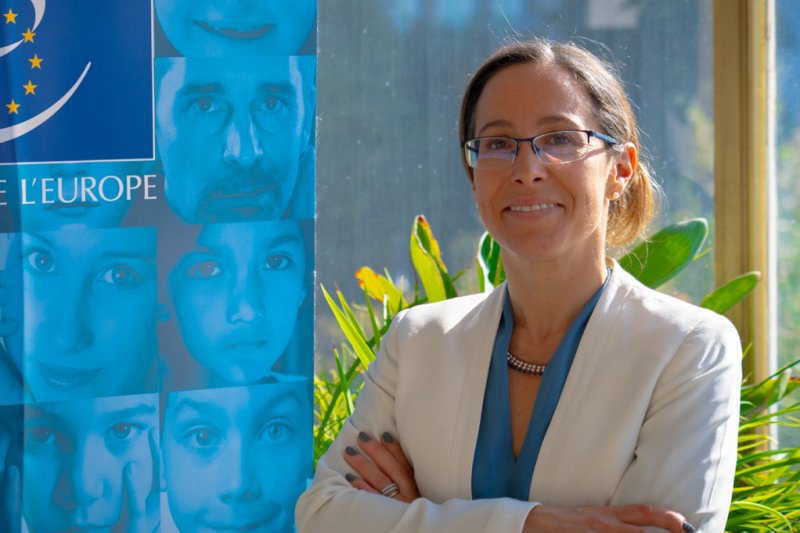
A Balance of Albania’s 30 Years in CoE
Founded in 1949, the Council of Europe focuses on democratic standards, the rule of law, and human rights across its 46 member states. This year, Albania marks the 30th anniversary of its membership in the Council of Europe, although in 1995, few Albanians fully understood the significance of this step. Three decades and many ups and downs later, the country now faces the task of assessing its progress in the areas the Council monitors and supports.
For this purpose, Albanian Daily conducted an interview with the Head of the Council of Europe Office in Albania, Ms. Giulia Re, who has held this position for just over two years.
-Albania’s 30 years in the Council of Europe mark a significant milestone. Looking back, what do you consider the most impactful reforms the Council of Europe has contributed to in Albania?
-This year marks the 30th anniversary of Albania’s membership in the Council of Europe, a partnership that has profoundly shaped the country’s democratic transformation. Over three decades, our co-operation has been pivotal in strengthening the rule of law, democracy, and human rights in line with European standards, helping Albanian institutions advance key reforms, particularly in justice. A cornerstone has been the long-standing partnership with the Venice Commission, which since 1995 has provided 38 legal opinions and amicus curiae guiding Albania’s constitutional, legislative, and institutional reforms to reflect European best practices of transparency, accountability, and independence. The Venice Commission remains a steadfast and trusted partner in Albania’s reform journey.
These achievements were celebrated at a Conference in Tirana on 21-22 October, hosted by the Parliament of Albania and the Venice Commission titled “30 Years of Partnership and Progress: Albania, the Council of Europe, and the Venice Commission”. The event gathered representatives of the Venice Commission, the Council of Europe, international experts and the Government of Albania, to mark Albania’s progress and the Council of Europe’s contribution. Discussions addressed key areas of on-going reform, including the judicial vetting process, electoral reform, and constitutional justice
Another pillar of Albania’s journey toward justice and fundamental rights has been the European Court of Human Rights, whose judgements have provided essential guidance for national legal reforms in line with the European Convention on Human Rights. Through targeted co-operation programmes, the Council of Europe has helped Albanian authorities address systemic shortcomings, strengthening institutions for the benefit of all citizens.
The Council of Europe Office in Tirana upholds this partnership with unwavering dedication. Together with national authorities, civil society, international partners and our donors – the European Union, Germany, Sweden, Switzerland and the Human Rights Trust Fund - we continue to promote shared European values. As Albania looks toward the future and its path to European integration, this lasting collaboration stands as both a testament to past achievements and a commitment to continued progress toward a just, democratic, and resilient society.
-The European Court of Human Rights has issued numerous judgments affecting Albania, particularly regarding property rights. How has Albania progressed in aligning its laws and judicial practices with these rulings?
-The Committee of Ministers of the Council of Europe assesses the execution of judgements of the European Court of Human Rights. In co-operation with the European Union, we have assisted Albanian institutions in strengthening property rights and developing a more effective system for executing the judgments.
A secure property rights framework and legal certainty are vital for sustainable growth, investments, and Albania’s EU accession. Our co-operation has led to significant legislative improvements and stronger co-ordination among key institutions, including the State Advocate’s Office, the judiciary, the State Cadastre Agency, and the Agency for the Treatment of Property. Together with the Ministry of Justice and the Agency for the Treatment of Property, we have reviewed legislation on property treatment to align it with ECHR standards, making compensation more transparent and efficient.
The Council of Europe also works closely with the State Advocate’s Office to support the implementation of European Court’s judgments, addressing systemic issues such as overlapping property titles and delays in property registration. A complex example is the case of segregation of Roma and Egyptian children in a Korça primary school, where the Court underscored
the importance of inclusive education and the right to equal access to education for all children. We continue to support this process, to ensure a targeted solution.
Albania is moving in the right direction, but lasting progress depends on sustained institutional commitment and consistent implementation.
-The rights and conditions of prisoners are essential components of any justice system.
How has the Council of Europe supported Albania in improving prison conditions and respecting prisoners’ rights? What progress has been made, and what challenges remain?
-Protecting the rights and dignity of people in prison is both a human rights obligation and a matter of public safety. Everyone deprived of liberty today will one day return to their communities; investing in rehabilitation and reintegration rather than punishment reduces re-offending.
The Council of Europe has a longstanding partnership with the Albanian prison service. In recent years, we have worked closely to harmonise prison legislation, policies, and management with Council of Europe norms and best practices. Together, we have addressed issues raised by the European Committee for the Prevention of Torture and assessed capacity and resource needs to provide support to the benefit of services and treatment offered to prisoners. A concrete example is the introduction of the pro-social prison model which uses an incentive (e.g. increased visits with the family, extended out of cell time, employment opportunities) to encourage positive behaviour and rehabilitation.
Reform efforts also include piloting innovative support programmes for prisoners such as Cognitive Behaviour Therapy and Trauma Informed Therapy, the latter introduced this year in Pojska women prison. Participants reported that structured psychological support significantly improved well-being, with some women now prepared to support others. This process marks a shift toward a more humane approach to serving sentences in Albania.
Another milestone is the strengthening of the Training Centre for prison staff, supported by the Council of Europe. The Prison Service has now established dedicated training units in local prisons, which in the last six months have trained independently 1,000 prison staff, demonstrating growing institutional ownership and sustainability.
Despite progress, challenges remain, particularly in ensuring adequate mental health care in prisons and specialized closed institutions. Though complex, this issue cannot be neglected. We remain committed to supporting Albania in building a humane, rights-based penitentiary system.
-Corruption and money laundering remain persistent challenges in Albania’s European integration journey. Over the past three decades, how has the Council of Europe contributed to addressing these issues? What tangible improvements have been achieved, and where should Albania focus its efforts going forward?
-Corruption and money laundering have long been significant obstacles to Albania's progress toward European integration. Over the past three decades, the Council of Europe has been a key partner in Albania’s efforts to fight corruption and money laundering.
These joint efforts have delivered real progress. In 2025, Albania successfully concluded GRECO’s Fifth Evaluation Round, showing significant progress in preventing corruption within top executive functions and law enforcement institutions. Another major milestone came in October 2023, when Albania was removed from the Financial Action Task Force (FATF) grey list, reflecting its strengthened anti–money laundering measures. This step reflected increased financial transparency and boosts confidence, making it easier to access international banking, attract investment, and foster economic growth.
Our efforts continue on multiple fronts. To reinforce the legal and regulatory framework, Albania has updated its legislation in different fields, in line with Council of Europe recommendations and European standards. Important assistance was provided to boost the institutional framework on international co-operation in criminal matters; amendments to the Electoral and Criminal Procedure Codes in 2020 ensured greater transparency in political finance; developed the first National Strategy on Anti–Money Laundering and Countering the Financing of Terrorism (2023); establishment of the Asset Recovery Office. Currently, we are focusing on strengthening integrity in public administration through the new Law on the Conflict of Interest.
Important efforts were also devoted to embrace digital innovation, where the Council of Europe has supported two major digital systems. The Electronic System on Asset and Conflict of Interest Declarations created in 2024 is improving monitoring and compliance across the public sector, whereas the Central Election Commission’s Financial Supervision Platform, the first of its kind in the Western Balkans, ensures enhanced transparency in political finance and helps prevent misuse of state resources.
Building skills has been also at the heart of this partnership. Over the years, Albanian magistrates and public officials have been trained in corruption, money laundering, and human rights-compliant procedures, including via the Council of Europe HELP online course. These efforts promote more transparent, professional, and accountable institutions for citizens.
Looking ahead, the next challenge for Albania is to ensure these reforms deliver tangible results. Continued focus on effective law enforcement, judicial independence, asset recovery and transparency, will be key to deepening public trust and strengthening the rule of law, two vital steps on the way to EU accession. We will keep working with the Albanian authorities, thanks to the generous support of the European Union and the Swiss Government.
-Promoting equality and protecting human rights are central pillars of the Council of Europe’s mission. How has Albania’s membership influenced progress towards building a just and inclusive society? What impact have these efforts had on citizens?
-Albania has made significant progress in strengthening human rights protection and promote equality, reflecting its growing commitment to European values. With the continued support of the Council of Europe, in partnership with the European Union, Albania advanced the implementation of the European Convention on Human Rights, while supporting public authorities in promoting diversity and equal treatment for all.
Assistance in revising domestic legislation on equality has enhanced its effectiveness and reinforced the role and capacities of national equality bodies. Support to the Commissioner for Protection from Discrimination has led to a significant rise in complaints and to successfully resolved cases of discrimination and hate speech. If before 2023, the percentage of successfully resolved cases was 6%, this rate reached 12% in 2024. The continuous trend of around 400 complaints annually demonstrates growing public trust in national protection mechanisms.
Close co-operation among public institutions, equality bodies, and civil society has been instrumental in identifying and addressing inequalities. Expert consultations have contributed to aligning key legislation, including the Law on Protection of National Minorities and its secondary legislation, ensuring equal rights and protection before the law for all individuals.
While institutional progress is evident, raising public awareness remains vital to challenge stereotypes. With this in mind, our initiatives engage diverse communities to foster understanding, tolerance, and respect for vulnerable groups, including national minorities, LGBTI persons, and persons with disabilities.
We stand with Albania in the firm determination to advance equality and human rights for all.
-Media freedom and freedom of expression are fundamental to a thriving democracy, and the Council of Europe serves as a key standard-setting body. What role has the CoE played in shaping and safeguarding these freedoms in Albania? How is it supporting the country in addressing new challenges in this area?
-Freedom of expression, a cornerstone of democracy and human rights, lies at the heart of the Council of Europe’s mission and continues to guide our co-operation with Albania. The Council of Europe has long supported Albania in its efforts to align its media legislation, policies, and practices with European standards, as set out in Article 10 of the European Convention on Human Rights. Together with the European Union, we are implementing a joint initiative to promote freedom of expression through open dialogue, establishing a platform that brings together public institutions, media professionals, civil society, and academia. This process has enabled key actors to discuss sensitive issues, identify shared priorities, and agree on concrete recommendations to strengthen media freedom. These recommendations outline practical steps to improve safety and working conditions of journalists, reinforce access to information, and enhance transparency and independence in media ownership. By fostering dialogue and co-operation, the Council of Europe contributes to building mutual understanding between media actors and public authorities.
Our focus will remain on strengthening resilience to disinformation and ensuring that freedom of expression thrives in the digital era.
- How has the Council of Europe contributed to educational reforms and the digitalization of learning, as key to the country’s future development? What impacts have these initiatives had so far?
-Education is the bedrock of a democratic society, and the Council of Europe remains committed to supporting Albania in building an inclusive, quality education system aligned with European standards.
A core part of our mission is strengthening democratic citizenship education. In close co-operation with the Ministry of Education, we are integrating the Council of Europe’s Reference Framework of Competences for Democratic Culture into the national curriculum. These efforts are at the heart of our pan-European strategy, which includes the creation of a European Space for Citizenship Education and the designation of 2025 as the European Year of Digital Citizenship Education.
Our project on democratic citizenship education, supported by Swedish Government, translates this strategy into tangible actions. Through the “Fake ? Fact” campaign, in co-operation with the Swedish Institute, we visited 12 cities across Albania to promote media literacy and critical thinking. In parallel, educators are being equipped with practical tools, such as the "Handbook on Digital Democratic Citizenship," detailed lesson plans, and guidelines. I am happy to share that we are in the final stage of establishing "Democratic Culture Labs" in 17 pilot schools. They will be incubators for democratic competences, stronger school governance and safer online engagement.
On the digital education front, the Council of Europe Development Bank is financing the "Albania Digital Education Project" with a EUR 27 million loan. This initiative will create smart labs in over 600 schools, and improving internet access for around 150,000 students, with a particular focus on remote and rural areas.
By investing in democratic values, digital skills and modern infrastructure, Council of Europe directly supports Albania’s National Education Strategy and helps building a resilient, inclusive and digitally proficient future generation, ready to thrive in a united Europe. / ADN