Anti-Government Protests Enter 15th Day as Demonstrations Spread Nationwide
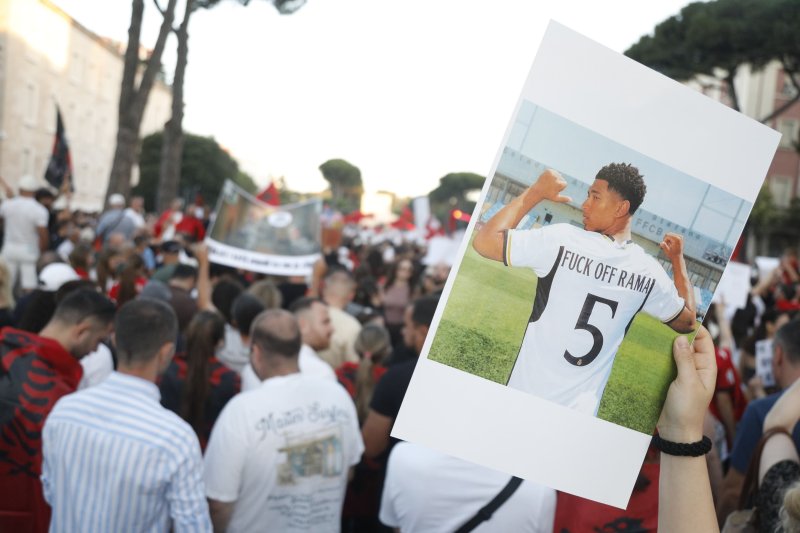
Hundreds of demonstrators gathered once again in central Tirana on Sunday as anti-government protests entered their 15th consecutive day, with participants demanding the resignation of Prime Minister Edi Rama and calling for political change.
After assembling in Skanderbeg Square, protesters began marching toward the Prime Minister’s Office, continuing a wave of demonstrations that has expanded beyond the capital and into several other Albanian cities, as well as among Albanian communities abroad.
What initially began as a movement opposing the construction of a controversial luxury resort project in Zvërnec has evolved into a broader expression of public dissatisfaction with the government. Protesters now cite concerns ranging from governance and transparency to environmental protection and economic issues.
Organizers say the demonstrations have grown steadily over the past two weeks, transforming from a localized campaign into a nationwide protest movement. Sunday's rally marked the 15th consecutive day of public gatherings, making it one of the most sustained protest actions seen in Albania in recent years.
Participants carried banners and chanted slogans calling for the government's resignation, while demanding greater accountability from state institutions. Protest leaders have vowed to continue demonstrations until their demands are addressed.
The government has defended its policies and rejected calls for resignation. Prime Minister Edi Rama has previously argued that ongoing protests risk harming Albania’s tourism industry and broader economy, particularly during the peak summer season.
The Zvërnec development project, which sparked the initial demonstrations, remains at the center of a heated national debate. Supporters argue that the investment would create jobs and boost tourism, while opponents contend that it threatens environmentally sensitive coastal areas and raises concerns about the management of public resources.
As tensions continue between protesters and government officials, observers are closely watching whether the movement can maintain its momentum and translate growing public frustration into broader political pressure on the administration.
For now, demonstrators say they intend to remain in the streets, insisting that their campaign has become about far more than a single development project and now reflects wider demands for change in Albania's political landscape.