The Future Is Here
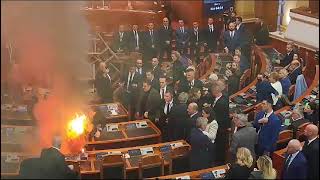
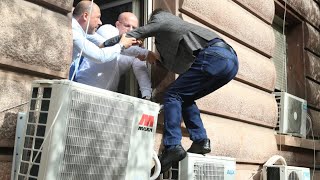
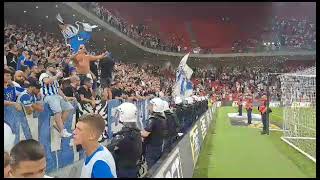
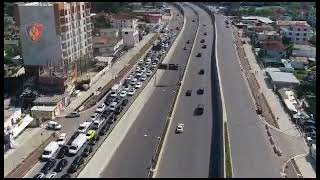
Everywhere I have travelled these past weeks for work — in meetings or phone calls with friends around the world — I have felt proud of the kind words I have heard about Albania. The coverage of the weeks-long protests by prestigious international media has portrayed our country as a society of civic conscience and solidarity. There is no better image than the one created without money, but with the living spirit of a society that rises to its feet for its own country.
The protests in Albania reflect deep concerns that demand serious reflection and meaningful action regarding the country's democratic and developmental model.
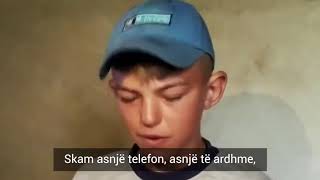
First, most of the protesters are children of the transition that began in 1990 and has still not come to an end. They did not grow up with the fear of communism, nor with the paranoia of the external enemy. For this reason, the use of divisive rhetoric produces the opposite effect.
In our region, the only countries that have still not moved beyond the generation of leaders who symbolise the transition are Albania and Serbia, though for entirely different reasons. Unlike the Serbs, Albanians are clear that their country belongs to the European family. For the children of the transition, the model of a normal life is not the Albania of communism. Nor is it the Albania of kiosks and pyramid schemes. And nor is it the Albania of concrete, which creates interdependence between political power, profit and architectural imagination, but produces no social well-being. On the contrary. It is the Albania of equal opportunities and of closing the unbearable gap between expectations and reality. It is the Albania where democracy is neither negotiated away nor distorted.
Second, over these weeks Albania is experiencing a collective emotional release that is not mediated by parties, leaders or institutions. People are protesting not only against arrogance, the extreme personalisation of power, and the harmful alliance between politics, the oligarchy, organised crime and the media. They are experiencing a sense of solidarity, of dignity, and an awareness of the public interest. One of the most important products of this protest, however diverse it may be, is a social catharsis. Along with it, a new foundation is being created for a more credible democratic practice — one that can transform the energy of the squares into political reality.
Third, Albania has never enjoyed so much international sympathy. During the war in Kosovo, the attention towards our country was linked mainly to the generosity of Albanians in sheltering their sisters and brothers from Kosovo. Today this attention is for something entirely different: for the fact that citizens are seeking to break away from a political and economic model that has suffocated competition and meritocracy. A model built at the expense of past and future generations — consuming the contributions of the former and ruining the heritage of the latter.
Fourth, the daily coverage of the protests in Albania by the most prestigious international media — focusing on the real causes of citizens' anger and on the mobilisation of our diaspora as never before — is the best investment in our image as a people and in our path towards the European Union. Our path towards the EU has been undermined precisely by those wounds against which people are protesting today: widespread corruption, organised crime, politicised institutions, and the oligarchic capture of public assets. What is happening today is the most powerful counter-evidence that has ever existed. Albanians are demanding that European standards be made real. They are fighting persistently for democracy, freedom, equality, justice, and sustainable social and economic development. They are doing what responsible citizens do in every European democracy: designing change from the bottom up, towards a new model for a new Albania.
Last, but not least, the spirit of the protest cannot be extinguished, because it is already greater than the anger on the streets of Albania or in the digital space. Denying this reality only increases the cost of a change that is inevitable. Albania has overcome great challenges by staying united. This moment calls for more patriotism, responsibility, ethics, ideas, a concentration of forces, and courage. Albania deserves better!