EU and Nato Vow to Step up Pressure on Russia after 'New Escalation' in Germany
The heads of Nato and the European Commission have warned that Russia is growing increasingly reckless and vowed to respond to a "new normal".
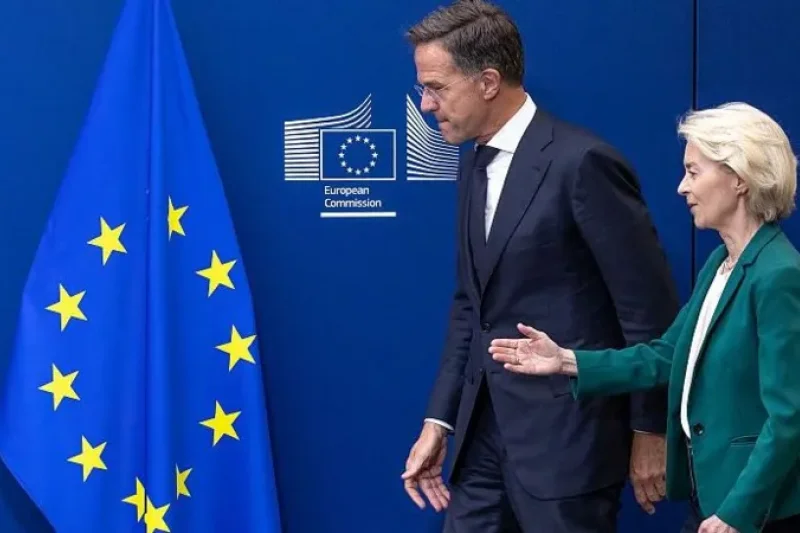
"Leipzig marks a new escalation on European Union soil directly attributed to Russia," said Commission President Ursula von der Leyen, a day after Germany blamed Russia for a failed drone attack last month on Leipzig airport.
"We have to step up and that means being ready to respond to Russia's recklessness faster and better," von der Leyen said. Nato Secretary General Mark Rutte said the whole alliance, which includes the US, stood "in full solidarity with Germany".
Russia has rejected German accusations that a drone carrying explosives deliberately targeted a Ukrainian cargo plane on 4 August.
The drone was defused by a robot at Leipzig/Halle airport and a second drone is thought to have collided with another cargo plane.
A third drone was reportedly found 10 days later at the airport, which is an important Nato hub and is regularly used by Ukrainian Antonov transport aircraft.
It was not until Tuesday that the German government said police investigations and intelligence finding had proved that Russia was behind the incidents.
The interior minister said that the drone's configuration, components, explosives and detonator were all known from other Russian hybrid operations.
Two suspects have reportedly been identified in the Leipzig attack, including a Belarusian with a Russian passport who entered on a tourist visa, and another with Latvian and Russian passports who arrived by plane in Berlin and flew out two days before the failed attack.
Berlin has said it will close the Russian consulate in Bonn as well as the Russian House cultural institution, widely suspected in Berlin of acting as a propaganda outlet for the Kremlin.
The Russian foreign ministry promised to respond in "mirror-image" fashion and said Berlin had offered no evidence to back its claims.
Vladimir Putin has condemned Germany's measures as a serious mistake that "clearly runs counter to the interests of the German people".
Asked whether Moscow would be prepared to sever relations with Berlin, Russian Deputy Foreign Minister Alexander Grushko said "maybe", but for now it was giving diplomacy a chance.
Critics in Germany suggested the German response was relatively weak, but Berlin has its eye on a more co-ordinated response with its allies, including extended EU sanctions and entry restrictions on Russian visitors across the bloc.
(Source: BBC)