
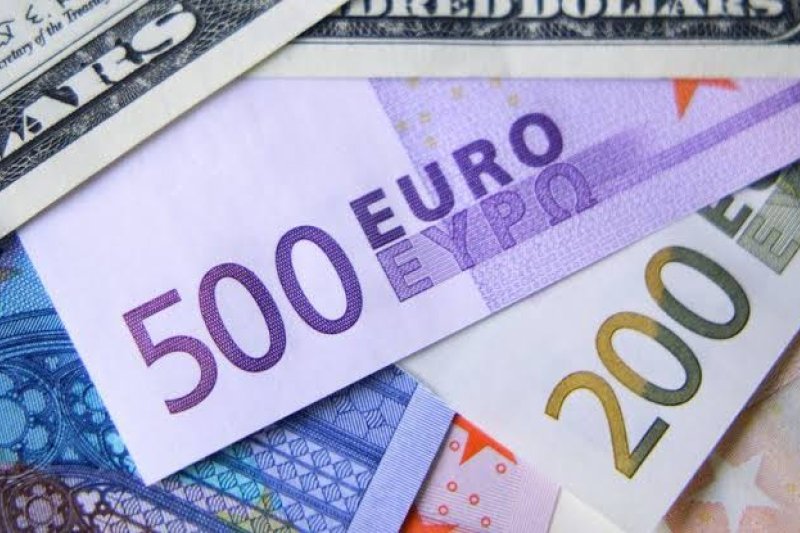
Euro Drops to New Historic Low
The European common currency Euro has marked another decline in the domestic foreign currency exchange market today, trading at Lek 93.07 on Monday (August 10), according to the official exchange rate of the Bank of Albania.
This is the lowest historical level since the euro began functioning as a physical currency. Since the beginning of 2026, the Euro exchange rate against the Lek has fallen by 3.8%.
Compared to the highest historical level, of Lek 140.4, reached in February 2011, the Euro is exchanged for Lek 47.5 less, with a decrease of 34%.
According to foreign exchange agents, the market is under the effect of the influx of the tourist season, which reaches its peak during this period of the year.
However, the seasonal decline in the Euro exchange rate is a continuation of a clear downward trend that had started in the first months of the year, as rarely before. Statistics from the Bank of Albania show that for the first quarter of the year, the current account deficit fell to Euro 228 million, down 28% compared to the same period a year earlier.
Meanwhile, foreign direct investments reached the value of Euro 404 million, marking a new historical record for this period of the year. They increased by 11.6% compared to the same period last year.
Beyond the information provided by official statistics, the public remains strongly convinced that the exchange rate is also significantly affected by foreign exchange inflows originating from informal or criminal activities.
Several cases published by the Special Structure against Corruption and Organized Crime (SPAK) confirm the perception of investing large amounts of money from criminal activities in the development and purchase of real estate.
The decline of the Euro began in 2016, and until 2024, its depreciation is explained more by informal flows from the increase in construction than by the improvement of the current account deficit, which, on the contrary, worsened. After 2024, the effect of informal flows was also added by tourist inflows, with the arrivals of foreign citizens exceeding 12 million per year.