Hegseth Plans to Ask Congress for More Funding in Wake of Iran War
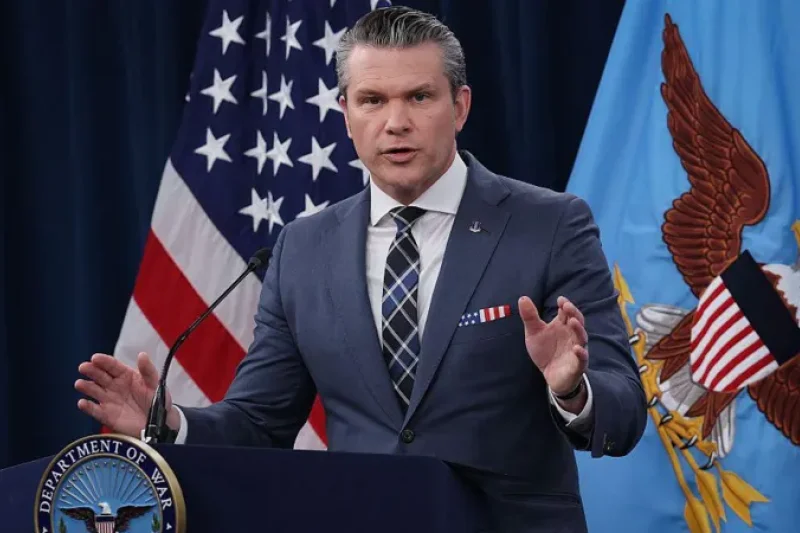
Defense Secretary Pete Hegseth could ask Congress for as much as $200bn (£150bn) more in funding because of the war in Iran, he indicated during a news conference.
The Washington Post and other US media reported that the Pentagon had asked the White House to approve a $200bn request to Congress for Iran war funding, according to senior administration officials.
Asked about the funding on Thursday, Hegseth told reporters: "It takes money to kill bad guys".
"We're going back to Congress and our folks there to ensure that we're properly funded," he said.
US President Donald Trump's economic adviser Kevin Hassett said on Sunday that the war in Iran had already cost the US $12bn.
"I think right now we've got what we need," he told CBS on Sunday.
Asked whether it would approve the request, the White House referred the BBC to Hegseth's comments.
On Thursday, Hegseth said the department needed more money for "what we may have to do in the future" as well as making sure that ammunition was refilled.
"This kind of funding bill is going to ensure that we're properly funded going forward," he said.
The potential $200bn request comes in addition to the defence department's annual budget of $838.7bn, which was approved by Congress in January.
Asked about the $200bn figure, Republican House Speaker Mike Johnson said he was sure it was "not a random number".
"Obviously it's a dangerous time in the world, and we have to adequately fund defence, and we have a commitment to do that," he said.
The war has had other economic impacts in the US. On Wednesday, the US central bank voted to hold interest rates steady again, as a spike in oil prices since the start of the US-Israel war with Iran has raised economic uncertainty and threatened to drive up inflation.
The Fed typically lowers interest rates when it sees unemployment rising and wants to boost the economy. It raises them when it is worried about inflation, hoping higher borrowing costs will ease spending and slow down price rises.
Hegseth's request, which has yet to be confirmed by the White House, will set up a bruising legislative fight less than eight months from November's midterm congressional elections.
While military funding tends to garner bipartisan support, polls suggest a majority of the US public does not approve the war in Iran – and politicians will be pressed to justify the massive spending increase that is being required.
Democrats have been quick to attempt to put the size of this military spending package in context.
The one-year extension of health insurance subsidies they unsuccessfully fought for last year, for instance, was estimated to be $35bn. The administration had previously said that the total savings from last year's Department of Government Efficiency (Doge) budget cuts – which included massive reductions in US foreign aid – totalled $175bn. Last year, the federal government spent $100bn for food aid for lower-income families.
In the end, Republicans in Congress should have the votes to push through the extra funding – but it could come at a steep political price if the war, and the economic disruption that has come with it, drag on.
Pentagon officials have said US action in Iran could last anywhere from four to six weeks. The conflict has lasted almost three weeks so far.
(Source: BBC)