Lajcak Urges EU, Western Balkans to Take Enlargement Seriously
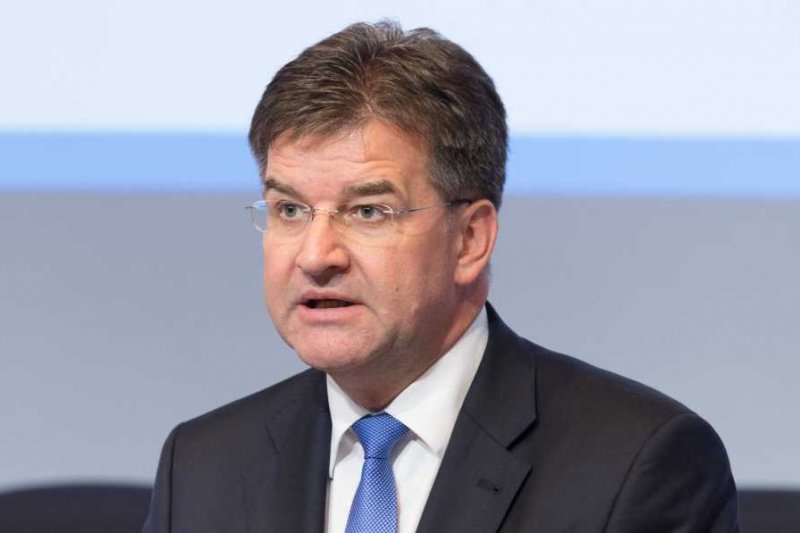
In the countries of Southeast Europe, support for joining the EU is falling because residents believe that it does not want to accept them, but there are partnership programs through which these countries can also participate in common topics such as the "green plan" and digitization, said the EU's special representative for the Western Balkans, Miroslav Lajcak, in an interview with Hina.
It has been 20 years since the EU and the Southeastern countries stated in a joint declaration for the first time that "the future of the Balkans is in the EU". Since that meeting in Thessaloniki in 2003, only Croatia became a member in 2013.
"My personal opinion is that Europe had to digest the huge enlargement in 2004 and 2007. It brought many positive effects but also elements that complicated the EU, especially because it is more difficult for it to make unanimous decisions with 28, or now with 27 countries, than it was when there were 15," said Lajcak, a 60-year-old Slovak diplomat.
"Some countries deviated from European norms and values, which also generated skepticism towards further enlargement. Furthermore, objectively speaking, Europe faced multiple crises that were neither planned nor expected, such as the financial crisis, migration and Brexit. All of this brought enlargement down to list of priorities. Public opinion in numerous countries of Western Europe was not positive towards the opening of the labor market to new members, so political leaders did not want to promote further enlargement," added Laj?ak.
He spoke with Hina in Greece, where he participated in the economic forum in Delphi. It was under the Greek presidency of the EU that he promised membership to Montenegro, Serbia, North Macedonia, Albania and Bosnia and Herzegovina two decades ago. On July 1, the six-month presidency of the EU will be taken over by Spain, which also supports the membership of those countries.
"The countries of the Western Balkans, unlike the countries of Central Europe, still have unresolved issues from the past that continue to preoccupy them. For my country (Slovakia), and the rest of Central Europe, integration into the EU was an absolute priority, so we were fully committed to achieving it." , said Lajcak.
Miroslav Laj?ak, the former Minister of Foreign Affairs of Slovakia, is the EU's special representative for the dialogue between Serbia and Kosovo.
Serbia, which does not recognize the independence of Kosovo unilaterally declared in 2008, has opened 22 negotiation chapters out of 35. However, it has closed only two.
North Macedonia was first blocked by Greece because of its name, and when it added "Northern" to its name, it was blocked by France ahead of its local elections, and then by Bulgaria, disputing its national identity and language. The EU only jointly opened negotiations with North Macedonia and Albania in 2022.
"I don't want to speak in terms of someone's guilt, but there were factors on both the EU side and the Balkan side that lead us to a situation where we are talking about the future of the EU, but without progress," said Lajcak.
"But now, after Russia's aggression against Ukraine, we see that both the EU and the Balkans must take enlargement seriously. This cannot be achieved if one side takes it seriously and the other does not," he added.
Bosnia and Herzegovina is a complex issue, Montenegro is the leader
Bosnia and Herzegovina received candidate status in December 2022.
"The situation in BiH is still very complicated. The fundamental thing is where the legitimacy comes from, which should be the difference in responsibility and competence between the state level and that of the entities. We see different interpretations in Sarajevo and Banja Luka and numerous disagreements based on the differences in those interpretations ", said Laj?ak, who worked as a high commissioner of the international community in Bosnia and Herzegovina from 2007 to 2009.
"It is necessary to touch on the functionality of that state. We also see positive elements, the Council of Ministers was formed very quickly, much faster than during the previous elections. It is important that decisions are made by all three constituent nations. BiH must also find a role for those nations that are not constituents , to ensure that no one is discriminated against on the basis of their ethnicity," he added.
In 2006, Laj?ak also oversaw the holding of the referendum on the independence of Montenegro, the country that has advanced the farthest in negotiations with the EU, on behalf of the EU. Jakov Milatovi? became president there last month, replacing Milo ?ukanovi?, who spent 33 years in leading state positions.
"I expect Montenegro to focus less on itself and more on the European agenda. Montenegro is still a leader, although the speed of European reform has slowed down significantly. But it is good that the functionality of the Constitutional Court has been restored," said Laj?ak.
Parliamentary elections await the country in June.
"I expect the new president and the government to fully commit to European integration, to what the majority of residents want. Montenegro has been a factor of stability in the Balkans for many years, so I expect it to continue to play that role," said the diplomat.
Zoran Miljani?, minister in the technical government of Montenegro, said at the forum in Delphi that "it would be optimal for Montenegro to become a member in the next four years".
It is "ungrateful" to predict the dates of new expansions
Lajcak, however, says that it is "ungrateful to talk" about the dates of the next EU enlargement.
"But what I would like to see is for our partners in the Western Balkans to start participating more in EU partnership programs. To be in the same room. Not only when we discuss the Western Balkans, but also to be part of the discussion on other topics, to they see that we are serious with them," he says.
"For example, when we ask them for their opinion on the Green Plan, on digitization and other areas we discuss, so that we get used to each other. We need to refresh the methodology, without changing it, I do not ask that we change charters or documents because that will cost us time But within the existing structures I think there is space that we should use to bring the Western Balkans closer," he added.
Among such platforms are the EU's macro-regional strategies for the area of the Adriatic and Ionian Seas and the Danube River. As part of that political framework, EU countries and those outside the EU that belong to those geographical areas participate. Countries cooperate across borders in transport, environmental protection and tourism using EU funds and the same rules. In May, the Adriatic-Ionian Forum will be held in Sarajevo under the chairmanship of BiH, which will then be chaired by Croatia.
Laj?ak often travels to Southeastern European countries and says that "he has not seen that people there do not want to be part of the EU".
"But I saw people who are afraid that the EU does not want to see them in its membership. The EU definitely has a positive image in the region, but support for European integration is falling, simply because people are afraid that the EU is not serious," he said.
"That must change. The EU must talk more with the region as a partner, and teach it less," he added.
In Serbia, the number of people who support joining the EU fell from 70 percent to 35 percent, which is the lowest level in history, according to the data of the Association of Serbian Economists presented at the forum in Delphi.
"Sometimes our language is too strict, too bureaucratic, when we talk about conditionality. We must show respect for that region, its people, treat them as partners. And be clear about what we promise them. When they deliver something, we must also deliver something," he said. is Lajcak.
In the last ten years, only Croatia managed to enter the EU, from which the United Kingdom withdrew. In January, Croatia went a step further by accepting the euro as its currency and entering the Schengen area, where there are no border controls between members.
Laj?ak says that 10 years have already passed, so nobody sees Croatia as a new member anymore.
"Croatia is an important member in many areas because it has brought its own experience. I see its role as constructive. I appreciate its role when we discuss things in this region and I expect it to be a strong advocate of further EU enlargement," he said.
"It can improve the EU's communication with the countries of the region," concluded Laj?ak.