Railway Reform, Albania Last in the Region
Albania has slowed the pace of railway sector reform in 2025 and remains the country with the lowest level of implementation regarding the Western Balkans Regional Railway Reform Plan.
According to the "2025 Report on the Implementation of the Green Agenda for the Western Balkans Action Plan," Albania's railway reform implementation fell to 45% in 2025, down from 51% in 2024. Bosnia and Herzegovina was at 52%, Montenegro at 60%, Kosova and North Macedonia at 62% each, and Serbia at 65%. Serbia also recorded a sharp decline, down from 93% in 2024.
One element of the reform is the opening of the railway market to operators. On this indicator, Albania is rated at 52%, compared to 89% for Serbia, 67% for Kosova and North Macedonia, 56% for Montenegro, and 40% for Bosnia and Herzegovina.
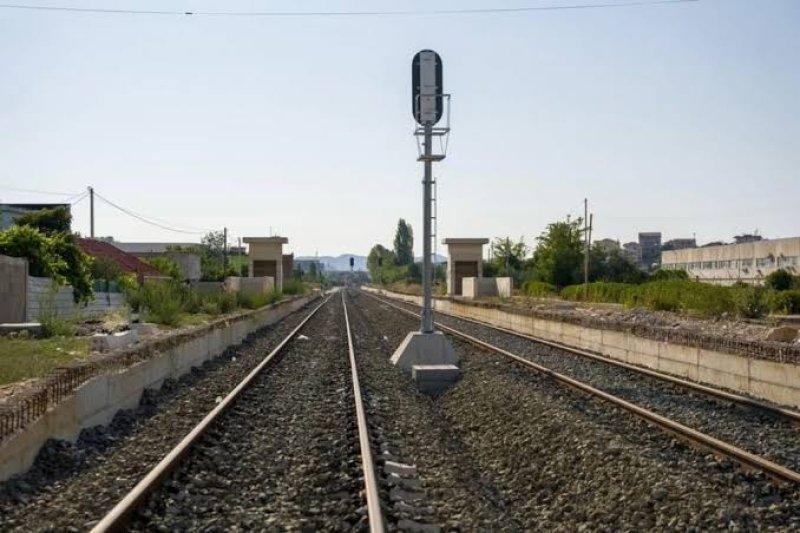
Another issue is the pace of infrastructure modernization. Work continues in Albania to connect Tirana Airport to the railway network as part of the Tirana-Durrës line. The report also mentions preparatory work to connect Porto Romano and Vlora to the road and railway networks. However, the report assesses that, despite these projects, the overall pace of constructing multimodal terminals and modernizing road and rail infrastructure in the region remains relatively slow.
Part of the reform specifically concerns establishing connections between railways, ports, airports, and road transport, enabling goods to transfer more easily from one mode of transport to another. In this regard, Albania has not yet transposed European rules on combined freight transport. The report notes that only Serbia and Montenegro have partially transposed these rules, whereas other countries in the region have not.
Another weakness of the reform in the region concerns cross-border rail crossings. The report observes that activities planned for 2025 in this area have shown little to no progress across most of the Western Balkans, with the exception of some developments between Serbia and Hungary.
The other countries failed to make significant progress in establishing a legal framework for joint rail border checks, setting up joint stations, or renovating cross-border rail lines.
Albania shows a relatively low level of alignment between its domestic regulations and the European railway system.