Fresh Bomb Threats Hit European Flights and Mystery Remains Who Is Behind Them
Dozens of flights across Europe this week have been impacted by a string of hoax bomb threats which have disrupted travel plans and left authorities scrambling to identify the culprit.
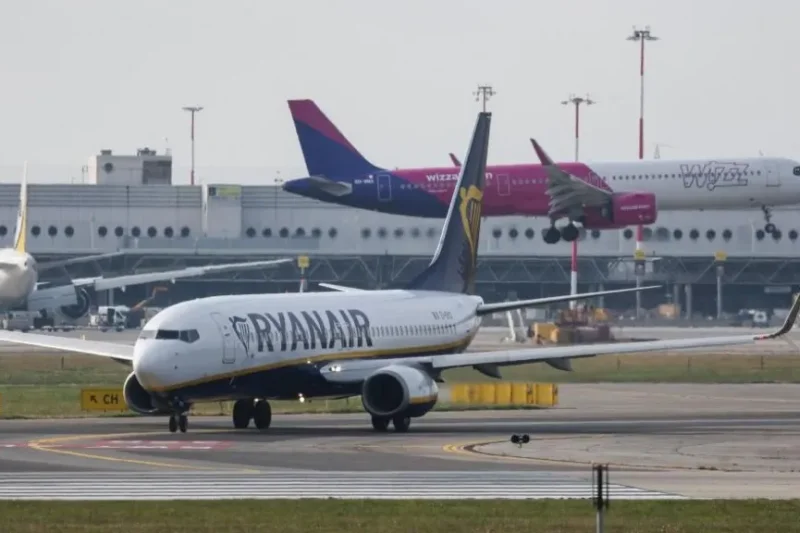
Over a dozen flights were impacted on Thursday, including four flight diversions in the Czech Republic and two in Italy, two days after several other flights and one cruise ship also received bomb threats.
Police in Denmark and the Czech Republic said Friday that fresh threats had been directed toward air traffic at Copenhagen and Prague airports, respectively. Both forces sought to downplay the threat to the public; Danish police assessed there was no danger for passenger while Czech police said it has “taken the necessary security measures with minimal impact on the airport’s normal operations.”
At the same time, Ireland’s national broadcaster RTÉ and other Irish media organizations evacuated their offices after receiving bomb threats, though it is unclear if this is related to those targeting airlines.
How were the threats made?
It’s not completely clear, although Czech and Italian authorities say they were made by email.
A representative of Václav Havel Airport in Prague, told CNN the threats it received about bombs being placed on four flights were made in an anonymous email.
A Czech Police spokesperson told CNN the email was addressed to the airport, adding that similar emails were sent to other airports in Europe.
The Italy flight threats came in an email from an anti-feminist group calling itself “The Male State” to a logistics hub company working with Rome Fiumicino Airport.
The email, first published by CNN Affiliate SkyTG24, made the false claim that “explosive devices” had been placed on two flights - one from Helsinki and another from Dublin. A spokesperson for the airport confirmed to CNN the screenshot was authentic.
The International Centre for Counter-Terrorism, a Netherlands-based think tank, said “The Male State,” was created in Russia in 2016 as a misogynist movement, that later emerged as a vocal supporter of the Ukraine war. A Russian court banned the group and labelled it as an extremist organization in 2021.
All European airports plan and carry out training for incidents like these. Speaking to CNN, Keith Jeffries, a former Federal Security Director at LAX airport, said that all airports “will have bomb threat management plans, and they’ll train to that plan,” allowing them to make decisions in a matter of seconds.
The bottom line is that no aviation authority will ever ignore a bomb threat, Jeffries said.
Who was behind it?
Again, it remains unclear at this stage who exactly was behind the threats. No official group or state has been identified by any European country at this stage. The European Union has said it is too early to say whether the incidents are linked.
Security analysts have suggested it could be part of a wider hybrid campaign or series of malicious hoaxes.
Eric Schouten, the head of aviation security group Dyami, suggested saboteurs acting on behalf of the Russian state could be to blame.
“From railways to the food infrastructure that you see happening with the fridges being hacked ?and all ?kinds of other operations, it does fit the narrative of Russian state actors ?who want to disturb Europe,” Schouten said, according to Reuters. He also pointed out that many of the countries affected have supported Ukraine in its war with Russia.
Germany’s foreign ministry made reference to Russia’s invasion of Ukraine too, saying that Europe’s security is “being tested far beyond the Ukrainian frontline.” The ministry referenced these bomb threats, the cyberattacks on supermarket fridges and drones crossing into some European countries’ airspace as examples of such threats.
The UK’s transport minister described the threats as a “malicious hoax.”
Speaking to British media, Heidi Alexander said that the disrupted flights had triggered “established processes for dealing with hoax and malicious threats, and that’s what these threats have been.”
Authorities steered clear of naming any specific culprit, however. Irish official Simon Harris told Cork 96FM “we don’t yet know whether it’s an individual behind this effort” to target the country’s media outlets, “or some part of a coordinated effort.”
What’s the impact been?
Overall, the impact has been relatively contained. All the threats have so far proven false, with the authorities involved saying that no such explosive devices have been found.
They have, of course, caused disruption to travelers. The passengers and crew on at least 14 planes were impacted on Thursday, including an Aer Lingus flight bound for Rome that was diverted to France and two flights from Spain and Denmark that were forced to divert to Bulgarian capital Sofia. It comes after at least seven flights were rerouted on Tuesday.
Analysts are warning the threats could be aimed at both causing disruption and observing the response from airlines and authorities.
“These aviation threats are also occurring in the same period as cyberattacks on supermarket refrigeration systems across Europe,” Eliran Almog, CEO of aviation cybersecurity firm Cyviation, told Reuters.
“Different essential services are experiencing disruption that carries economic costs and can undermine public confidence.”
(Source: BBC)