Strait of Hormuz Closed as Iran Issues Threats; Oil Prices Surge to Multi-Month Highs
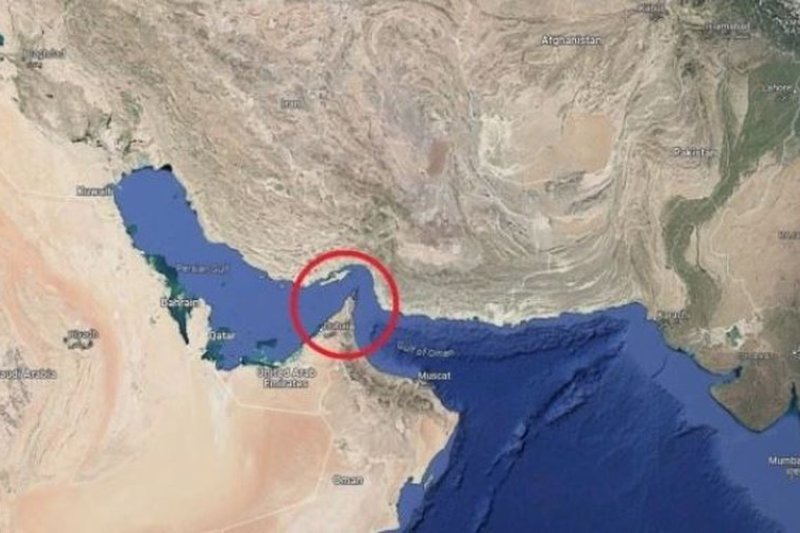
Iran has declared the closure of the Strait of Hormuz and warned that any vessel attempting to pass through the strategic waterway would be set ablaze, according to statements carried by state media and reported by Reuters.
Ebrahim Jabari, described as a senior adviser to the head of Iran’s Revolutionary Guard, said Tehran would take military action against ships attempting to cross the strait.
“The Strait of Hormuz is closed. If anyone tries to pass through it, the heroes of the Revolutionary Guard and the regular navy will burn these ships,” Jabari said, according to state media.
The announcement had an immediate impact on global energy markets.
U.S. crude oil West Texas Intermediate (WTI) jumped 8.4%, or $5.72, to $72.74 per barrel, extending gains following reports of the closure. International benchmark Brent crude rose 9%, or $6.65, to $79.45 per barrel.
Prices have now reached their highest levels since June 2025, when the United States and Israel carried out strikes on Iranian nuclear facilities.
The Strait of Hormuz is widely regarded as the world’s most critical oil transit chokepoint, handling a significant share of global crude exports. Analysts say market direction will largely depend on whether the conflict results in a prolonged disruption of maritime traffic through the narrow passage.
“ The pace of traffic resumption through Hormuz and the scale of Iranian retaliation will be key drivers for prices in the coming days,” analysts at UBS led by Henri Patrick wrote in a note.
Escalation and Uncertainty
The developments follow a wave of airstrikes launched over the weekend by the United States and Israel, which reportedly killed Iran’s Supreme Leader, Ali Khamenei, along with other senior officials of the Islamic Republic.
It remains unclear who will ultimately assume leadership of the world’s fourth-largest oil producer within OPEC, adding further uncertainty to already volatile markets.
U.S. President Donald Trump warned of “terror on Earth” while stating that American military operations would continue until all U.S. objectives are achieved. He added, however, that Tehran had expressed willingness to engage in talks.
“They want to talk and I have agreed to talk,” Trump said, suggesting that a path toward de-escalation remains possible, even as he described U.S. operations in Iran as “ahead of schedule.”
Iranian security chief Ali Larijani dismissed the possibility of negotiations, saying the joint U.S.-Israeli attack had plunged the entire region into an unnecessary war.
With geopolitical tensions mounting and oil markets reacting sharply, investors are closely watching whether maritime traffic through Hormuz resumes — or whether the confrontation deepens into a broader regional conflict.