3 Key Projects in the EU Priority Investment List
The Energy Community has opened the public consultation on the next list of Projects of Energy Community Interest (PECI) for 2026, which includes eight key electricity infrastructure projects aimed at addressing cross-border obstacles and preparing the power grids for the growth of renewable energy in the region. Albania is involved in at least three of these projects with direct impact.
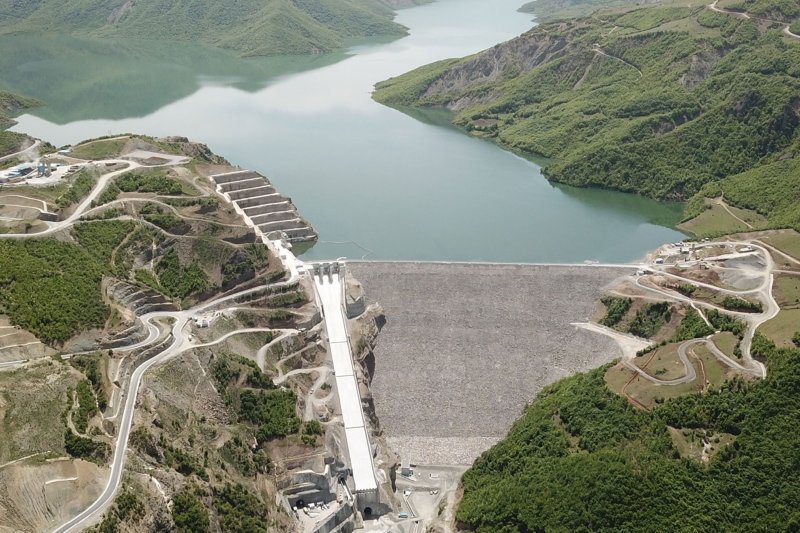
The largest project is the expansion of the pumped hydropower plant in Moglica, part of the Devoll project of the company Statkraft. “With a planned installed capacity of up to 1,620 MW and a storage capacity of around 30 GWh, this investment aims to create one of the largest energy flexibility assets in the Western Balkans. The plant will function as a giant “battery”, storing energy during periods of surplus and returning it to the grid during times of high demand,” the document states.
“In parallel, another strategic project for Albania is the reconfiguration of the 400 kV grid and the construction of a new interconnection with Kosovo. This project includes the expansion of substations and the construction of a new line between Fierze and the Prizren area, relieving the existing congestion on the 220 kV grid. It is considered essential to enable the integration of over 1 GW of planned wind energy capacities in northeastern Albania, as well as to increase energy trade in the region. Another project with a direct impact on Albania is the rehabilitation of the existing 220 kV line connecting Trebinje, Perucica, Podgorica, and Vau e Dejes. By replacing obsolete equipment and increasing transmission capacity, the project aims to reduce losses and alleviate grid loads, significantly improving security of supply and the integration of renewable energy in the Bosnia-Montenegro-Albania triangle,” the document noted.
According to the project description, the East-West Corridor project between Kosovo and North Macedonia is also expected to have indirect effects on Albania, strengthening regional connections and increasing the flexibility of the energy system, as the country is already an important exporter and transit country.
The consultation process on the projects will be open from 16 March to 17 April, and is part of the framework of the revised TEN-E regulation of the European Union and precedes the final adoption of the list in December 2026. Out of 27 initial proposals, the selected projects focus mainly on expanding transmission capacities and increasing the flexibility of energy systems in the Western Balkans and beyond.
For Albania, the list of projects represents a shift from a traditional hydro system to a more advanced scale that combines production, storage, and cross-border transmission. PECI projects are projects that benefit several countries at once, and therefore their financing involves a number of parties ranging from budgetary funds to private companies, international financial institutions with preferential loans and grants, or European Union funds.