Eager to Contribute to Albania’s Progress
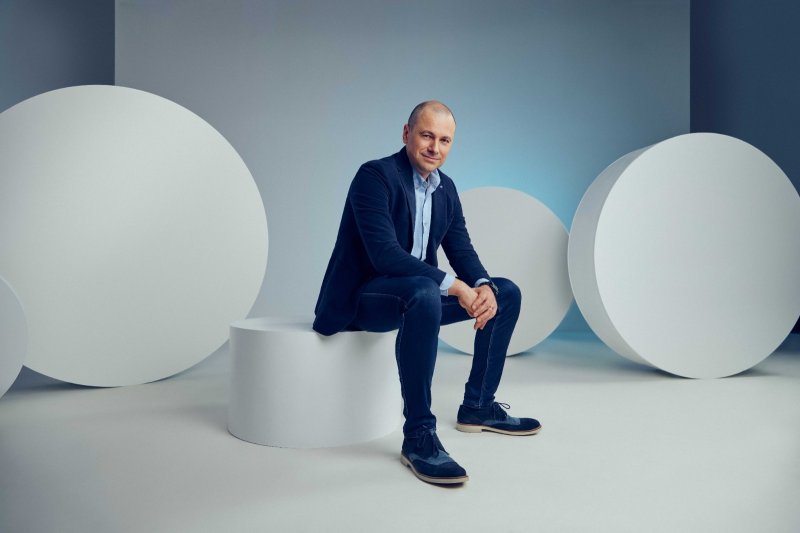
We see huge potential in Albanian tourism, agriculture, energy sector and various other industries. Albania has recorded significantly higher economic growth than the EU average in recent years, says the President of the Management Board of NBL (Nova Ljubljanska Banka) Group, Mr. Blaz Brodnjak, in this interview with Albanian Daily News.
This renowned Slovenian Bank is looking forward to enter the Albanian market, which according to Mr. Brodnjak, has an even greater potential ahead, with further EU integration. “Drawing on our experience from Slovenia’s EU accession in 2004, we would be ready to meaningfully support Albania’s economy on this journey,” says Blaz Brodnjak in this interview, while offering a detailed presentation of NBL’s activity and future plans.
-Mr. Brodnjak, thank you for this interview. Could you share some basic info about the NLB Group?
-NLB Group (Nova Ljubljanska Banka) has been the largest international financial institution with its headquarters and exclusive strategic focus in Southeast Europe, former Yugoslavia and Western Balkans. We operate under a universal banking model, offering comprehensive services to our clients, from retail and corporate banking to insurance and investment solutions. Our headquarter is in Ljubljana, Slovenia, where we have been managing a systemic and leading position, by managing 70% of cash, 37% of sight deposits of households, almost 40% of corporate and international payments, 42% of asset management and more than 70% of life insurance services, distributed through the banking channel. Beyond Slovenia, we have been offering universal financial services in five other countries across the region. In all markets of our operations, our banks hold market shares of more than 10% (measured by total assets) and we belong to the top three lenders.
NLB is a public company, with shares listed on the Prime Market of the Ljubljana Stock Exchange and global depositary receipts traded on the Main Market of the London Stock Exchange. The Republic of Slovenia remains a 25% shareholder, while the rest is owned by leading and most prominent global institutional financial investors.
NLB Group serves almost 3 million active clients across our target markets, employs more than 8,000 dedicated professionals, and manages total assets exceeding EUR 30 billion. The Group looks after the financial needs of its clients and improves the quality of life in its home region.
-What makes the Albanian market attractive for NLB compared to other markets in the region?
-NLB Group has a strong presence in Kosovo with the second largest overall and North Macedonia with even the leading position in loans to households. Also in Bosnia and Herzegovina, Montenegro, and Serbia we have been amongst the leading lenders, so that we can confidently state that we have been a regional specialist. We are actually the only financial institution that offers at least one form of financing across all markets of the former Yugoslavia. As our focus is exclusively on the SEE region, we believe that there is no real alternative to the full accession of all Western Balkans countries to the European Union and given our very good experience with the Albanian population in our existing markets, it is only logical to start thinking of whether and how NLB Group could bring its services also to the only missing regional market, esteemed Republic of Albania.
We believe that such a move would significantly complement NLB’s regional footprint and create a more integrated financial network across the entire Western Balkan region. This interconnectedness could further support cross-border capital flows and position NLB Group as a key link among the regional markets, while also acting as one of the key hubs/windows for international investors into the region and local investors to the world.
As our shares have through the GDR been listed also at the London Stock Exchange and our investor base has truly been global, our statistically relevant systemic position in multiple markets actually represents a proxy investment opportunity, buying into the regional opportunities and risks.
We have been closely monitoring the progress as Albania has been making in aligning with EU standards, reducing risk and increasing confidence among foreign investors. We expect Montenegro and Albania to be the first regional countries to join the EU, thus acting as vital catalysts for the entire region. In our view, Western Balkan countries should be priority candidates for EU accession, as they are already surrounded by EU members and geographically belong to the heart of Europe. The accession process has taken far too long, which in the new geostrategic context, in our firm opinion, reflects insufficient understanding of the underlying European bodies on the necessity of stronger unity and cohesiveness within the continent.
We see huge potential in Albanian tourism, agriculture, energy sector and various other industries. Albania has recorded significantly higher economic growth than the EU average in recent years. With further EU integration, we see even greater potential ahead. Drawing on our experience from Slovenia’s EU accession in 2004, we would be ready to meaningfully support Albania’s economy on this journey.
-Does NLB see Albania as a long-term strategic market or as a selective growth opportunity?
-NLB is a regional systemic bank with an exclusive focus on the region, therefore we see Albania as a potential long-term strategic market. Our commitment to the region goes beyond providing financial services. We strive to create a thriving community where individuals and businesses can discover new opportunities. This means supporting local enterprises, empowering entrepreneurs, promoting local culture, endorsing sports and humanitarian initiatives, as well as driving sustainable development.
We have consistently emphasized that we closely monitor developments in our home region and carefully evaluate opportunities to create added value for our shareholders. This includes potential acquisitions, both in banking and non-banking sectors.
-In which segments is there more potential in Albania: individuals, SME, corporate or project financing?
-NLB operates under a universal banking model, which means we do not focus on just one segment. We see potential across all areas – individuals, SMEs, corporates, and project financing.
In particular, we recognize significant opportunities in infrastructure development, which is crucial for Albania’s economic growth, as well as in retail financing, driven by a young population and rising consumer needs. Our approach is to provide comprehensive solutions that support both personal and business ambitions, contributing to long-term prosperity in the region.
-How much does regulatory and institutional stability influence your decision-making for investments in Albania?
-We have seen remarkable progress in Albania’s economic and administrative development. As a NATO member and soon, we hope, a future EU member, Albania represents a stable and attractive market that will greatly benefit from EU accession. All implemented reforms improve confidence and trust among foreign investors.
-Do you see room for banking consolidation in Albania and will NLB be part of this process?
-The Albanian banking sector is moderately concentrated, with the top five banks accounting for around 75% of the market. This indicates potential for further consolidation. NLB is prepared to play an important role in the ongoing consolidation of the financial sector across the region, both in markets where we are already present and in potential new SEE markets. This ambition reflects our aspiration to act as a connecting link between markets and countries in the region, recognizing our role in the increasing interconnectedness of capital flows.
In addition, we have extensive experience in mergers and acquisitions. In the past five years, we have acquired four banks in four different countries and one leasing company operating in two countries. We have demonstrated our capability not only to acquire but also to efficiently and economically integrate new members of the NLB Group.
-What competitive advantage can NLB’s regional experience bring to the Albanian market?
-We focus exclusively on Southeast Europe, which means this region is our home – not just a strategic market, as it is for some larger Western European banks present in our countries.
We can bring to Albania a wide range of financial services, competitive products, and an advanced digital development. In line with our 2030 strategy, our goal is to offer clients a best-in-class user experience. Today, we operate the leading digital bank in Slovenia, and we are prepared to deliver modern digital solutions to Albanian customers, accelerating digital transformation of the Albanian banking sector.
NLB Group is one of key pillars of regional financial stability and plays a strong connecting role. We are a trusted partner in trade finance, supporting robust trade flows across the region. We work with businesses headquartered in any Southeast European country that operate across regional markets. In short, we are an important and systemic platform and regional as well as broader bridge for businesses, talents and material as well as financial flows.
-How does NLB integrate ESG principles in a developing market like Albania?
-NLB Group officially joined the Net-Zero Banking Alliance (NZBA) in May 2022, becoming the first banking group headquartered in Southeast Europe to sign the Commitment Statement.
At NLB, we believe that the transition to sustainability is essential – and the financial sector can play a key role in making it happen. That is why, in recent years, we have systematically developed a range of green financial products that help our clients move toward a low-carbon economy. With a commitment to allocate €1.9 billion to sustainable financing in retail and corporate banking by 2030, NLB Group strives to be a major catalyst for the green transition in our home region.
Although recent global conflicts have somewhat shifted attention away from sustainability and some leading international banks have abandoned their commitments, NLB Group remains firmly committed. We stand by our promises and believe that through sustainable financing we can actively support Albania’s energy transition and broader green transformation.
-Are there specific sectors in Albania where ESG and sustainable finance can have an immediate impact?
-We aim to support projects that reduce energy consumption, produce green energy, enhance the electricity grids, store the energy, improve public transportation, and develop railways and highways, to mention only few segments. By doing so, we can further strengthen Albania’s energy, agricultural, and tourism sectors, helping them become even more competitive and sustainable.
In recent years, we have financed the largest wind park in Kosovo and two major wind parks in Serbia. In addition, we have supported strategic regional railway and highway projects, all from Slovenia to North Macedonia. With our strong capital base and liquidity, we would be ready and eager to contribute to Albania’s future development, accelerating its transition into a swiftly developing and thriving member of the European family. / ADN