Sudan’s Warring Sides to Begin Talks in Saudi Arabia as Fighting Rages on
Factions fighting in Sudan are to begin direct talks in Saudi Arabia after three weeks of clashes in the capital, Khartoum, and the south-western region of Darfur that have killed at least hundreds and wounded many more.
Representatives of the Sudanese army and the paramilitary Rapid Support Forces (RSF) were in Jeddah on Saturday for “pre-negotiation talks” aimed at establishing a durable ceasefire that would allow aid to reach millions of desperate civilians trapped by the fighting.
A joint statement by the US and Saudi governments, which have brought the two sides together after a number of fruitless attempts, said: “The kingdom of Saudi Arabia and the United States urge both parties to take in consideration the interests of the Sudanese nation and its people and actively engage in the talks toward a ceasefire and end to the conflict.”
Forces aligned with Sudan’s de facto leader, Abdel Fattah al-Burhan, who leads the regular army, are in conflict with the RSF, commanded by his deputy turned rival, Mohamed Hamdan Dagalo.
A series of truces have been agreed since the fighting erupted on 15 April, but none have been respected. There was little sign of any calm on Saturday.
In the city of Bahri, across the Nile from Khartoum, warplanes were heard overnight and explosions startled residents. “We don’t leave the house because we’re scared of stray bullets,” said a man who gave his name as Ahmed.
Gun clashes and airstrikes over residential areas were reported in eastern Khartoum on Saturday, while in the centre of the city, witnesses reported continued airstrikes and explosions on Friday, including near the airport.
In recent days, fighting has raged around the presidential palace, a key strategic site that gained added importance as negotiations loomed.
Diplomats sought to minimise expectations from the talks on Saturday, saying they were only “a first step” with limited objectives.
The army confirmed late on Friday that it had sent envoys to Saudi Arabia to discuss “details of the truce in the process of being extended” but Burhan’s special envoy, Dafallah Alhaj, said the army would not sit down directly with any delegation sent by the “rebellious” RSF.
The RSF confirmed hours before the talks were due to begin that it would be sending a representative, though it made clear the aim of the discussions was limited to finding a way to allow aid to reach civilians.
Many analysts say neither Burhan nor Dagalo, nor their various regional sponsors and supporters, have any interest in ending the fighting now, because both believe they can defeat the other and so obtain unchallenged control of Sudan’s state and resources.
The US-Saudi statement noted the efforts of other countries and organisations behind this weekend’s talks, including Britain, the United Arab Emirates, the League of Arab States, the African Union and other groups.
The fighting has continued in recent days despite a threat of sanctions from the US president, Joe Biden, against those responsible for “threatening the peace, security and stability of Sudan” and “undermining Sudan’s democratic transition”.
Sudan endured decades of sanctions during the rule of the autocrat Omar al-Bashir, who was ousted in a palace coup in 2019 after mass street protests.
Biden said: “The violence taking place in Sudan is a tragedy – and it is a betrayal of the Sudanese people’s clear demand for civilian government and a transition to democracy. It must end.”
The conflict has killed about 700 people, mostly in Khartoum and the western Darfur region, according to the Armed Conflict Location and Event Data Project.
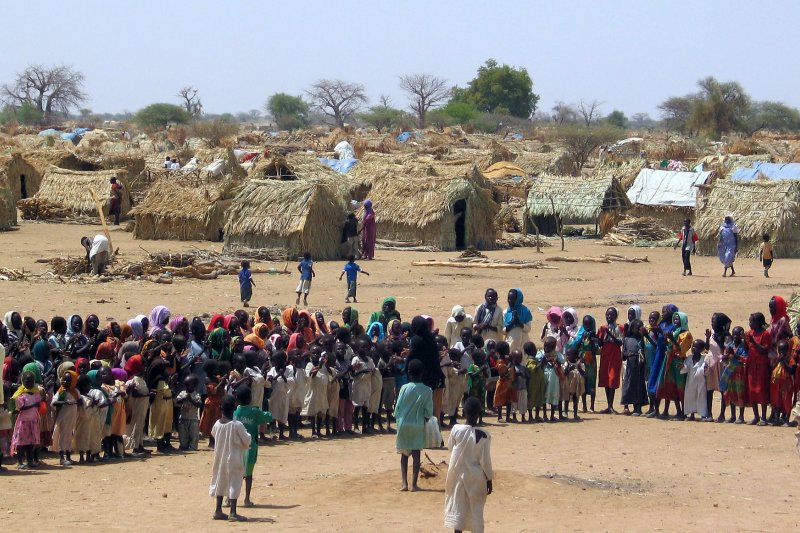
The UN children’s agency, Unicef, warned on Friday that “the situation in Sudan has become fatal for a frighteningly large number of children”. The agency’s spokesperson, James Elder, said it had received reports from a trusted partner – not yet independently verified by the UN – that 190 children were killed and 1,700 wounded during the conflict’s first 11 days.
(Source: The Guardian)