EU Remains the Only Credible Option

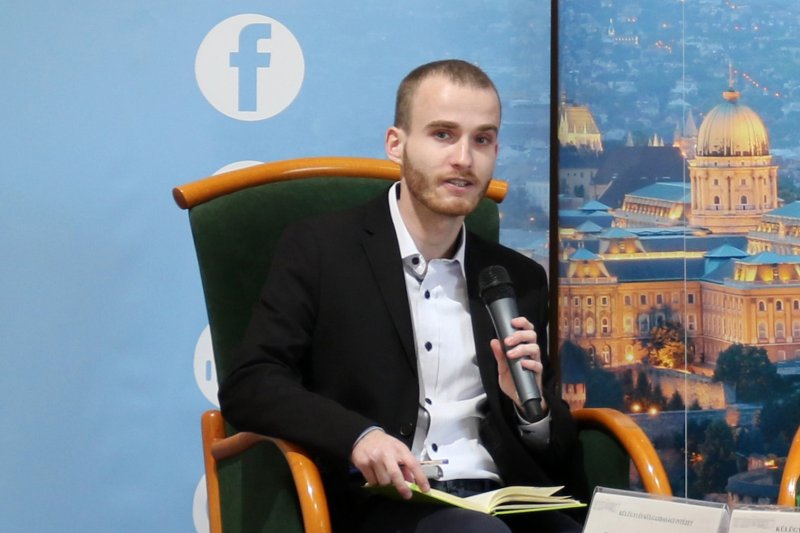
The EU integration process of the Western Balkans, including Albania, has been among the major topics discussed with Ferenc Nemeth, Research Fellow at the Institute for Foreign Affairs and Trade (IFAT) in Budapest in an exclusive interview with the Albanian Daily News.
“It has almost been 20 years since the 2003 Thessaloniki Summit where the region received the political promise of full-fledged membership. Since then, all aspiring countries made tremendous internal reforms and made (or have been trying to make) amends with their neighbors, but still, little has been achieved when it comes to their EU integration advancement,” the Hungarian researcher said, being reluctant that the process itself has been slow and oftentimes almost non-existent, and people of the candidate countries are also tired of the constant promises that one day they would also be part of the EU.
Mr. Nemeth holds a Master’s degree in International Relations from Corvinus University of Budapest and currently he is participating in the Interdisciplinary Joint Master’s Programme in Southeast European Studies at the University of Graz and University of Belgrade. Besides his studies, he was a lecturer at the Eotvos Jozsef College. His fields of research include the politics, security and Euro-Atlantic integration of the Western Balkans.
The researcher moderated a panel discussion entitled “EU Integration and Albania: Prospects and Realities” held as part of an international conference on the 100th anniversary of the establishment of the diplomatic relations between Albania and Hungary organized by IFAT in partnership with the Department of Eastern and Central European History and Historical Russistics of the Eotvos Lorand University on 24-25 March 2022.
The Institute for Foreign Affairs and Trade is a separate legal entity under the Center for Democracy Public Foundation operating as the leading Hungarian foreign policy think-tank.
According to Nemeth’s opinion, despite the lack of speedy integration, the EU remains the only credible alternative for the region, both in political and economic terms. Not one external power can offer such mutually beneficial incentives as the EU does to the Western Balkans, he said.
In the meantime, the Hungarian researcher thought that war has and will never be an option for anything, not even for a speedier or easier EU accession of Ukraine as there is no consensus among Member States. Asked about the Conference on the Future of Europe, which is coming to an end, Mr. Nemeth said the countries of the WB are not officially part of the Conference. “To me it signals that in the heads of great EU powers enlargement is not a priority. The invitation of the region to the Conference would have been an important political gesture but it remained once again a missed opportunity.”
The researcher Nemeth assessed the bilateral relations between the governments of Albania and Hungary as excellent and the cooperation in the fields of EU integration, culture and education could be highlighted.
Given the latest international developments, the Hungarian political researcher was of the opinion that the worlddoes not live in an American-dominated unipolar world system anymore. “The US is still, of course, one of the most influential and powerful political and economic entities; Washington, however, is not capable of dominating the entire world. For example, China has already surpassed the US in terms of economy, and Washington is aware of this fact too… The future of the US - Russia and US - China relations will have strong impacts on the EU (on all Member States) and the Western Balkans, too,” said IFAT Research Fellow Ferenc Nemeth in the following interview:
Albanian Daily News: Hungary has been an unwavering supporter of the Euro-Atlantic integration of the Western Balkans, but the so called “enlargement fatigue” of some EU member countries are making more complicated the accession process of the countries of that region which has remained as a deadlocked spot in Europe. Do you think that the EU's ‘fatigue’ will be faced with WB’s ‘fatigue’ as the new geopolitical situation and economic and social difficulties call for solutions which might be offered by other major powers?
IFAT Research Fellow Ferenc Nemeth: The so-called “enlargement fatigue” not only impacts EU member states but also the Western Balkans; we can, unfortunately, detect this phenomenon when it comes to the candidate countries too. It has almost been 20 years since the 2003 Thessaloniki Summit where the region received the political promise of full-fledged membership. Since then, all aspiring countries made tremendous internal reforms and made (or have been trying to make) amends with their neighbors, but still, little has been achieved when it comes to their EU integration advancement. The process itself has been slow and oftentimes almost non-existent, and people of the candidate countries are also tired of the constant promises that one day they would also be part of the EU.
Despite the lack of speedy integration, the EU remains the only credible alternative for the region, both in political and economic terms. Not one external power can offer such mutually beneficial incentives as the EU does to the Western Balkans. In times of crisis, such as the COVID-19 pandemic, it was the EU who provided the region with the much needed assistance, although, other great powers had a better PR while doing so.
- As a follow up, I have nothing against Brussels’ effort to get Ukraine in the Union as soon as possible because of the Russian aggression. Being led by this logic a question circulates in social media in Albania: Does this mean that a 'war' would expedite the accession process of this country and other regional countries which are in the 'waiting room' since a long time?
- War has and will never be an option for anything, not even for a speedier (or easier) EU accession. I understand the voices of some European leaders in support of Ukraine’s EU integration as signaling hope for the people of Ukraine in times of an armed conflict. From the side of Ukraine, the prospect of EU membership is symbolic: it would be a testament that the country joined the Western sphere of influence once and for all.
There is no consensus on Ukraine’s EU bid among Member States either. Compared to the Western Balkans, even before the war, Ukraine faced numerous and more severe problems in the fields of corruption, organized crime, rule-of-law – just to name a few. I highly doubt that EU Member States that often raise concerns over the Western Balkans when it comes to these issues would be willing to close their eyes and be in favor of a speedy integration of Ukraine this time around. Especially given that decisions on enlargement require a consensus among all 27 Member States.
The war in Ukraine should be understood as an opportunity for the EU to reassure its commitment towards the Western Balkans. There would be no better time than now to have the long-awaited promises given to the region fulfilled, such as opening accession negotiations with Albania and North Macedonia, grating visa-free regime to Kosovo, and have a speedier EU integration for Montenegro and Serbia by closing/opening chapters (clusters). These would be small yet powerful steps in reassuring the region that their accession to EU still enjoys priority even in such difficult times.
- In the meantime, what are Hungary’s expectations from the Conference on the Future of Europe regarding EU’s future policies and functioning? As it is already known there have been suppositions on making changes to Union’s treaties but as the Conference is approaching its end no word is said on such a fundamental endeavor. Which might be, according to you, the reasons for the change of mind, and actually should they have been changed after such a long time since its foundation and enlargement and against another political and geostrategic background, especially after the war in Ukraine and the pandemic?
- The initial idea of the Conference on the Future of Europe was to have a comprehensive dialogue about the way forward, followed by the possibility to create a new EU Treaty. Little information, however, has been made public on the current stances of the process or the possible conclusions of the Conference. For Hungary, having a strong Europe with a geopolitical vision, and where the main source of decision-making and power remains on the level of Member States are important.
On the downside, the countries of the Western Balkans are not officially part of the Conference. To me it signals that in the heads of great EU powers, enlargement is not a priority. The invitation of the region to the Conference would have been an important political gesture but it remained once again a missed opportunity. Nevertheless, I welcome the timely aims of the Conference and the fact that it wishes to incorporate the citizens’ voices too.
The COVID-19 pandemic and the war in Ukraine could indeed alter or have a significant impact on the outcome of the Conference. These crises serve as wake-up calls for the EU: it must strengthen its ability to act as a geopolitical actor and have a strong, opinionated voice on foreign policy issues. In my view, these must be the ultimate outcomes of the Conference.
- The migration crisis has been a contested issue in the EU and the Ukraine war is an added challenge. Which is Budapest’s vision on the solution of this crisis and do you think that member countries could head towards unilateral solutions or in groups like the V4 countries?
- Migration will remain one of the most dividing topics in the future too. Recent years showed that it is barely impossible to create a common, EU-level solution to the problem that would be acceptable for all parties involved. Migration is an issue that is bigger than Member States; thus, I doubt any unilateral actions or regulations would serve as long-lasting solutions. The war in Ukraine will eventually bring the same dilemmas and cleavages to the surface as the migration crisis of 2015 but I do not think we will be closer to a comprehensive reform on EU migration and asylum policy.
- As a follow up, Mr. Nemeth, which are the perspectives of the development of the Visegrad Group and do the member countries still see it as a united front like before?
- The Visegrad Group one of the prime examples of (regional) cooperation within the EU. Obviously, there have been ups and downs in the past (and most recently on the approach towards the war in Ukraine) but the common interests and goals have always been stronger. The V4 will thus remain united on issues such as strongly supporting the EU integration of the Western Balkans, boosting cross-regional cooperation and fostering education and science through the International Visegrad Fund. I am certain that the cooperation between Visegrad countries could also serve as a great example for the Western Balkans to follow.
- Let me touch please on the relations between Albania and Hungary. My view from Tirana is that the vitality of the traditional friendly relationship does not match the volume of exchanges between the two countries. If I put it in a figurative way the Hungarian ‘image’ is not so present in Albania. I remember that Malev was the only air company which kept its flights during the communist rule at the lowest prices in Albanian currency and the ‘Hungarian chickens’ besides other goods made Hungary so much present among Albanians. Please, what is the point of view from Budapest on the bilateral relations between the two countries because I see that Serbia and North Macedonia are seen as main interests?
- Although Serbia enjoys great attention from Hungary–given its proximity, economic interests, and the Hungarian minority in Vojvodina–Budapest keeps supporting and engaging with all the countries of the Western Balkans–Albania included. The bilateral relations between the two governments are excellent and the cooperation in the fields of EU integration, culture and education could be highlighted. We keep supporting Albania’s EU integration path by providing our expertise on issues related to sectoral EU policies.
The two countries have ever-growing economic cooperation, Hungarian companies invest in Albania. For instance, the Hungarian OTP Bank is also present (having bought Societe Generale a couple of years ago and Alpha Bank recently). WizzAir also opened a base in Tirana and started operating flights from Kukës too. We also have a direct Budapest–Tirana flight which is, according to my own experience, is of high demand. For Hungarians, before the introduction of these direct flights, Albania was a rather mysterious country in the Balkans. In recent years the country’s image improved and has become a popular holiday destination.
Since I mentioned culture and tourism, history also plays a defining role in the Albanian–Hungarian relations, spanning from the alliance of Skanderbeg and Janos Hunyadi to Geraldine Apponyi, the wife of King Zogu. In addition, many Hungarian Albanologists–Lajos Thalloczy or Ferenc Nopcsa–strongly advocated for the independence of Albania in the early 20th century.
- Among the long list of developments in the world over the last decades, the pandemic and the war in Ukraine have apparently generated tremendous changes to the international scene in all aspects, including shifts of positions of major powers and their blocs, and the emergence of new superpowers. Given the above picture, do you think that the world is heading towards a new order replacing the unipolar American dominated world order and how will Hungary maintain balance as the world is becoming more complex?
- As far as I see it, we do not live in an American-dominated unipolar world system anymore. The US is still, of course, one of the most influential and powerful political and economic entities; Washington, however, is not capable of dominating the entire world. For example, China has already surpassed the US in terms of economy, and Washington is aware of this fact too. The war in Ukraine, however, once again placed the US’s attention to Russia, and, in the meantime, it might give a chance for Chinese expansion. The future of the US–Russia and US–China relations will have strong impacts on the EU (on all Member States) and the Western Balkans too. It would be, however, too early to predict how great power rivalry will turn out to be in the light of current events.