Evacuees from Russia-occupied City Where Residents Ate Weeds on Way to Ukraine
People evacuated from the devastated Russian-occupied city of Oleshky have arrived in Belarus and are expected back in Ukraine later on Saturday, authorities have said.
Residents of the frontline city had been trapped without food, water and electricity, with many resorting to cooking garden weeds to survive.
The evacuees were taken out of Oleshky on Friday during a local ceasefire brokered by US First Lady Melania Trump.
Planes carrying the residents landed in the city of Gomel on Saturday morning, according to Belarusian state media and a senior Ukrainian official.
"The last, fourth plane landed in Gomel (Belarus). In a few hours, all Ukrainian citizens evacuated from Oleshky, together with the Ukrainian delegation, will be on Ukrainian territory," said David Arakhamia, a key Ukrainian official.
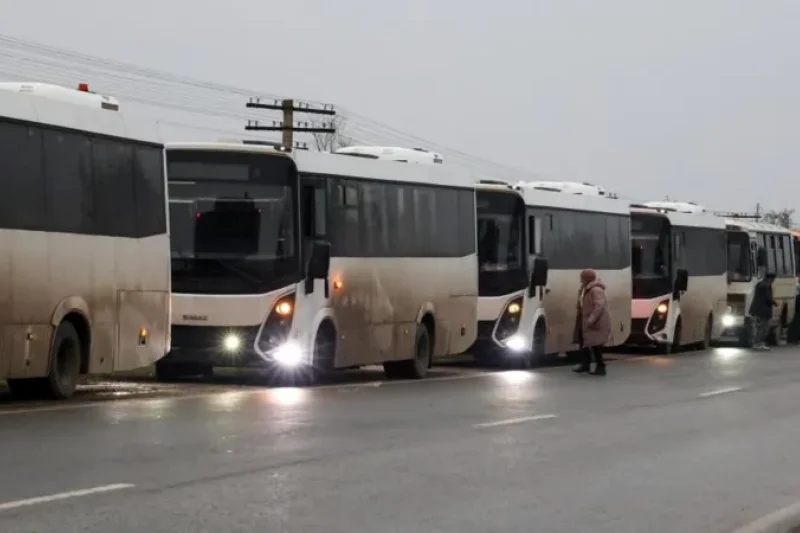
The state-owned Belarusian news agency Belta reported a bus convoy of Oleshky residents had left Gomel airport and was heading towards the Ukrainian border.
A humanitarian ceasefire took effect across the frontline region of Kherson on Tuesday, providing the first few days of peace in the area in four years, following Russia's invasion of Ukraine in February 2022.
Conditions had become so desperate in Oleshky that not only was getting supplies into the city extremely difficult, but escape was highly dangerous because the routes out had been mined and subject to drone attack.
One resident who fled the city three weeks earlier told the BBC he had walked through 24km (15 miles) of minefields to get to safety.
The ceasefire allowed the road out of the city to be cleared of mines and will remain in place until the end of Sunday 1 November.
Residents had a four-hour window to leave before a convoy of 25 buses, with space for 750 people, left the town on Friday afternoon - along with ambulances for people with limited mobility.
Several hundred people are understood to have decided to stay in the war-torn city, despite widespread devastation and the lack of gas, electricity and running water.
Before the war, Oleshky was home to 24,000 people, but it was seized by Russia during the first days of its full-scale invasion.
Ukraine's human rights ombudsman Dmytro Lubinets said on Friday morning that those who decided to stay "will receive all the necessary humanitarian assistance".
Ukrainian military positions lie just 5km (3.1 miles) from Oleshky but evacuees first had to travel into Russian-occupied territory and then to the southern Russian city of Anapa, where they flew to Gomel.
Bridges across the nearby River Dnipro have been destroyed and sources say the riverbank has been mined and is dangerous.
Lubinets and his Russian counterpart Yana Lantratova travelled to Oleshky together on Friday, setting off from Armiansk, in the Russian-occupied Crimean peninsula.
Lubinets is the first Ukrainian official since the start of the war to visit Russian-occupied parts of Ukraine.
The Oleshky ceasefire has required close cooperation with Lantratova, which Lubinets said he carried out in the interests of saving lives.
But some in Ukraine have recoiled at the sight of him standing beside a representative of the Russian occupying power which has killed so many of the city's residents and made life unbearable for the rest.
Russia said on Thursday that it had prepared "dozens of tonnes" of aid for the residents who do not wish to leave, including food, medicine, hygiene products and fuel for generators.
(Source: BBC)