Protest in Tirana Features Toppling of Edi Rama Bust as Demonstrators Escalate Symbolic Actions
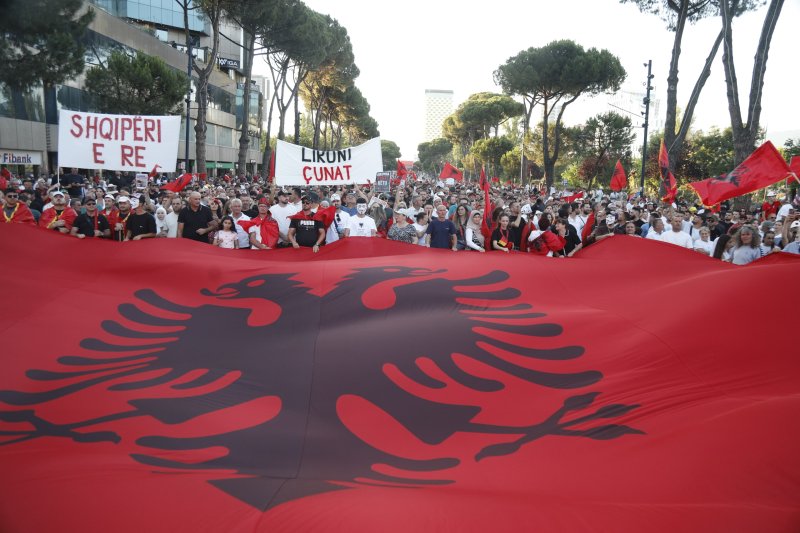
A protest in Albania’s capital on Saturday saw demonstrators introduce and later topple a symbolic bust of Prime Minister Edi Rama, in one of the most striking moments of the ongoing anti-government rallies.
The bust, which had the inscription “The Last Dictator,” was pulled down using ropes by protesters before being stepped on in the middle of the crowd. Demonstrators compared the act to the historic 1990s removal of the statue of former communist leader Enver Hoxha, a reference that carries strong symbolic weight in Albania’s post-communist political memory.
The incident took place during the 35th demonstration organized under the so-called “Flamingo Revolution,” a protest movement that has been gathering momentum in recent weeks and drawing participants from across the country as well as members of the Albanian diaspora returning from abroad.
Organizers said the rally was among the largest to date, claiming widespread participation from citizens across Albania. Independent verification of crowd size was not immediately available.
The protests have consistently called for the resignation of Prime Minister Edi Rama, accusing the government of lacking transparency and enabling controversial development projects, particularly a planned tourism investment near the Zvërnec Lagoon.
Saturday’s demonstration combined political messaging with symbolic acts aimed at the government, with speakers framing the protest as part of a broader push for systemic political change. The introduction and subsequent destruction of the bust marked a new escalation in the visual symbolism used by the movement.
The “Flamingo Revolution” has evolved from an environmental protest into a wider political movement, with demands ranging from government accountability to full political renewal. Authorities have not yet issued an official response to Saturday’s events.
The latest rally adds to weeks of sustained demonstrations in Tirana, reflecting growing political tension between the government and segments of the opposition movement and civil society.