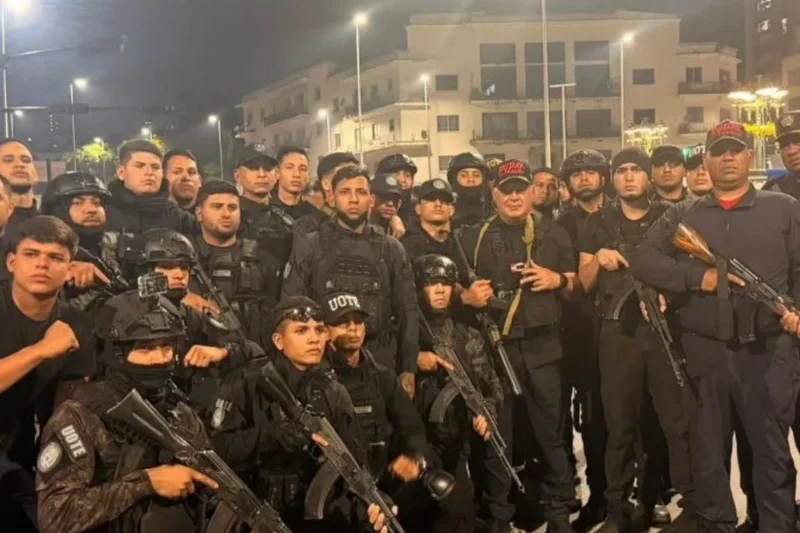
Security Forces Patrol Venezuelan Streets as Opposition Leader Says New President 'Can't Be Trusted'
In Venezuela, one thing seems certain: repression did not end with Maduro's seizure. It intensified.
In the streets of Petare, Caracas, there are "hooded men with guns patrolling, checking people's WhatsApp statuses," community leader Katiuska Camargo tells me.
Dozens of military checkpoints have sprung up in the city. Foreign journalists are unable to enter.
The Union of Journalists and Media Workers reported that 14 journalists were detained on Monday morning, though they were later released.
The US operation in Venezuela "undermined a fundamental principle of international law," the UN's high commission for human rights (OHCHR) has said.
Addressing reporters in Geneva, Ravina Shamdasani, spokeswoman for the OHCHR said "states must not threaten or use force against the territorial integrity or political independence of any state".
The criticism follows a UN Security Council emergency meeting yesterday, where some of America’s allies also took a stance against Trump’s military operation.
Among them, France was the most outspoken. Deputy permanent representative, Jay Dharmadhikari, said Maduro's capture by the US ran "counter to the principle of peaceful dispute resolution and runs counter to the principle of the non-use of force".
This morning, for the fourth day in a row, China repeated its opposition to Trump’s “reckless” actions.
Chinese Foreign Ministry spokesperson Mao Ning said that China stands “ready to work with countries in the region… to jointly maintain peace and stability”.
Maduro has historically considered China an ally.
(Source: BBC)