
Albania Must Walk Its Own Path to EU
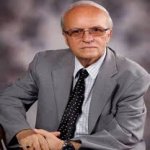
A career connected with all that is Albanian is the CV of the renowned Professor of the Albanian Language, Anton Panchev. “In the very first beginning, honestly, I wasn’t impressed by the Albanian language because back then I thought my professional career would be dedicated to the Greek or Romanian language. Just one visit to Kosovo in 2005 entirely changed my plans and opinion,” was the revelation made by Asst. Prof. Anton Panchev, Ph.D., Department of Balkan Studies at Sofia University "St. Kliment Ohridski" in an exclusive interview with Albanian Daily News.
Professor Panchev spoke of how the most prominent Bulgarian researchers had grown their interest in Albanian culture, religion, traditions at the end of the 19th century, the establishment of the Albanian colony in Bulgaria at the end of the 19th century, which developed different activities in the area of education, culture, and journalism. “In that way, Sofia has become an important center for the Albanian Revival. I think the fact that on April 21, 1912, Liri e Shqipërisë (Freedom of Albania), an Albanian newspaper printed in Sofia published as a poem the Albanian national anthem, speaks of the significance of the relations between Albania and Bulgaria,” Mr. Panchev said.
The professor considered ‘indeed friendly relationship’ the ties between Bulgaria and Albania, but he was said that no serious positive signs have appeared about an Albanian-Bulgarian strategic partnership; or, at least, have not gained necessary dimensions.
In addition, Professor Panchev dwelt on the Kosovo-Serbia conflict, the course of the troubled relations between Sofia and Skopje, the Bulgarian stance towards the Russian aggression against Ukraine. According to him, Serbia is practically the open door for Russian influence in the Balkans and beyond.
The Professor was of the opinion that Albania and North Macedonia have not to follow the same EU accession path. “There is not a single clause in the EU member criteria according to which two countries must share the same path to the Union, and there is no such dependence,” said the Bulgarian Professor, Anton Panchev in the following interview:
Albanian Daily News: First of all Professor, the readers of Albanian Daily News would be interested to learn some of the main highlights of your career, which is closely linked with Albanians and their language, old and contemporary history in all aspects. To put it in a figurative way you have turned into a ‘who is who’ in Albania, and could you share with us what has motivated you to make this choice?
Bulgarian Professor Anton Panchev: Foremost, I want to thank you for this opportunity and to congratulate the entire staff of your very respectful journal and all its readers! I started to learn the Albanian language, literature, and history at Sofia University 20 years ago when I was a student in the Balkan Studies Department. In the very first beginning, honestly, I wasn’t impressed by the Albanian language because back then I thought my professional career would be dedicated to the Greek or Romanian language. Just one visit to Kosovo in 2005 entirely changed my plans and opinion. Then I participated in The International Seminar on Albanian Language, Literature and Culture, and I was so impressed by the Albanian hospitality that I decided to improve my language capabilities. Currently, I teach the Albanian Language at the Department of Balkan Studies, Sofia University. In addition, I actively translate books from Albanian to Bulgarian and vice-versa, and I often engage in writing scientific papers about the historical, and political and linguistic relations between Bulgaria and Albania.
- How much space has albanology in the university system in Bulgaria and which are some of the reasons for the rising interest in it?
- Balkan Studies is a complex Degree Program, of which Albanian Studies are a very important part. It prepares specialists in Balkan languages and cultures, including Albanian. Students familiarize themselves with the culture and history of the Balkan region from ancient times until now, as well as the literature of the Balkan peoples. They study Albanian, Greek and Romanian languages, which alongside Bulgarian, form the Balkan language union.
- Mr. Panchev, please, which is your opinion on the Albanian-Bulgarian relations in all their aspects?
- At the end of the 19th century and the beginning of the 20th century, some of the most prominent Bulgarian researchers had grown their interest in Albanian culture, religion, traditions, etc. They have carried out many field research trips in some regions that had an Albanian population, and these studies have a valuable contribution to various areas of science. The Albanian colony in Bulgaria, mainly based in our current capital Sofia, but in some other towns too, established at the end of the 19th century, has developed different activities in the area of education, culture, and journalism. In that way, Sofia has become an important center for the Albanian Revival. I think the fact that on April 21, 1912, Liri e Shqipërisë (Freedom of Albania), an Albanian newspaper printed in Sofia published as a poem the Albanian national anthem, speaks of the significance of the relations between Albania and Bulgaria.
- According to you deep expertise, which are, please, some of the reasons of the permanent friendship between Albanians and Bulgarians, and secondly, how would you assess the links between the two countries and are the relevant authorities of Tirana and Sofia doing enough to expand them?
- Bulgarian-Albanian political relations in the past developed under the dual star of the Macedonian and the Albanian questions, resulting from the Congress of Berlin in 1878. The lesson from the investigation therein is that these questions cannot be isolated and resolved separately. A common solution had not yet arrived, either. The pull towards the opposing gravitational centers, whose cores meet in the area of the Republic of North Macedonia, is too strong and will be causing tension for quite some time henceforth. From the Bulgarian and Albanian grafts in Vardar Macedonia and Kosovo new state formations have grown differently and yet entangled again. In present times, a possible (optimistic) conclusion would be that the mutually beneficial “European style” symbiosis seems to have remained the only unexplored option for the development of the complicated geopolitical combination.
- Bulgaria is an EU member while Albania is on track to hopefully join your country in the Union. In addition, they are both NATO members and do not have any unresolved problems at all. Do you think that a Tirana-Sofia axis could be a genuine promoter of peace and stability in the region against the background of the narrative that the ‘special’ relationship between Tirana and Belgrade is the guarantor of regional stability?
- Bulgaria has given an unequivocal ‘yes’ to Albania for the start of EU membership talks. Many Bulgarian officials have pointed out the Bulgarian support for Albania’s membership in the EU. There are indeed friendly relations between Bulgaria and Albania, and the Bulgarian national minority in Albania has a significant contribution to these friendly relations. The Bulgarian minority has been included in the legislation, the Albanian president said. That is why all minorities are protected, including the Bulgarian one, and every effort is made to make them proud of their identity and to always be well integrated and supported by all institutions, both central and local. Unfortunately, no serious positive signs have appeared about an Albanian-Bulgarian strategic partnership; or, at least, have not gained necessary dimensions. For instance, there is a long delay when it comes to Corridor 8, which is crucial for the economic development of the region.
- As a follow up, Mr. Professor, how do you see the perspective of the relations between Kosovo and Serbia? Secondly, there has been more than a decade of the EU mediated talks between Pristina and Belgrade, but relations seem more than deadlocked. Do you think the EU has exhausted its authority to lead the conflict to a final solution?
- We have to accept that Serbia has a very consecutive policy towards the other Balkan countries. The problem is that this policy is staunchly related to the dark past of the aggressive Serbian nationalism, and the subversive actions of Serbia against Kosovo and some other Balkan states are continuing. The European Union and its Member States must openly engage in the Western Balkans region and move the European integration process forward, respecting its principles and rules. Starting membership negotiations, closing chapters, and even accepting new members will create serious concerns for the integrity of the European Union and its unity in various crises in general. In this regard, Serbia has been negotiating EU membership for 10 years, but this process has not played a role in reducing the Russian influence in Belgrade's politics. On the contrary, Serbia is practically the open door for Russian influence in the Balkans and beyond.
- Let me touch upon the relations between Bulgaria and North Macedonia. Do you think that the disagreements are so deep making again impossible the lifting of Sofia’s veto which blocks North Macedonia but Albania, as well, in the next stage of the EU accession process? Do you think the decoupling from North Macedonia could be Albania’s alternative, of course, something that should be decided by EU members?
- The full support that the Republic of Bulgaria has been giving the Republic of Macedonia (now the Republic of North Macedonia) since its founding 30 years ago has been more than noteworthy: Bulgaria was the first state to recognize the independence of the state of Macedonia in 1992 and has made serious efforts as an EU member country to accelerate the process of integration of Republic of North Macedonia to the EU, but our neighboring country is going to deny essential Bulgarian interests linked with the human rights of the Bulgarian community there. Bulgaria’s demands for a breakthrough have been presented many times by the Bulgarian leaders. Those demands include:
The inclusion of the Bulgarians in the constitution of North Macedonia;
Prevention of hate speech against Bulgaria in the Republic of North Macedonia;
Rehabilitation of the Bulgarian victims of communism in Yugoslavia;
Resumption of the work of the Joint Expert Commission on Historical Issues and more active participation of Skopje in it;
A clear statement of non-interference in the internal affairs of Bulgaria.
The Treaty of Friendship and Good Neighborliness was signed between Sofia and Skopje in 2017. According to the treaty’s provisions, one of the main tasks was the setting up of a Joint Commission on Historical Issues with the main objective to resolve by consensus the existing controversial historical issues between the two countries, but the commission failed to accomplish this task. Every meeting of the Joint Expert Commission on Historical Issues has proven to be fruitless, although the text of the treaty Skopje signed states that our countries have a common history. This common history should unite and not divide us. North Macedonia’s problem is that during the Middle Ages and the Revival period, not a single authentic source exists in which a Macedonian state or Macedonian people are mentioned. Bulgaria insists that our neighbor is not going to build an identity, based on the theft of Bulgaria’s history. There is no Bulgarian and Macedonian narrative of the objective facts of the Middle Ages and the Revival. The documents are what they are, and their presentation is truth or falsehood. After the accession of the Republic of North Macedonia to NATO, the good neighborly agreement between the two countries is, to all intents and purposes, dead. All contacts were terminated, unilaterally, by North Macedonia. Bulgaria’s refusal to accept the start of North Macedonia’s EU accession talks is mainly due to the lack of guarantees for good neighborly relations and the implementation of bilateral agreements.
In this dangerous geopolitical situation, the EU needs to be strong and united and cannot allow divisions between its Member States, nor compromise with the various criteria for the admission of new candidates for membership, nor with the principles of its foreign policy. Suffice it to quote the Copenhagen criteria: a candidate country has to achieve “stability of institutions guaranteeing democracy, the rule of law, human rights, respect for and protection of minorities…”.
About Albania – there is not a single clause in the EU member criteria according to which two countries must share the same path to the Union, and there is no such dependence. Please, just look at North Macedonia’s official statements in 2019!
- Please, how do you assess the stance of Bulgaria towards the Ukraine war and according to you, could Sofia play any specific role for the conflict to come to an end and avoid any spillover in the region?
- I think Bulgaria will not only have to take care of its national security but will also take on an important part of the Euro-Atlantic defense, because apart from its geographical position, Bulgaria will be a key factor in supplying Ukraine with arms due to the profile of the Bulgarian army and military industry. However, these developments can happen if other NATO member states supply the Bulgarian army with the relevant weapons, which are to serve as replacements for what it could send to Ukraine. Bulgaria has received natural gas mainly from Russia (about 85%), but Moscow has stopped the supplies at the end of April. In the summer, the gas connection with Greece will be ready and Bulgaria will be supplied with gas from Azerbaijan and liquefied natural gas, but the Western allies must guarantee the security and prices of supply, as well as allow the operation of Bulgarian thermal power plants. There is a strong humanitarian element – the refugees from Ukraine will continue to come to Bulgaria in the future because the economic and social problems in that country will continue regardless of the eventual end of the war. The European Union must provide sufficient funds for the permanent accommodation of these people. On the other hand, the Bulgarian institutions know best the difficulties, achievements, and threats to the integration of the Western Balkans into the Union and Sofia should receive full official support from the EU institutions to implement its mission, while Brussels should commit itself to all Bulgarian initiatives to guarantee the European path of the countries in the region.
-To conclude, Mr. Panchev, there is a proposal on the changes to EU treaties in the frame of the Conference on the Future of Europe, which ended its first part of deliberations. According to you, can that happen- a change of treaties, and how does official Sofia see the repercussions of such a move?
- I’m not such an expert on these questions, but I’m completely convinced that the countries of the Western Balkans that wish to become part of the European Union must condemn the crimes of the communist regime in the region categorically. The archives of the secret services and those of the state organizations of the totalitarian regimes must be opened, while the victims of totalitarianism must be rehabilitated; the implementation of the treaties and agreements between the countries of the Western Balkans, as well as between them and the EU Member States, is a very important condition for the negotiations to start and for the whole process to move forward; disputes between the parties should be resolved on clear principles and not decided based on 'the interest of the moment'. Issues should not be ignored, but a quick solution to those should be sought. The European Union must also concentrate on combating Russian hybrid attacks in the Balkans. In addition to Russian propaganda, the use of extremist groups and others also includes the Russian (Soviet) geopolitical projects of the past, which are still being used today to create disunion between and within the countries of the region.