
Six Arrests for Smuggling Migrants Via Schengen Airports
Europol supported a migrant smuggling investigation involving law enforcement authorities from 17 countries. The criminal network was also engaged in document fraud and money laundering.
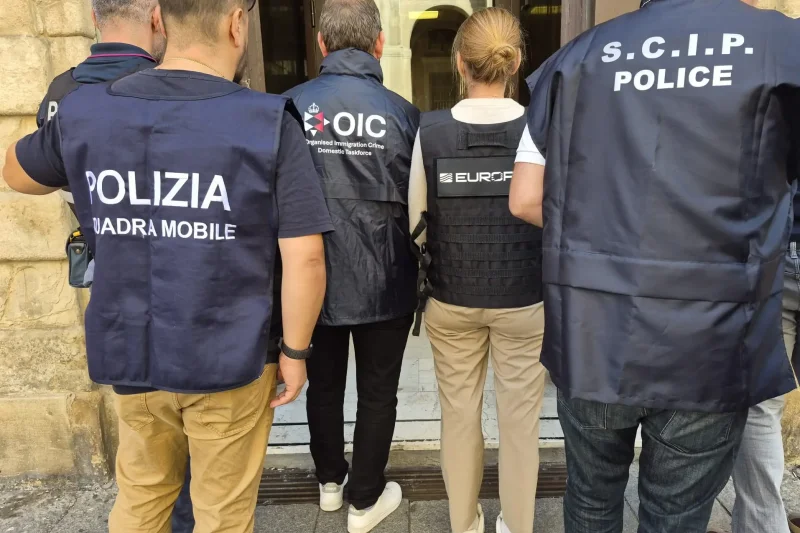
The action day on 22 September 2026 in Austria, Italy, Spain, and the United Kingdom (UK) led to six arrests, 10 house searches, and multiple seizures, including ID documents, electronic equipment, evidence, and a large amount of cash.
The action day on 22 September 2026 in Austria, Italy, Spain, and the United Kingdom (UK) led to six arrests, 10 house searches, and multiple seizures, including ID documents, electronic equipment, evidence, and a large amount of cash.
Operating across Europe, the network allegedly smuggled migrants from the mainland Europe to the UK by air. Its operations relied heavily on fraudulent documents, which enabled migrants to travel illegally through airports in the Schengen Area and Schengen-associated countries.
The majority of migrants entered the European Union (EU) using genuine passports and, in many cases, valid Schengen tourist visas. Once inside the EU, they destroyed and disposed of their identity documents, replacing them with counterfeit ones provided by the smuggling network. These documents were then used to conceal identity and travel across the EU.
During the initial phase of the investigation, law enforcement authorities in Belgium, Finland, Germany, Iceland, Ireland, Sweden and the Netherlands actively investigated the different migrant smuggling routes towards the UK used by this criminal organisation. Overall, the routes identified during the investigation spanned 17 countries.
Large network of migrant smugglers across the EU
Multiple cells were identified across the EU. One of them, based in Vienna, Austria, and believed to have dealt with the supply of fake documents, involved Afghan and Pakistani nationals. The suspects are connected with the setting up of a widespread network of services, primarily mobile phone shops to allegedly launder criminal profits.
Another cell based in Spain is believed to have supplied a large number of counterfeit documents. This cell allegedly facilitated the distribution of over 1 000 fake IDs, sent via couriers from United Arab Emirates to the EU, North and South America and the Caribbeans. Investigative leads in different countries suggest that the wider criminal network generated more than EUR 2 million in illegal proceeds.
Document fraud networks generally supply migrant smuggling and other criminal groups. They often stay under the radar as law enforcement authorities across the EU seize individual fake documents in seemingly unrelated cases. The exchange of information of seizure of counterfeit documents between national authorities is therefore crucial to identifying and dismantling the networks involved in document fraud.