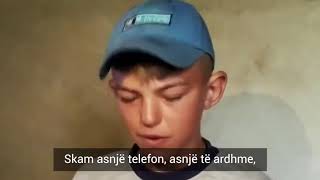

Albania Must Treat Cyberbullying as Seriously as any other Violence against Children
November 20th marks International Children's Day, a global celebration honoring the rights and dignity of our youngest citizens. On this special day, we come together to reaffirm our commitment to providing children with a safer world where they can thrive and prosper. In Albania, UNICEF is joining forces with One Albania, a private company, to address a pressing concern that affects children worldwide: cyberbullying. Online risk and harm are now a pressing reality: they can reach any child, anywhere, at any moment. This is the lesson UNICEF has learned from decades of work across the globe, and it is the reality now confronting Albania with increasing urgency.
Last week, One Albania and the Department of Journalism and Communication at the University of Tirana released a national study that surveyed over 850 young people across ten cities. The findings are sobering: one in five young Albanians has faced online harassment. But perhaps more concerning is what happens next - most victims tell no one. Not parents. Not teachers. Not friends. The isolation compounds the harm, allowing cyberbullying to deepen without support or intervention.
These are not mere statistics about technology; they were about children's safety and well-being. Behind each number lies a teenager who stopped attending school, a child who received anonymous threats for weeks, a student who began seeing themselves through the distorted lens of online abuse.
Albania faces a threat as serious as any form of offline violence against children, yet our response remains fragmented. Nearly a quarter of incidents involve anonymous perpetrators or fake profiles - the digital version of the old saying, “throw the stone and hide the hand,” where harm is inflicted without accountability. The harm is real. The vulnerability is documented. What remains missing is a coordinated, sustained response that treats online violence with the urgency it deserves.
We believe Albania needs a new model: one where government, families, schools, UNICEF, civil society, and the private sector work as one, with shared responsibility and shared actionThis is why we are presenting these findings jointly: to signal that protecting children online requires shared responsibility and shared action.
What evidence tells us
The study reveals patterns that should concern every parent, educator, and policymaker. Children who are psychologically sensitive experience cyberbullying at a rate of 71.9%, nearly three times higher than their less sensitive peers. The most damaging attacks involve sexual harassment, misuse of personal data, and assaults on intimate life. When asked about lasting effects, nearly 10% of victims said they began to see themselves as their abusers portrayed them, a profound indicator of psychological harm.
Yet, our cultural perception has not caught up with this reality. While 29% of Albanians still view traditional bullying as more dangerous than online abuse, international evidence shows the opposite: cyberbullying often causes deeper, longer-lasting harm because of its permanence and public visibility.
The data from this recent study paint a deeply concerning picture: nearly 85% of children rarely or never discuss online abuse with their parents, and more than 92% feel they cannot turn to their teachers. This silence isn't just a byproduct of the issue; it is an active component of the harm itself. It leaves children feeling isolated in a rapidly changing digital landscape, leaving them exposed when their established support networks simply cannot keep up.
Why partnership is the only path forward
Neither government regulation alone nor voluntary corporate action alone will solve this. To be ahead of the game, we must work together across sectors. Children live in a digital ecosystem built and operated largely by private companies. Those companies have both the technical capacity and the ethical obligation to make their platforms safer. But they cannot do it in isolation from families, schools, and the protective frameworks that governments and organizations like UNICEF provide.
For UNICEF, this partnership represents decades of global experience in child protection applied locally. We bring evidence-based approaches, technical expertise, and a commitment to strengthening efforts across three critical areas: awareness-raising among children and young people, robust legislation and enforcement, and comprehensive child protection and support services. These pillars must work together to combat online harms against children.
For One Albania, this commitment reflects a clear understanding that telecommunications infrastructure is not neutral; it shapes how children experience the digital world. As a key telecommunications operator, it stands at the most crucial point: the heart of the network. It can clearly see the bigger picture: the traffic flows, the risks, the attempts to break in that others can’t detect.
When Albanian families choose a telecommunication provider, they are trusting that company with their children's safety. One Albania has already moved beyond awareness campaigns to concrete action. The One Safe platform offers families tools to filter inappropriate content, block harmful websites, and provide parental oversight, practical solutions that make a strong network, one that truly protects the people who use it. Commissioning this research was itself an act of leadership, demonstrating that private sector responsibility means investing in understanding problems, not just responding to them.
Together, we can move faster and more effectively than either sector acting alone. UNICEF's global partnerships show that when companies collaborate with child protection experts to improve safety features, reporting mechanisms, and rapid response protocols, measurable improvements follow. When young people themselves are engaged as part of the solution - not just subjects of protection - the results are even stronger.
What does this mean in practice
The first line of protection is at home. More than rules or restrictions, children need parents who are present in their digital lives. This means regular, non-judgmental conversations about what happens online - who children talk to, what they see, how they feel about their interactions. It means parents developing their own digital literacy so they can understand the platforms their children use and recognize warning signs when something is wrong. When a child experiences cyberbullying, the initial response often determines everything: Will they be blamed for what happened? Will their devices be taken away as punishment? Or will they find a parent who listens, who believes them, and who knows how to take screenshots, block abusers, and report to the right authorities? We must equip children and their caregivers with essential tools such as digital literacy, critical thinking, and open communication channels to enhance their knowledge and awareness. When parents are present, informed, and supportive, children are far more likely to seek help before harm deepens.
Schools need clear protocols so that when a student reports cyberbullying, they are taken seriously and connected to support. The finding that 70% of affected students do not discuss concerns with teachers reveals a system that has to work to earn the children's trust. Institutions need stronger enforcement of existing laws and better-trained professionals who understand digital evidence.
From the private sector side, this means continuing to innovate. For telecommunications companies, this translates into a dedication to continuous investment in powerful detection systems that actively halt malware, phishing attempts, and inappropriate content right at the network level. Platforms and services where blocking and reporting are intuitive, where harmful content is removed quickly, and where privacy protections are robust. It means ensuring that when children need help, they can access support services without barriers. And it means transparency - measuring progress, sharing insights, and holding ourselves accountable to the families who depend on these services.
Albania has strong cultural values that can support this work. When 91% of us agree that 'words can break bones,' we acknowledge the power of what is said—online or offline. The question is whether we will match that acknowledgment with action.
A call to action
The Committee on the Rights of the Child (CRC) observations concluded that Albania needs to enforce existing laws on online safety, strengthen privacy protections, expand equitable internet access, and improve digital literacy for children. We now have concrete data and deeper insights into challenges we have long recognized. The patterns are documented, the dynamics revealed, the urgency undeniable. What remains is the will to act not through symbolic gestures but through sustained, coordinated effort across all sectors.
As representatives of UNICEF and One Albania, we recognize that neither of us can address this challenge alone. UNICEF will continue strengthening efforts on awareness-raising, supporting robust legislation and enforcement, and helping build comprehensive child protection and support services. One Albania will continue investing in safety solutions and exploring new approaches to reach the age groups most affected by this phenomenon. Where our efforts can align and reinforce each other, Albanian children will benefit.
We call on government institutions to accelerate enforcement, on schools to prioritize this as a core child protection issue, and on families to engage actively in their children's digital lives. We call on other private sector actors to recognize that this is not optional - it is foundational to operating responsibly in Albania today.
Albania must treat online violence against children as seriously as offline abuse. The path forward requires each sector to bring its strengths, accept its responsibilities, and find ways to work together with urgency. The children of this country deserve nothing less.
Murat Sahin is the UNICEF Representative for Albania - Barna Kutvolgyi is the Executive Director of One Albania